tesphero.com

Author name: tesphero@gmail.com

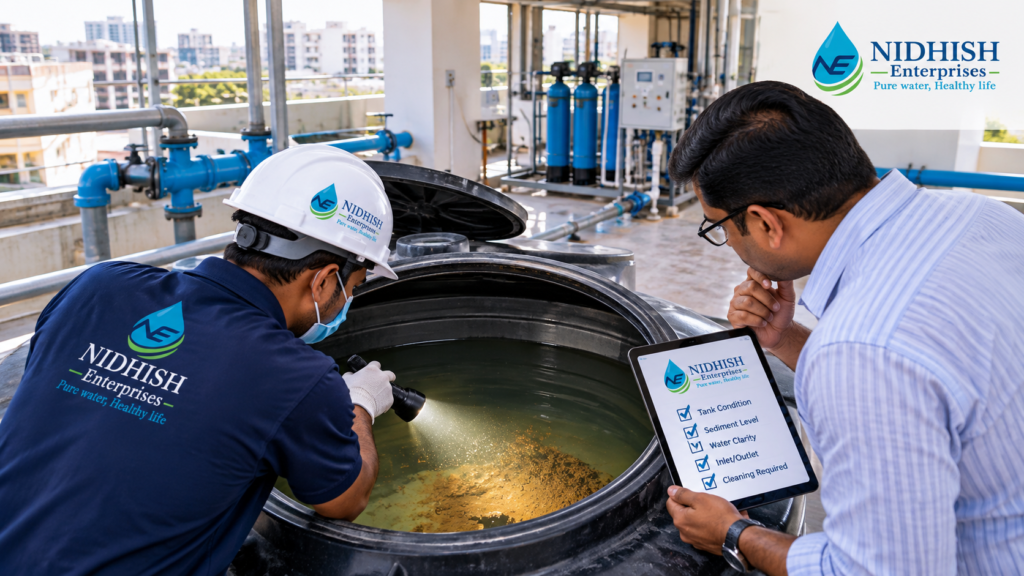
Nidhish Enterprises technician inspecting a commercial water storage tank for sediment, water clarity and cleaning requirements
Nidish-Enterprises, Tesphero-blogs

Why Water Storage Tank Cleaning Matters for Commercial Water Quality

Water Storage Tank Cleaning plays an important role in maintaining commercial water quality because stored water can be affected by sediment, dirt, biofilm, and other contaminants when tanks are poorly maintained. Offices, schools, restaurants, hotels, hospitals, factories, hostels, and other commercial facilities often depend on storage tanks to maintain a steady water supply. Therefore, tank condition should be considered part of the overall water-management system. Even when incoming water appears clear, storage conditions can influence its quality before it reaches taps, coolers, kitchens, wash areas, or water-treatment equipment. However, cleaning a tank alone does not guarantee that water is safe for every intended use. Source-water quality, tank design, plumbing condition, treatment systems, and ongoing maintenance also matter. Table of Contents 1. Why Commercial Buildings Use Water Storage Tanks Commercial properties may require a large and reliable water supply throughout the day. As a result, many facilities use underground or overhead tanks to store water before distribution. The stored water may support different applications, including drinking-water treatment, kitchens, washrooms, cleaning, manufacturing processes, cooling systems, or general utility requirements. Storage provides operational convenience. However, it also creates another stage in the water journey that needs attention. Water may enter a property in acceptable condition but later come into contact with sediment, poorly maintained tank surfaces, stagnant zones, or contamination entering through an improperly protected tank. Therefore, businesses should not evaluate water quality only at the original source. They should also consider what happens between the source and the point of use. 2. How Stored Water Quality Can Change A storage tank is not simply a container that can be ignored after installation. Over time, particles carried by incoming water may settle at the bottom. Dust or debris may also enter if covers, vents, inspection openings, or surrounding areas are not adequately maintained. In addition, stagnant areas and deposits can create conditions that make water-management problems more difficult to control. The World Health Organization notes that safe drinking-water management requires attention from the water source through to the consumer. Therefore, storage and distribution conditions form part of the broader water-safety picture. For authoritative guidance on drinking-water quality, businesses can refer to the World Health Organization drinking-water resources. However, the actual risks inside a specific commercial tank depend on its water source, design, usage, condition, cleaning history, and operating environment. 3. Why Water Storage Tank Cleaning Matters Regular Water Storage Tank Cleaning can help remove accumulated sediment, visible dirt, deposits, and other unwanted material from tank surfaces. This matters because the tank may supply water to multiple areas of a commercial property. For example, one tank may feed a kitchen, office pantry, washrooms, and a commercial RO system. Consequently, poor tank conditions can affect several downstream applications rather than just one tap. Cleaning also provides an opportunity to inspect the tank itself. During inspection, businesses may identify problems such as damaged covers, cracks, excessive deposits, poorly protected openings, leakage, or other maintenance concerns. Therefore, tank cleaning should not be treated only as a cosmetic activity. It should form part of a broader inspection and water-management routine. 4. Sediment Can Accumulate Inside Commercial Water Tanks Sediment is one of the most visible reasons to pay attention to storage tanks. Depending on the incoming water and supply system, suspended particles can gradually settle at the bottom of a tank. A small amount may not be obvious from water taken near the outlet. However, deposits can become more noticeable over time. Commercial properties may experience different levels of sediment depending on factors such as: Heavy deposits should not simply be assumed to be harmless. At the same time, their appearance alone cannot identify every water-quality problem. If a business repeatedly experiences unusual sediment, colour, odour, or other water changes, professional assessment and appropriate water testing may be useful. 5. Water Storage Tank Cleaning and Biofilm Concerns Another issue in water systems is biofilm. Biofilm generally refers to communities of microorganisms attached to surfaces and surrounded by material they produce. It can develop on wet surfaces under suitable conditions. A neglected water system can provide surfaces where deposits and biological growth become more difficult to manage. However, businesses should avoid assuming that every tank has dangerous microbial contamination simply because it has not been cleaned recently. You cannot reliably identify microbiological safety by appearance alone. Clear-looking water is not automatically micro biologically safe. Similarly, visible dirt does not tell you exactly which microorganisms, if any, are present. Therefore, where drinking-water safety is a concern, appropriate testing and professional assessment are more reliable than visual assumptions. 6. Water Storage Tank Cleaning Before Commercial RO Treatment Storage-tank condition can also matter when water feeds a commercial purification system. Imagine this sequence: Water Source → Storage Tank → Pretreatment → Commercial RO → Point of Use If the storage tank contains significant sediment or other unwanted material, the downstream treatment equipment has to receive that incoming water. Pretreatment components are designed to manage particular water conditions. Still, poor upstream maintenance can create unnecessary operating challenges. For example, suspended material may contribute to more frequent attention being required for certain filtration stages, depending on system design and feed-water conditions. Therefore, maintaining the storage tank can complement proper RO maintenance. However, tank cleaning does not replace RO servicing, and an RO system does not eliminate the need to maintain upstream storage. Both serve different purposes. For more information, internally link: Why Regular RO Maintenance Matters for Water Quality and System Performance Suggested anchor: why regular RO maintenance matters 7. Tank Cleaning Is Not a Substitute for Water Treatment This distinction is especially important. Cleaning removes physical contamination and deposits from the tank. It does not automatically correct every problem with the incoming water. For example, tank cleaning alone may not solve issues involving: Likewise, water treatment equipment should be selected according to actual water conditions and intended use. A TDS reading alone does not provide a complete picture of water quality. Therefore, businesses experiencing repeated water-quality problems should consider testing relevant parameters


Tesphero Infra representative comparing under-construction vs ready-to-move property based on timeline, cost, inspection and documents
Infra, Tesphero-blogs

Ultimate Guide to Choosing Between Under-Construction and Ready-to-Move Homes

Under-Construction vs. Ready-to-Move Property is an important comparison for buyers deciding what fits their budget, timeline, and priorities. Additionally, both options can work for different buyers. However, the right choice depends on much more than the advertised property price. An under-construction property may offer a longer purchase and payment journey. However, a ready-to-move home allows buyers to inspect an existing property before making the final decision. Factors such as possession timeline, construction status, financing, expenses, documentation, location, and housing needs can influence the decision. Therefore, instead of asking which option is universally better, buyers should compare both choices based on their own requirements. Table of Contents Understanding Under-Construction vs Ready-to-Move Property Before comparing the two, buyers should understand what they are actually evaluating. An under-construction property is generally a property within a project where construction is still in progress and possession is expected at a future stage. A ready-to-move property, on the other hand, is already constructed and is expected to be available for possession, subject to the property’s documentation, approvals, transaction process, and other applicable requirements. The difference may appear simple. Still, it can change the entire buying experience. With an under-construction property, buyers are making a decision partly on the basis of plans, specifications, project information, construction progress, and promised timelines. With a ready property, they can usually inspect the actual unit and surroundings more directly. As a result, each option requires a slightly different evaluation process. Under-Construction vs Ready-to-Move Property: Quick Comparison Factor Under-Construction Property Ready-to-Move Property Possession Expected in the future Generally available sooner, subject to transaction requirements Physical inspection Final unit may not yet be complete Actual property can usually be inspected Payment May follow a project/payment schedule Purchase amount may become payable over a shorter transaction period Construction risk Progress and completion timeline matter Construction is substantially/fully visible Location assessment Surroundings may still be developing Existing neighbourhood is easier to observe Customisation Some changes may be possible depending on project stage Changes usually happen through renovation/interiors Immediate use Usually not possible until possession May be suitable for earlier occupancy after completion of required formalities Documentation Project status and RERA-related information may be relevant Completion/occupancy and title-related documents need careful review This table provides a starting point. However, buyers should evaluate the actual project rather than assuming every property in either category has the same characteristics. 1. Compare Your Possession Timeline Your timeline is one of the first things to consider in the Under-Construction vs Ready-to-Move Property decision. Ask yourself a simple question: When do I actually need the property? Someone currently living in a rented home may want to move sooner. Similarly, a family relocating for work or personal reasons may not want to wait for construction to finish. In such cases, a ready property may fit the timeline better. An under-construction property may suit someone who does not need immediate possession and is comfortable with a future completion schedule. However, buyers should not rely only on verbal statements about possession. Check the project’s official information, applicable registration details, construction progress, agreement terms, and stated completion or possession timeline. Most importantly, keep some flexibility in your personal financial and housing plans because construction timelines can be affected by various circumstances. 2. Compare What You Can Inspect Before Buying A major difference between the two options is what you can physically inspect. With a ready-to-move property, buyers may be able to examine the actual unit. You can look at: In addition, visiting at different times of the day can provide useful context about traffic, noise, sunlight, and neighbourhood activity. An under-construction property requires a different approach because the final unit may not yet exist in completed form. Therefore, buyers may need to rely more on sanctioned/project information, specifications, agreement terms, construction progress, sample units where available, and other verified project details. A sample flat can help you understand the intended design. Still, buyers should confirm what is actually included in the purchased unit rather than assuming every feature shown in a sample or marketing material forms part of the final delivery. 3. Payment Planning in Under-Construction vs Ready-to-Move Property Price matters, but payment timing matters too. Under-construction projects may have payment structures linked to time, milestones, or other agreed schedules depending on the project and transaction. Consequently, the buyer’s payments may be spread across the construction period. A ready property can create a different financial situation because the transaction may move towards completion over a shorter period. Therefore, compare your actual cash-flow requirements rather than looking only at the headline price. Consider: For example, someone paying rent while also servicing a housing-related loan may experience a different financial burden from a buyer who can remain in an existing family home during construction. So, create a realistic monthly budget before deciding. 4. Compare the Total Property Cost One of the most common buyer mistakes is comparing only the advertised base price. The final financial commitment can include several other components. Depending on the property and transaction, buyers may need to consider applicable expenses such as registration and stamp-related costs, maintenance-related charges, parking or amenity-related charges where applicable, loan costs, interiors, moving expenses, taxes, and other contractual charges. Therefore, ask for a detailed cost sheet. Then, separate the costs into three categories: Purchase costs – amounts directly related to acquiring the property. Financing costs – interest and applicable loan-related charges. Post-purchase costs – interiors, furnishing, maintenance, moving, and other expenses. This approach creates a much clearer comparison. Also, never assume that under-construction property is automatically cheaper or that ready property is always more expensive. Pricing depends on the individual project, location, size, demand, construction stage, property condition, and many other factors. 5. Construction Progress in Under-Construction vs Ready-to-Move Property Construction progress becomes especially important when considering an under-construction project. Do not evaluate progress only through advertisements. Instead, check the project’s current status through available official information and visit the site where practical. Observe whether the visible construction appears consistent with the stage communicated to buyers. Also,

Tesphero Finserv advisor explaining Business Loan Eligibility factors including turnover, cash flow, credit history, existing loans and documents
Finserv, Tesphero-blogs

8 Essential Factors You Need for Business Loan Eligibility

Business Loan Eligibility depends on several factors. These include business history, turnover, cash flow, credit behaviour, existing financial obligations, and documentation. Therefore, before approving an application, lenders may review these areas to gauge the business’s ability to manage borrowing. For many small businesses and MSMEs in India, borrowing can support expansion. It can fund machinery purchases, working capital, inventory, technology, or other genuine business requirements. However, approval is never automatic for Business Loan Eligibility. Additionally, different banks and financial institutions have their own eligibility criteria, credit policies, documentation requirements, and risk assessment processes. Therefore, understanding what lenders may examine can help you prepare a more complete application and set realistic expectations before applying. Table of Contents What Is Business Loan Eligibility? Business Loan Eligibility refers to the conditions and financial factors a lender considers when assessing whether a business qualifies for a particular loan. Eligibility should not be confused with guaranteed approval. A business may satisfy basic criteria but still receive a different loan amount, interest rate, repayment period, security requirement, or other terms than expected. In some cases, a lender may also decline an application after completing its credit assessment. The exact process varies by lender and loan product. For example, eligibility requirements for a working capital facility may differ from those for a machinery loan or another type of business finance. Therefore, business owners should review the specific lender’s requirements rather than relying on one universal checklist. Why Do Lenders Check Business Loan Eligibility? A business loan creates a repayment obligation. Naturally, lenders need to understand whether the borrower appears capable of meeting that obligation under the proposed terms. Creditworthiness is a central part of this process. SBI’s MSME lending guidance, for example, discusses financial discipline, repayment behavior, income and turnover trends, updated financial statements, and banking trails when explaining creditworthiness and cost of credit. SBI Modern MSME credit assessment can also use several sources of financial information. SIDBI explains that its FIT Rank framework uses GST, bank-statement and income-tax-return information to support risk assessment for MSME lending. SIDBI So, what should a business prepare for? Here are eight important factors. 1. Business Age and Operating History The first factor is how long the business has been operating. An established operating history gives a lender more information to evaluate. It may provide financial statements, tax filings, bank transactions, sales patterns, repayment records, and other evidence of business activity. In contrast, a very new business naturally has less historical information. This does not mean every new business will be rejected. Different lenders and loan products can have different requirements. However, some products specifically prescribe a minimum operating history. For example, SIDBI’s published information on one EXPRESS loan product states eligibility conditions that include a specified period of business operations along with other requirements. SIDBI What can help? Keep business registration records, tax documents, financial statements, and other relevant records organized. A clear business history can make it easier for a lender to understand how the company has developed over time. 2. How Turnover Affects Business Loan Eligibility Another important part of Business Loan Eligibility can be your turnover and revenue pattern. Lenders may want to understand how much business you generate and whether that level of activity appears suitable for the requested loan. However, one large sales month does not necessarily tell the complete story. A lender may examine trends across a longer period. For example, revenue may be: Each situation can provide different information about the business. Consistent turnover records can also help support the information provided in a loan application. Therefore, businesses should maintain proper sales records and file applicable returns accurately and on time. Turnover alone does not guarantee approval A high-turnover business can still face financial pressure. Why? Because revenue is not the same as available cash or profit. That brings us to the next factor. 3. Profitability and Cash Flow A business may generate strong sales but still struggle to meet regular financial obligations. For instance, customers may take 60 or 90 days to pay invoices while suppliers require much faster payment. Similarly, large amounts of money may remain tied up in inventory. As a result, cash flow becomes important. A lender may review financial information to understand whether the business appears capable of servicing additional debt. Relevant information can include: SBI’s MSME borrower guidance lists financial statements—including balance sheets, profit and loss statements and cash-flow statements—among documents that may generally be required when seeking finance. SBI Profit and cash flow are not the same This distinction matters. A business can show accounting profit while experiencing a temporary cash shortage. Likewise, money in the bank at one point does not automatically mean the business is consistently profitable. Therefore, lenders may consider multiple financial indicators rather than relying on one number. 4. How Credit History Affects Business Loan Eligibility Credit history can play an important role in Business Loan Eligibility. Depending on the borrower structure and product, a lender may review relevant business and/or promoter credit information. This history can help show how previous credit obligations were handled. Lenders may consider patterns such as: SIDBI’s MSME research notes that commercial credit assessment can use historical credit attributes such as utilization, payment, and balance trends to support lending decisions. SIDBI Therefore, business owners should not think about their credit profile only when they need a new loan. Regularly reviewing credit obligations and making repayments on time can support better financial discipline. Does a good credit score guarantee a loan? No. A strong credit profile may support an application, but it does not guarantee approval. The lender may still assess revenue, cash flow, existing obligations, documentation, business profile, loan purpose, and its own credit policy. 5. Existing Loans and Financial Obligations Before approving additional credit, lenders may consider how much debt the business already has. Suppose a company already has several EMIs, a working capital facility, equipment finance, or other repayment obligations. A new loan adds another commitment. Therefore, lenders may examine whether the business appears

Tesphero Digi team identifying the right digital marketing channels including SEO, paid search, social media, content and email marketing
Digi, Tesphero-blogs

How to Identify the Right Digital Marketing Channels for Your Business

Choosing the right digital marketing channels can significantly affect how effectively a business reaches potential customers. However, being active on every digital platform does not automatically produce better results. A channel that works well for one business may generate very little value for another. For example, a local service business may benefit from Google Search and local visibility, while a visually driven consumer brand may find social media more useful. Meanwhile, a B2B company may depend more on search, educational content, email, or professional platforms. Therefore, the goal is not to use as many channels as possible. Instead, businesses should understand their audience, objectives, budget, buying journey, and available resources before deciding where to invest. Table of Contents Why the Right Digital Marketing Channels Matter Businesses today can choose from many marketing channels. Search engines, social platforms, paid advertising, email, websites, video, and content can all play a role. However, every channel serves a different purpose. A person searching for “accounting services near me,” for example, is behaving differently from someone casually watching short videos on social media. Both people may eventually become customers, but their intent and stage in the buying journey are different. Choosing the right digital marketing channels helps a business focus its time and budget where meaningful customer interactions are more likely to happen. At the same time, channel selection should not happen in isolation. Your website, message, offer, targeting, and customer experience can all influence the final result. 1. Start With Your Business Goals Before choosing a platform, first decide what you actually want digital marketing to achieve. Different objectives may require different approaches. For example, your goal could be to: A business trying to generate immediate enquiries may use a different channel mix from a company trying to build long-term organic visibility. Therefore, avoid starting with questions such as: “Should we use Instagram?” Instead, begin with: “What business result are we trying to achieve?” Once the objective becomes clear, comparing channels becomes easier. 2. Understand Where Your Customers Spend Time A marketing channel becomes useful only when it helps you reach a relevant audience. So, start by understanding your customers. Consider their age range, location, profession, interests, problems, buying behavior, and preferred ways of researching products or services. More importantly, think about where they go when they need what you offer. Someone looking for an emergency repair service may immediately search online. In contrast, someone discovering a fashion or lifestyle product may encounter it while browsing social media. Similarly, a business decision-maker researching a complex service may spend more time reading articles, case studies, emails, or professional content before making an inquiry. As a result, customer behavior should influence your channel strategy more than platform popularity. 3. Consider Customer Search and Buying Intent Not every website visit has the same value. A person may be researching a topic, comparing providers, looking for prices, or already preparing to buy. This is where search intent becomes important. For instance, consider these searches: “what is commercial RO” “commercial RO for restaurant” “commercial RO supplier in Indore” Although they relate to a similar subject, the person behind each search may be at a different stage of the buying process. Therefore, businesses should consider whether a marketing channel can reach customers at the stage that matters to them. This is also why traffic alone should not determine whether a channel is successful. Relevant visitors and meaningful actions often provide more useful information. 4. SEO as One of the Right Digital Marketing Channels Search engine optimization can help businesses improve their organic visibility when people search for relevant information, products, or services. SEO can include: One advantage of SEO is that useful pages can continue attracting relevant visitors over time. However, SEO generally requires consistent effort. Results also depend on competition, website quality, search demand, technical health, content usefulness, and other factors. Therefore, SEO should usually be treated as a longer-term visibility strategy rather than a guaranteed source of immediate leads. If you are still building your SEO foundation, our guide on What Is SEO and Why Is It Important for Business Growth? can provide additional context. 5. Paid Search Advertising Paid search allows businesses to place advertisements around relevant searches. This can be useful when potential customers are actively looking for a product or service. For example, a user searching for a specific professional service may have stronger immediate intent than someone who simply sees an unrelated promotional post while scrolling. However, paid advertising requires more than simply setting a budget. Businesses should consider: Poor targeting can result in clicks without meaningful business outcomes. Therefore, paid campaigns should be evaluated based on business results rather than traffic alone. We have also covered the broader differences between organic and paid approaches in SEO vs Paid Marketing: Which Strategy Is Better for Your Business? 6. Social Media Marketing Social media can help businesses communicate with audiences, demonstrate expertise, showcase products, tell brand stories, and stay visible. However, not every business needs the same social platforms. A visual consumer brand may benefit from image- or video-led platforms. Meanwhile, a B2B company may need a different content style and platform strategy. The important question is not: “Which social platform is most popular?” Instead, ask: “Where can we realistically reach and communicate with our target customers?” Consistency also matters. Maintaining five inactive or poorly managed profiles may offer less value than building a meaningful presence on one or two relevant platforms. For a deeper understanding, read How Social Media Marketing Can Help Businesses Build a Stronger Brand. 7. Content Marketing Content marketing supports many other digital channels. Blogs can support organic search. Videos can support social media. Guides can help potential customers understand complex services. Meanwhile, useful educational content can support both lead generation and customer trust. Strong content begins with customer needs. For example, instead of publishing random industry updates, a business could answer questions such as: Consequently, content becomes more useful when it helps the right audience make progress rather than

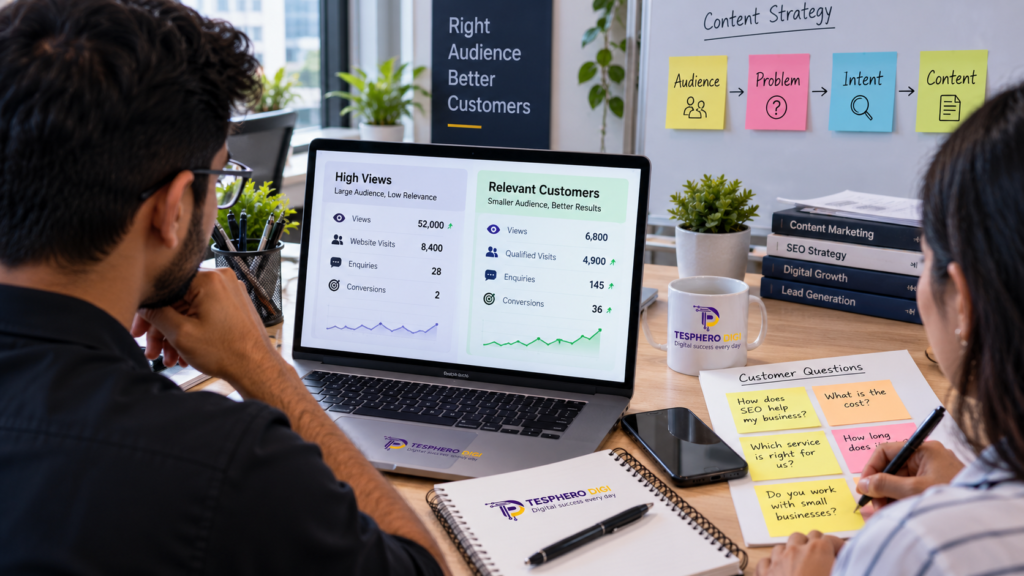
Tesphero Digi team creating content that attracts customers by comparing high views with relevant visits, enquiries and conversions
Digi, Tesphero-blogs

How to Create Content That Attracts the Right Customers, Not Just More Views

Content That Attracts Customers starts with understanding the right audience rather than simply chasing more views. For a business, valuable content should reach people who genuinely need its products or services and help them move closer to a meaningful action. A post can receive thousands of views and still generate very few inquiries. Meanwhile, another piece of content may attract a much smaller audience but bring relevant website visits, qualified leads, calls, or sales conversations. Therefore, businesses should not create content only around the question, “How can we get more views?” A better question is: “What does our ideal customer need to see before they feel ready to consider our business?” That change in thinking can improve everything from topic selection and SEO to social media, calls to action, and performance measurement. This guide explains how businesses can create useful content that attracts the right audience rather than chasing numbers that may not contribute to business growth. Table of Contents Why Content That Attracts Customers Matters Digital platforms make numbers highly visible. You can quickly see views, impressions, likes, followers, clicks, and shares. Naturally, businesses start using these numbers to judge whether their content is working. However, a large number does not always represent business value. Imagine two posts. Post A receives 50,000 views but attracts people who have little interest in buying the service. Post B receives 3,000 views but reaches business owners who are actively researching the exact problem the company solves. Which one is more valuable? The answer depends on the business objective. If the goal is brand awareness, reach can certainly matter. However, if the goal is qualified inquiries, website conversions, or sales opportunities, audience relevance becomes much more important. Google’s Search Central guidance similarly recommends creating content primarily to benefit people rather than producing content mainly to attract search-engine visits. That principle is useful beyond SEO as well. Useful business content should serve a real audience. 1. Start With the Customer, Not the Content Format One common mistake happens before content creation even begins. A business says: “We need to make more Reels.” Or: “We should publish four blogs every month.” However, neither statement explains who the content is for. Before deciding whether to create a blog, video, carousel, email, or social post, understand the customer you want to reach. Build a Practical Customer Profile You do not need a complicated 20-page persona document. Instead, answer useful questions: For a B2B company, you may also need to understand the person’s role in the purchase. The employee researching your solution may not be the person who finally approves the budget. Therefore, your content may need to answer questions for several decision-makers. 2. How to Create Content That Attracts Customers Around Real Problems Businesses often create content around themselves. They repeatedly post: “Our company provides…” “We are proud to announce…” “We offer the best…” “Our team has…” Some company-focused content is useful. However, customers usually pay more attention to their own problems. So, shift the starting point. Instead of asking: “What should we post today?” Ask: “What does our customer need help understanding today?” That question usually produces stronger topics. Turn Customer Questions Into Content Your sales and customer-support conversations can provide valuable ideas. Suppose prospects repeatedly ask: “How much does this service cost?” That could become a pricing guide. If customers ask: “Which option is right for my business?” Create a comparison. When people ask: “Why am I not getting leads from my website?” Create a diagnostic article. In fact, our guide “Why Your Business Website Is Not Generating Enough Leads” follows exactly this approach: it begins with a business problem rather than a generic marketing topic. Useful questions can become: As a result, Content That Attracts Customers usually begins with real questions rather than random content ideas. 3. Understand Search Intent Before Choosing Keywords A keyword can bring traffic. However, the reason behind the search matters just as much as the search volume. This is where search intent becomes important. Suppose someone searches: “What is SEO?” They may simply want to learn. Another person searches: “SEO agency for small business.” Their intent is different. Similarly: “What is CRM software?” and “Best CRM for a 10-person sales team” represent different stages of research. Do Not Select Topics Only Because They Have High Search Volume A high-volume keyword can look attractive in an SEO tool. Yet it may be too broad for your actual customers. A smaller, more specific search can sometimes align much better with the service you provide. Therefore, evaluate: Keyword + Intent + Business Relevance rather than keyword volume alone. Google recommends creating people-first content for an intended audience and cautions against producing large amounts of content on many topics simply in the hope that some of it performs in search. That makes audience relevance an important part of SEO content planning. 4. Content That Attracts Customers Should Match the Buying Journey Content That Attracts Customers should also support people at different stages of their buying journey. Some people have just discovered a problem. Others understand the problem but are comparing solutions. A smaller group may already be choosing between providers. Therefore, creating only one type of content can leave gaps in your strategy. Awareness Stage At this stage, people are trying to understand a problem. Useful content may include: For example: “Why Is My Website Getting Traffic but No Leads?” The reader may not yet know what needs fixing. Consideration Stage Now the customer understands the problem and begins comparing possible solutions. Useful topics include: For example, “SEO vs Paid Marketing: Which Strategy Is Better for Your Business?” can help a business understand two different approaches before deciding how to proceed. Decision Stage At this stage, the prospect is closer to choosing a provider or product. Useful content can include: A balanced content strategy should support more than one stage. 5. Be Specific Enough to Attract the Right Audience Broad content often attracts broad audiences. Specific content can make it easier for

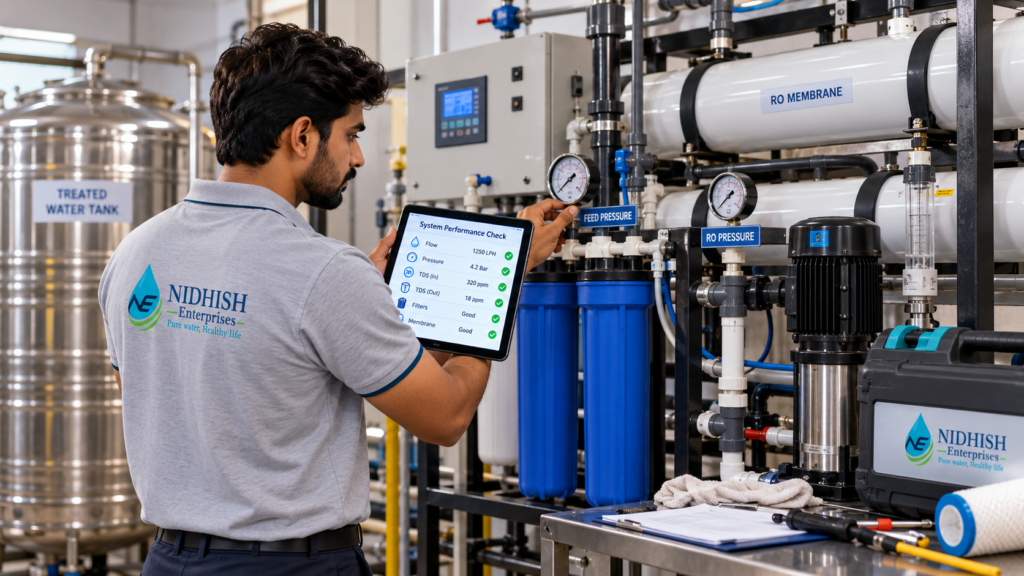
Commercial Water Purifier Service by a Nidhish Enterprises technician checking pressure, TDS, filters and membrane performance
Nidish-Enterprises, Tesphero-blogs

5 Signs Your Commercial Water Purifier Needs Professional Servicing

A Commercial Water Purifier Service should not begin only after the system completely stops working. In offices, restaurants, schools, factories, hospitals, hotels, and other commercial spaces, a purifier may show warning signs before a major performance problem develops. Slower water flow, unusual taste or odour, changing TDS readings, strange noises, and visible leakage can all indicate that the system needs attention. However, these symptoms do not always point to the same fault. A clogged filter, membrane issue, pressure problem, pump fault, loose fitting, or another component may be responsible. Therefore, guessing and replacing random parts is rarely the best approach. A trained technician can inspect the complete system, identify the likely cause, and recommend service based on the actual condition of the equipment. This guide explains five common signs that may indicate your commercial water purifier needs professional servicing and what businesses should do when they notice them. Table of Contents Why Commercial Water Purifier Service Matters A commercial purifier can operate for many hours every day. For example, an office may need drinking water throughout working hours. Meanwhile, a restaurant may depend on treated water for drinking, food preparation, beverages, or equipment, depending on its setup. As usage increases, filters collect material from incoming water. RO membranes may also experience fouling or scaling, while pumps, valves, fittings, storage tanks, and other components can develop performance issues over time. Pent air’s commercial RO guidance notes that membrane performance can be affected by contaminants, equipment size, and system pressure. It also explains that sediment Pre-filters help protect the membrane from suspended particles. Pent air For this reason, maintenance should be based on the purifier design, source-water quality, usage, manufacturer guidance, operating conditions, and actual system performance. If you want a broader maintenance overview, internally link here to “Why Regular RO Maintenance Matters for Water Quality and System Performance.” Now, let us look at five warning signs businesses should not ignore. 1. Water Flow or Output Has Become Noticeably Slower One of the easiest changes to notice is reduced water production. Perhaps the purifier previously filled its storage tank comfortably during normal operations. Now, it takes much longer. Alternatively, employees may notice that water flow becomes weak during busy periods. Do not immediately assume that the RO membrane has failed. Several factors can affect output. These may include: Pent air’s commercial EZ-RO troubleshooting guidance identifies clogged Pre-filters, fouled membranes, low feed-water pressure, blocked supply, and demand exceeding system capacity among possible causes of reduced water availability or production. Pent air Flow and Filtration Solutions Why Reduced Flow Matters A small drop in production can become a bigger operational problem when demand is high. Suppose an office uses most of its stored treated water during lunch hours. If the purifier cannot replenish the tank quickly enough, employees may experience a shortage later. Similarly, restaurants and other high-usage businesses can face disruption if treated-water production no longer matches normal demand. What Should You Do? First, compare current output with normal system performance. Also check whether the incoming water supply or pressure has changed. If the reduction continues, arrange a professional inspection. A technician can examine filters, membrane performance, pressure, pumps, valves, and other relevant components instead of replacing parts without diagnosis. Pent air also notes that commercial filtration systems have minimum pressure requirements and that low water pressure can affect system performance. Pent air Therefore, reduced flow deserves investigation rather than guesswork. 2. Water Taste, Smell, or Appearance Has Changed People often notice changes in water before they notice a mechanical problem. Perhaps the treated water develops an unusual taste. Maybe there is a new odour. In some cases, its appearance may also seem different. These changes should not automatically be blamed on one particular filter or component. Instead, they should prompt a proper check of the purifier and, where appropriate, the water itself. Why Can Taste or Odour Change? Possible reasons depend on the system and source water. For example, filters may need attention. The membrane may require evaluation. Storage and sanitation conditions can also matter. Additionally, the incoming water itself may have changed. Pent air’s RO troubleshooting guidance states that a gradual return of noticeable taste or odour can indicate that filter cartridges and/or the RO membrane need replacement. Pent air However, businesses should avoid using taste alone as a water-quality test. Water can look, smell, or taste normal while still requiring appropriate testing for the intended use. Do Not Simply Ignore the Change If employees or customers repeatedly report a difference, record when the issue started. Then consider: Has the source water changed? When was the purifier last serviced? Have filters recently been replaced? Has the system remained unused for an extended period? Does the issue affect every outlet connected to the purifier? A technician can use this information during diagnosis. Depending on the application and concern, appropriate water testing may also be advisable. 3. TDS Readings Are Changing Unexpectedly Many commercial RO users regularly check Total Dissolved Solids, or TDS. A TDS meter can provide useful information about dissolved ionic content and help operators observe changes between feed and treated water. However, TDS should be interpreted correctly. A single TDS number does not provide a complete assessment of drinking-water quality. Watch for Changes From the Normal Pattern Suppose your system usually produces treated water within a relatively stable operating range under similar conditions. Then the reading begins changing significantly. That change may justify further investigation. Possible causes can include membrane performance issues, flow-control problems, operating conditions, measurement errors, or other system-specific factors. Pent air’s troubleshooting guidance associates high product-water TDS with possible membrane or flow-control issues and recommends checking system components rather than relying on the reading alone. Pent air Compare Feed and Treated Water A technician may evaluate more than the final TDS number. For an RO system, examining feed-water and permeate readings together can provide more useful performance information. Still, proper interpretation depends on the system. Therefore, avoid applying one universal “ideal TDS” value to every commercial

Tesphero Ecom team scanning, verifying and securely packing customer orders in an e-commerce fulfilment studio
Ecom, Tesphero-blogs

E-commerce Customer Experience: 10 Proven Ways to Improve Orders

E-commerce Customer Experience does not end when a shopper clicks the “Buy Now” button. What happens after the purchase can be just as important. Accurate picking, secure packaging, timely dispatch, clear tracking, and a smooth delivery all shape how customers remember an online brand. A strong product listing may convince someone to place their first order. However, the package that arrives at their door becomes a physical representation of the brand. If the correct product arrives safely and on time, the buying experience feels complete. On the other hand, damaged packaging, incorrect products, missing items, or unclear delivery updates can create frustration even when the product itself is good. That is why packaging and order fulfilment should not be treated as simple back-end activities. Shopify defines order fulfilment as the process covering the journey from receiving an order through picking, packing, shipping, and delivery; returns can also form part of the process. Shopify For growing e-commerce businesses, the goal is straightforward: make the post-purchase experience as reliable as the buying experience. Table of Contents Why Packaging and Fulfilment Matter to the E-commerce Customer Experience Think about the customer’s journey. First, they discover a product. Next, they evaluate images, descriptions, reviews, price, and other details. Then they place the order. At that moment, control largely moves from the customer to the seller and the logistics process. The customer begins waiting. Questions naturally follow: Has my order been confirmed? When will it ship? Will it arrive on time? Will the package be damaged? Is the correct product inside? The fulfilment process provides the answers. Therefore, a seller should think beyond simply “sending the parcel.” The real objective is to complete the promise created on the product page. Our guide “From Product Launch to Repeat Customers: Building a Better E-commerce Customer Journey” explains this broader journey in detail. Packaging and fulfilment sit at an especially important stage because they connect the digital shopping experience with the physical product. 1. Packaging Creates a Physical Brand Experience Until delivery, most customer interactions with an e-commerce business happen through screens. They see your listing, product images, advertising, website, marketplace store, emails, and notifications digitally. Then the parcel arrives. For many online businesses, packaging becomes one of the first physical interactions between the customer and the brand. That makes presentation important. However, good packaging does not necessarily mean expensive packaging. Start With the Basics A package should first protect the product. After that, sellers can think about presentation and branding. Depending on the product, useful packaging may involve: Amazon India also notes that packaging plays an important role in making a good first impression while helping products reach customers in good condition. https://sell.amazon.in Therefore, function should come before decoration. A beautiful box cannot compensate for a broken product inside it. 2. Product Protection Should Be the First Priority E-commerce orders can move through several handling points before reaching customers. Boxes may be stacked, moved, transported, sorted, and handled during the journey. As a result, packaging should match the characteristics of the product. Fragile glassware needs different protection from clothing. Likewise, electronics, cosmetics, books, food products, jewelry, and large household items may require different packing approaches. Avoid One Packaging Method for Every Product A growing seller may find it convenient to use the same box and cushioning for everything. However, that can create problems. A small product inside an oversized box may move unnecessarily during transit. In addition, excessive packaging can increase material usage and potentially affect shipping costs. On the other hand, packaging that is too small or weak may fail to provide adequate protection. Shopify notes that carriers commonly consider package size and weight when determining shipping costs, making appropriate package dimensions operationally important. Shopify Help Center Therefore, sellers should match packaging to product size, weight, fragility, and shipping requirements. Test Packaging Before Scaling Do not wait for customer complaints to discover weaknesses. Instead, test common packaging combinations. Ask practical questions: Can the product move inside the box? Is cushioning sufficient? Can the outer packaging handle normal transit? Does the seal remain secure? Could moisture affect the item? Is the shipping label positioned clearly? Simple checks can identify problems before order volume increases. 3. Good Packaging Can Support Brand Recognition Protection comes first, but packaging can also communicate brand identity. Imagine ordering from two unfamiliar online sellers. The first parcel arrives in a damaged, oversized box with the product loosely placed inside. The second arrives securely packed with a clean presentation, a simple branded sticker, and a clear thank-you card. Even if both products are identical, the overall experience may feel different. Branding Does Not Need to Be Excessive Smaller sellers do not necessarily need premium custom boxes. Instead, they can use simple elements such as: These details can make the package feel intentional. However, avoid adding unnecessary material purely for appearance. Good packaging should balance protection, presentation, cost, and practicality. For sellers moving beyond marketplace-only selling, this connects naturally with our guide “From Seller to Brand: The Shift Every Growing Business Eventually Needs.” Your packaging can support that shift because it gives customers another opportunity to recognize the business behind the product. 4. Accurate Order Picking Is Essential Great packaging cannot fix an incorrect order. If a customer orders a blue medium-size shirt and receives a black large-size shirt, the fulfilment process has failed. Similarly, missing accessories, incorrect quantities, wrong variants, or incomplete bundles can quickly damage the experience. Therefore, picking accuracy deserves attention. Errors Become More Likely as Order Volume Grows When a business processes a few orders each day, employees may manage them manually. As volume grows, complexity increases. You may have: At that stage, memory is no longer a reliable inventory system. Clear SKUs, organized storage, accurate inventory records, bar code-based workflows where appropriate, and order verification can help reduce avoidable mistakes. Shopify also highlights bar code scanning as one way businesses can streamline picking and packing as fulfilment volume becomes more complex. Shopify Help Center 5. Inventory Accuracy Supports Better

Tesphero Infra representative helping a property buyer evaluate property resale value based on location, connectivity, condition, documents and demand
Infra, Tesphero-blogs

Property Resale Value: 10 Essential Factors Smart Buyers Should Know

Property Resale Value is an important factor to consider before buying a home, plot, or investment property. A property may look attractive today, but buyers should also think about how easily it could attract future buyers and what factors may influence its market value over time. No single formula guarantees a property’s future resale price. Location, connectivity, infrastructure, property condition, legal clarity, demand, supply, and the surrounding neighbourhood can all influence resale prospects. This is especially important in a developing city like Indore. Infrastructure and connectivity can evolve, while residential and commercial activity can expand into new areas. The Indore Development Authority (IDA), for example, describes its role as planning and implementing residential, commercial, public-sector, transportation, and infrastructure development in the city. Indore Development Authority Therefore, buyers should evaluate a property not only for today’s needs but also for factors that may matter when they eventually decide to sell. Table of Contents What Does Property Resale Value Mean? Property Resale Value refers to the price a property may command when its owner sells it in the secondary market. Suppose you purchase an apartment for ₹60 lakh. After several years, you decide to sell it. The price buyers are willing to offer at that time will depend on the property’s characteristics and the market conditions then prevailing. However, resale value should not be confused with guaranteed appreciation. A property purchased for ₹60 lakh does not automatically become worth ₹80 lakh or ₹1 crore after a certain number of years. Real estate markets can move differently across cities, neighborhoods, property types, and time periods. In addition, asking price and actual transaction price can differ. For that reason, buyers should focus on resale potential rather than trying to predict an exact future price. 1. Location Can Strongly Influence Property Resale Value Location is usually one of the first things future buyers evaluate. Two similar apartments can attract different levels of buyer interest simply because they are located in different neighborhoods. A useful location often provides reasonable access to everyday requirements such as: However, a good location does not always mean the center of the city. An emerging neighbourhood can also become attractive when connectivity, infrastructure, housing demand, and everyday services develop around it. Evaluate the Micro-Location Do not evaluate only the broad locality name. Visit the actual street and surrounding area. For example, one property may sit on a well-connected road, while another property in the same locality may have narrow access or difficult traffic conditions. Likewise, noise, drainage, parking pressure, nearby land use, street condition, and surrounding development can differ within a few kilometers. If you want to evaluate this in greater detail, internally link to “What Makes a Property Location Valuable? 7 Factors Buyers Should Consider.” That article complements resale analysis because location quality and future buyer demand are closely connected. 2. Connectivity and Accessibility Matter Future buyers usually want a property that fits comfortably into daily life. Therefore, accessibility can influence demand. Look at road connectivity and practical travel time rather than distance alone. A location may appear close to an employment area on a map, but congestion or poor road access can make the journey inconvenient. Meanwhile, a slightly farther property with better roads may offer easier travel. Consider access to: In Indore, buyers should also review planned infrastructure carefully rather than relying only on sales claims. IDA states that its planning and implementation work considers transportation facilities along with water supply, sewage lines, and electricity infrastructure. Indore Development Authority Existing Connectivity vs Proposed Connectivity This distinction matters. An operational road provides a benefit today. A proposed road represents a possible future change whose timeline and final implementation may vary. Therefore, verify major infrastructure claims through relevant government or development-authority sources. Do not pay a large premium only because someone says a metro, flyover, road, commercial hub, or another major project “will definitely come here.” 3. Infrastructure and Future Development Can Change an Area Real estate value does not depend only on the building. The surrounding area matters too. Road improvements, public facilities, commercial activity, transportation links, and organized residential development can affect how convenient an area becomes. For example, IDA currently lists multiple infrastructure and development works in Indore, including road and related projects. Its website also provides information about town and country planning schemes. Indore Development Authority Still, buyers should distinguish official information from speculation. Look at Development From Both Sides New infrastructure may improve accessibility and convenience. However, every nearby development does not automatically increase residential value. Consider what the project actually does. A useful road connection may improve access. On the other hand, certain high-traffic or incompatible neighboring uses may affect noise, congestion, or residential comfort. Therefore, evaluate the effect on the specific property instead of assuming that all development is positive. 4. Property Condition Can Affect Buyer Interest Imagine two apartments in the same building. They have similar floor areas and layouts. However, one has severe seepage, damaged flooring, poorly maintained bathrooms, and old electrical fittings. The other has received reasonable maintenance. Which one will be easier to present to a future buyer? Condition can influence both buyer interest and negotiation. Check the Property Carefully Before purchasing a resale home, inspect: Cosmetic improvements can make a home more presentable. However, they do not necessarily solve deeper structural or building-maintenance problems. Building Condition Matters Too An excellent apartment inside a poorly maintained building can still face resale challenges. Therefore, inspect common areas as well. Check lifts, staircases, corridors, parking areas, security systems, landscaping, water arrangements, waste management, and general upkeep. Future buyers will notice them too. 5. Property Age Matters, but It Is Not the Only Factor Older properties are not automatically poor resale options. Some older developments may have useful locations, established neighborhoods, spacious layouts, or strong connectivity. At the same time, age can introduce additional considerations. Older buildings may require more maintenance. Common facilities can also need repairs or upgrades. Therefore, buyers should consider age together with maintenance and construction condition. A

Customer comparing health insurance portability options with a Tesphero Finserv advisor before switching insurers
Finserv, Tesphero-blogs

Health Insurance Portability: 7 Powerful Reasons to Switch

Health Insurance Portability allows policyholders in India to move their health insurance policy from one insurer to another while carrying forward specified continuity credits. This can be useful when your existing policy no longer fits your needs, but switching should involve more than simply comparing premiums. A lower premium may look attractive. However, hospital network, room-rent conditions, co-payments, exclusions, waiting periods, claim processes, sub-limits, and policy features can have a much bigger impact when you actually need medical care. The good news is that changing insurers does not necessarily mean losing all the continuity you have built under your existing policy. IRDAI defines portability as the facility to transfer credits gained for pre-existing diseases and specific waiting periods from one insurer to another. Current IRDAI guidance allows portability for individual, family floater, and group health insurance policies at renewal. Still, portability is not an automatic upgrade. Before making the switch, you should understand what transfers, what may change, and whether the new policy genuinely offers a better fit. Table of Contents What Is Health Insurance Portability? Health insurance portability gives an eligible policyholder the option to move from an existing insurer to another insurer at renewal while carrying forward specified continuity credits. In simple terms, you are not necessarily starting from zero merely because the insurer changes. Under current IRDAI guidance, portability covers individual, family floater, and group health insurance policies at renewal. The regulator describes portability as transferring credits gained for pre-existing diseases and specific waiting periods from the existing insurer to the acquiring insurer. Portability and Migration Are Different These terms can sound similar, but IRDAI distinguishes between them. Portability generally refers to transferring eligible credits when moving from one insurer to another. Migration, on the other hand, refers to transferring eligible credits from one health insurance policy to another policy with the same insurer. Understanding this distinction helps when you speak with an insurer or insurance advisor about changing your cover. 1. What Benefits Can You Carry Forward? One of the main reasons people hesitate to change health insurers is the fear of losing the benefits they have built over several years. Portability addresses part of that concern. For indemnity-based health insurance policies, IRDAI states that eligible portability or migration credits can include credits related to the sum insured, No Claim Bonus, specific waiting periods, waiting period for pre-existing diseases, and the moratorium period. That makes continuity particularly important. Pre-Existing Disease Waiting Period Credit Suppose you have already completed part of the applicable waiting period for pre-existing diseases under your current policy. Eligible continuity credit can carry forward when you port, subject to the applicable rules and the terms of the new policy. Therefore, changing insurers does not automatically mean restarting every completed waiting period from day one. Specific Waiting Period Credit Health policies may have waiting periods for specified diseases or treatments. Portability can preserve eligible credit you have already earned toward those periods. Current IRDAI consumer guidance states that the maximum waiting period under a health insurance policy, including the waiting period for pre-existing diseases, shall not exceed 36 months. Moratorium Credit Continuity also matters for the moratorium period. According to current IRDAI guidance, after 60 continuous months of health insurance coverage, including portability and migration, a policy or claim generally cannot be contested on grounds of non-disclosure or misrepresentation except in cases of established fraud. Different treatment applies to an enhanced sum insured: the 60 months for the enhanced portion runs from the date of enhancement. This is one reason you should avoid unnecessary breaks in coverage. 2. When Should You Consider Health Insurance Portability? Changing insurers should solve a real problem or provide a meaningful improvement. Here are some situations in which reviewing portability may make sense. Your Current Coverage No Longer Matches Your Needs Healthcare needs can change over time. Perhaps you bought a basic policy several years ago. Since then, your family has grown, medical costs have increased, or you now want broader coverage. In such a case, compare your current policy with available alternatives. Look beyond the sum insured. Check the actual policy structure as well. Your Preferred Hospitals Are Not Conveniently Available Cashless treatment can become easier when your preferred hospitals participate in the insurer’s applicable network or cashless arrangement. Therefore, check hospital availability in the cities where you and your family are likely to seek treatment. For families in Indore, for example, reviewing access to relevant local hospitals may matter more than seeing a large nationwide number alone. Network arrangements can change. Always confirm current information directly with the insurer before making a decision. Your Policy Has Restrictive Sub-Limits or Conditions Some policies may include limits or conditions for particular expenses, procedures, room categories, or benefits. If those conditions no longer suit your requirements, you may want to explore other options. However, compare the complete wording before switching. A new policy may remove one restriction while introducing another. Your Premium Has Become Difficult to Manage Premium is a valid consideration. Still, price should not become the only reason to port. A cheaper policy with a higher co-payment, narrower benefits, restrictive room conditions, or unsuitable exclusions may not offer the value you expected. Instead, compare cost alongside coverage. 3. Poor Service Can Also Trigger a Portability Review Health insurance is not only a document you purchase once. Policy servicing matters throughout the relationship. You may interact with your insurer for endorsements, policy updates, authorization, claims, renewals, or grievances. If service problems continue, you may consider alternatives. Before switching, however, separate an isolated problem from a recurring pattern. One frustrating interaction does not automatically make another insurer a better choice. Look at the Complete Experience Consider factors such as: Also remember that claim outcomes depend on policy terms and the facts of each claim. Do not choose an insurer solely because someone online says that a company “always approves claims.” No insurer can guarantee every claim. 4. When Switching May Not Be the Right Move Portability gives you a

Tesphero Digi team reviewing consistent branding across a business website, social media and mobile platforms
Tesphero-blogs

Why Consistent Branding Matters Across Your Digital Presence

Consistent Branding helps people recognize, understand, and remember your business across different digital platforms. A customer may first discover your brand through Instagram, visit your website later, see a Google listing, and finally contact you through another channel. Each interaction contributes to the impression they form about your business. However, many businesses treat every digital platform separately. Their website uses one visual style. Social media posts follow another. The logo may appear differently across platforms, while messaging, colors, fonts, and tone keep changing. As a result, the business can feel disconnected even when its products or services are strong. Consistency does not mean making every post, page, or advertisement look identical. Instead, it means maintaining a recognizable brand identity while adapting content to each platform. When customers repeatedly see familiar visual and communication elements, they can connect those experiences with the same business. That is why branding should extend beyond a logo. Table of Contents What Does Consistent Branding Really Mean? Brand consistency means presenting your business with a clear and recognizable identity across customer touch points. That identity can include: For example, imagine that someone discovers a company through a professional Instagram advertisement. The person clicks the ad and reaches the website. However, the website uses completely different colors, outdated branding, and a different communication style. Even if both belong to the same company, the experience can feel disconnected. A consistent approach reduces that gap. Consistency Is Not Repetition Businesses sometimes misunderstand consistency as copying the same design everywhere. That is not necessary. An Instagram Reel, website service page, LinkedIn post, email campaign, and search advertisement serve different purposes. Therefore, their formats should change according to the platform. The underlying brand, however, should remain recognizable. Think of consistency as a common identity rather than an identical template. 1. Consistent Branding Helps Build Recognition People encounter a huge amount of digital content every day. Your business competes for attention with social posts, advertisements, videos, emails, websites, marketplace listings, and countless other messages. Therefore, recognition matters. When your colors, logo, visual language, and messaging remain familiar, customers may find it easier to connect new content with previous interactions. Consider a simple example. A potential customer sees one of your Instagram posts today. A few days later, they encounter a search ad from your business. Eventually, they visit your website. If each touch point feels connected, the customer can recognize that they are interacting with the same brand. Recognition Develops Over Multiple Interactions Not every customer converts during the first interaction. Some people research first. Others compare options, read reviews, visit websites, or follow a brand before making contact. For this reason, each interaction should reinforce the brand rather than restart the introduction. Our earlier guide, “How Social Media Marketing Can Help Businesses Build a Stronger Brand,” explains how social platforms can support brand visibility and customer relationships. Consistent presentation makes those efforts easier to connect with your wider digital presence. 2. Brand Consistency Can Support Customer Trust Trust develops through many signals. Professional communication, clear information, customer reviews, transparent policies, useful content, and a reliable website can all contribute. Brand consistency plays a supporting role as well. Suppose a customer sees a polished social media advertisement. After clicking it, they reach a website that looks unrelated to the ad. The sudden change may create uncertainty. They might wonder: “Is this the same company?” “Did I click the correct link?” “Why does this website look completely different?” Those questions create unnecessary friction. In contrast, familiar branding helps provide continuity from one digital interaction to another. Small Details Matter Consistency includes more than the main logo. Businesses should also pay attention to: Customers may not consciously analyze each detail. Still, the overall experience can influence how organized and professional the business appears. 3. Keep Your Visual Identity Consistent Visual identity often creates the first impression. A strong system usually starts with a few defined elements. Logo Use an approved version of your logo whenever possible. Avoid stretching it, changing its proportions, adding random effects, or placing it on backgrounds that make it difficult to read. In addition, decide how much clear space should appear around the logo. Brand Colors Choose a primary color palette and define the exact color values. Without clear guidelines, one designer may use dark blue while another uses bright blue. Over time, the brand starts to look inconsistent. Secondary colors can add flexibility. However, they should complement the main identity. Typography Select suitable fonts for headings, body text, graphics, and digital campaigns. You do not necessarily need the same font in every technical environment. Still, the overall typographic style should feel connected. Image Style Photography also influences brand identity. For instance, one business may use bright, natural lifestyle photography. Another might prefer clean product images or professional corporate environments. Constantly switching between unrelated visual styles can weaken the overall identity. Create Simple Brand Guidelines Small businesses do not need a 100-page brand manual. Even a basic guide can define: This document gives employees, designers, agencies, and freelancers a common reference. 4. Consistent Branding Needs a Clear Brand Voice Customers do not only see your brand. They also read it. Your website copy, social captions, advertisements, emails, WhatsApp messages, and customer-support communication all contribute to your brand voice. A business might choose a tone that feels: The right voice depends on the audience and business. Once you define it, keep the core style reasonably consistent. Adapt the Tone Without Losing the Brand Tone can change slightly according to context. A social media post may sound more conversational than a formal service proposal. Likewise, a customer-support response may require more empathy than a promotional advertisement. That flexibility is useful. However, the business should not sound like a completely different company on every channel. A clear brand voice helps customers become familiar with how your business communicates. 5. Your Website Should Anchor Your Digital Presence Social media platforms can introduce people to your business, but your website often provides deeper information.

Scroll to Top