tesphero.com

Author name: tesphero@gmail.com

Real estate consultant showing a developing residential plotted project to a couple in Indore
Infra, Tesphero-blogs

Why Buying a Plot in Indore’s Developing Areas Can Be a Smart Long-Term Investment

Real estate has always been considered one of the most preferred long-term investment options in India. While many buyers choose apartments or ready-to-move homes, an increasing number of investors are now exploring residential and commercial plots, especially in fast-growing cities like Indore. One of the biggest advantages of buying a plot is flexibility. You can build your dream home when you’re ready, develop the property for commercial use (subject to applicable approvals), or simply hold it as a long-term investment while the surrounding area grows. However, purchasing a plot isn’t just about finding land at a lower price. The real value of a plot depends on factors such as location, connectivity, surrounding infrastructure, legal clarity, and future development potential. As Indore continues to expand, several developing areas are attracting the attention of homebuyers and investors. Improved road networks, growing residential communities, commercial developments, and better civic infrastructure are gradually transforming many parts of the city. That said, every developing area doesn’t automatically become a successful investment destination. Smart buyers focus on verified information, practical planning, and long-term growth rather than short-term market excitement. In this guide, we’ll explain why buying a plot in Indore’s developing areas can be a smart long-term investment, what factors you should evaluate before purchasing, and how to make an informed real estate decision. 1. Why Is Indore Becoming a Preferred City for Real Estate Investment? Over the past several years, Indore has emerged as one of Central India’s fastest-growing cities. It is known for its expanding infrastructure, strong business environment, educational institutions, healthcare facilities, and improving quality of life. The city’s continuous urban development has encouraged residential and commercial expansion beyond traditionally established localities. As new roads, townships, business zones, and public facilities develop, many surrounding areas are gradually becoming attractive destinations for future property investment. For investors, this creates opportunities to explore locations that still have room for growth. Unlike fully developed neighbourhoods where property prices may already reflect existing demand, developing areas often provide buyers with the chance to invest before the locality becomes more established. However, successful investment isn’t about buying the cheapest plot available. Instead, buyers should understand why a particular area is growing, whether the infrastructure supports future development, and if there is genuine residential or commercial demand. 2. What Makes a Developing Area Worth Considering? The term developing area is frequently used in real estate, but what does it actually mean? A developing area is generally a location where infrastructure, residential projects, commercial activity, and public facilities are gradually improving. Instead of looking only at today’s condition, investors should evaluate whether the area has the potential to become more desirable over the coming years. Some important indicators include: When multiple development factors converge, they can make a locality more attractive to future residents and investors. 3. Location Still Matters More Than Price Many first-time buyers make the mistake of selecting a plot simply because it appears affordable. While price is certainly an important consideration, it should never be the only deciding factor. Imagine two plots with similar prices. One is located in an area with improving roads, nearby schools, hospitals, and residential communities. The other is situated in a location with limited connectivity and little visible development. Even if both plots cost almost the same today, their long-term usability and market demand could be very different. This is why experienced investors often evaluate location first and price second. Before making a purchase, ask yourself: The answers to these questions can help you make a more informed investment decision. 4. Connectivity Is One of the Biggest Growth Drivers One of the strongest indicators of a promising real estate location is good connectivity. Whether you’re buying a plot to build your future home or as a long-term investment, convenient access to different parts of the city can significantly influence the property’s appeal. Look for locations that provide reasonable access to: Good connectivity not only improves daily convenience but can also contribute to increasing demand as more families and businesses consider the location for future development. However, buyers should evaluate current connectivity rather than relying only on future promises. 5. Infrastructure Development Can Shape Future Value Infrastructure plays a major role in determining how a locality grows over time. A plot surrounded by improving civic facilities often becomes more practical for future residential or commercial use. Some important infrastructure factors to evaluate include: Areas where infrastructure is steadily improving often become more attractive to homebuyers and businesses alike. At the same time, buyers should remember that every infrastructure project progresses at its own pace. Instead of making decisions based solely on advertisements, verify development through site visits and reliable information whenever possible. 6. Why Buying Early Can Be a Smart Long-Term Investment One of the biggest advantages of investing in a developing area is the opportunity to enter the market before the location becomes fully established. As infrastructure improves and more residential and commercial projects are developed, the overall appeal of the area may increase over time. This often encourages more homebuyers, businesses, and investors to consider the location. However, buying early doesn’t simply mean purchasing the first affordable plot you find. Instead, it means identifying a location that shows real signs of sustainable growth. Before investing, ask yourself: A well-researched investment made today may offer better long-term potential than waiting until the area becomes fully developed. Patience is one of the most valuable qualities in real estate investing. 7. Plot vs Ready-to-Move Property: Which One Makes More Sense? Many buyers often compare plots with ready-to-move homes before making a purchase decision. The truth is that neither option is universally better. The right choice depends on your financial goals, lifestyle, and investment horizon. Buying a Plot Purchasing a plot offers flexibility that ready-built properties usually cannot. You can: For buyers planning several years Buying a Ready-to-Move Property A ready property may be suitable if you: However, ready properties generally offer limited customization compared to constructing your own home on a plot.

Financial advisor explaining working capital options to an MSME business owner
Finserv

CC vs OD for Business: Which Working Capital Facility Is Right for Your MSME?

Running a business requires more than a good product or service. Even when sales are growing, businesses often face a common challenge: managing day-to-day cash flow. A customer may place an order today but pay after 30 or 60 days. Meanwhile, the business still needs to pay suppliers, salaries, rent, electricity bills, transportation costs, and other operating expenses. This is where working capital becomes important. For many Micro, Small and Medium Enterprises (MSMEs), access to short-term funds can help manage temporary cash-flow gaps and keep regular operations running smoothly. Two commonly used working capital facilities are Cash Credit (CC) and Overdraft (OD). At first glance, they may appear similar because both can provide access to funds when a business needs additional liquidity. However, their structure, usage, security requirements, and suitability can differ depending on the business and the type of financial arrangement. So, the question is: CC vs OD—Which working capital facility is right for your MSME? The answer depends on your business model, cash flow cycle, funding requirements, security available, and how frequently you need access to short-term funds. In this guide, we’ll understand the difference between Cash Credit and Overdraft, how each facility generally works, and what MSMEs should consider before choosing one. Every financial decision—whether it’s choosing the right working capital facility for your business or understanding how insurance claims work—requires careful planning. If you’re also looking to understand the health insurance claim process, read our guide on Cashless vs Reimbursement Health Insurance Claims: What’s the Difference and Which One Is Better? 1. What Is Working Capital? Before comparing CC and OD, it is important to understand the purpose of working capital. Working capital is essentially the money a business uses to manage its day-to-day operational requirements. For example, a business may need funds for: The timing of business income and expenses is not always the same. For instance, imagine a manufacturing business receives a large order from a customer. The business needs to purchase raw materials and start production immediately. However, the customer may make the payment only after the finished goods are delivered. The business is profitable on paper, but it may still experience a temporary cash flow gap. Working capital facilities can help businesses manage such situations. MSMEs play a vital role in India’s economy, contributing significantly to employment and economic growth. Businesses looking for official information, schemes, and resources can visit the Ministry of Micro, Small and Medium Enterprises (MSME), Government of India. 2. What Is Cash Credit (CC)? Cash Credit, commonly known as CC, is a working capital facility generally designed to help businesses manage ongoing operational expenses and short-term funding requirements. Under a CC facility, a business is typically provided with a sanctioned limit based on factors such as its financial position, business activity, estimated working capital requirements, and other applicable lending criteria. The business can generally draw funds within the approved limit, subject to the terms and conditions of the facility. One of the key features of CC is that it is commonly associated with stock and receivables as security. For example, a business may have inventory worth a certain amount and outstanding payments expected from customers. Depending on the lender’s assessment and applicable terms, these assets may form part of the basis for determining the available working capital facility. The business can then use the facility to manage its operational cash flow. Example Suppose an MSME has a sanctioned CC limit of ₹20 lakh. The business may not need the entire ₹20 lakh every day. If it uses ₹8 lakh for purchasing inventory, the interest calculation is generally linked to the amount utilised, subject to the facility’s specific terms. As the business receives customer payments and repays part of the utilised amount, the available drawing capacity may change according to the applicable arrangement. This flexibility can be useful for businesses with regular inventory and receivables cycles. 3. What Is an Overdraft (OD)? An Overdraft, commonly known as OD, allows a customer or business to withdraw or use funds beyond the available balance in an account, up to an approved limit. The exact structure of an OD facility can vary depending on the lender and the type of facility. Unlike a traditional term loan, an OD facility is generally designed to provide flexibility in accessing short-term funds. A business may use the available limit when it faces a temporary cash flow requirement and repay the amount when funds come in. For example, suppose a business has an OD limit of ₹10 lakh. It may use ₹3 lakh to manage a temporary payment requirement and later repay the amount when it receives customer payments. The available limit can then become accessible again, subject to the terms of the facility. Depending on the type of OD, the facility may be secured against an asset or may be structured differently based on the borrower’s profile and lender requirements. 4. CC vs OD: What’s the Difference? Although both CC and OD can provide businesses with access to short-term funds, they are not necessarily the same. The biggest differences usually relate to purpose, structure, security, and how the facility is operated. Let’s look at the key differences. Purpose A CC facility is generally structured around a business’s regular working capital requirements, such as inventory and receivables. An OD facility may be more suitable for managing specific short-term liquidity gaps, depending on the facility structure and lender terms. Security CC facilities are commonly associated with working capital assets such as stock and receivables. OD facilities may be secured against assets such as property or other acceptable security, depending on the arrangement. However, the exact security requirements can vary from one lender and facility to another. Usage CC is often used by businesses with a regular operating cycle involving inventory, sales, and customer receivables. OD may be useful when a business needs flexible access to funds for short-term cash flow requirements. Limit The approved limit for either facility depends on factors such as the business’s financial

Digital marketing consultant reviewing website traffic and lead conversion strategy with a business owner
Digi, Tesphero-blogs

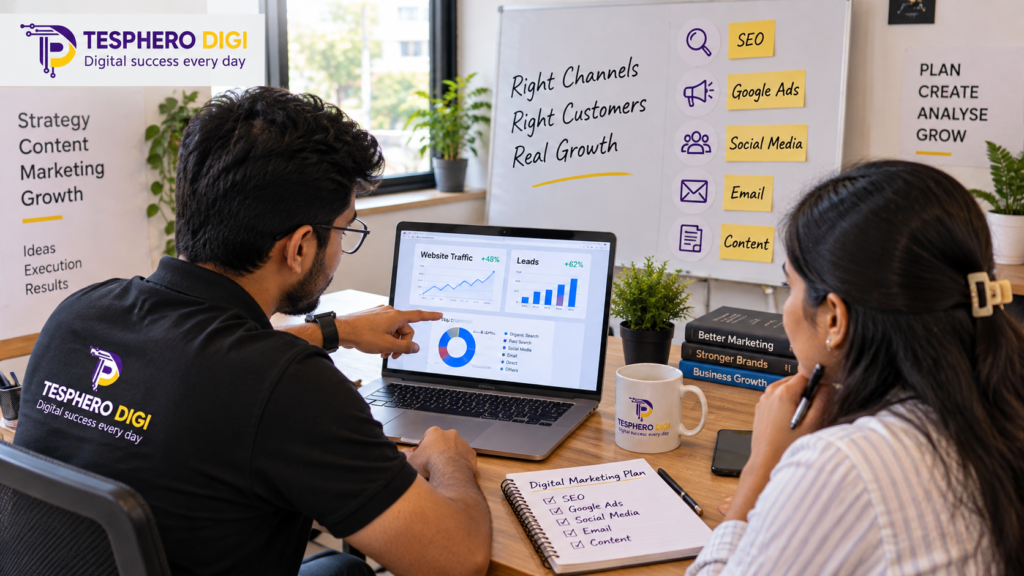
Why Your Digital Marketing Isn’t Generating Leads — 10 Common Reasons and How to Fix Them

You are running Google Ads. At the same time, are posting regularly on social media. Your website is live. With a strong content strategy, your business is visible online. But there is one problem: The leads aren’t coming in. Or perhaps you are getting enquiries, but most of them are irrelevant. Some people ask for prices and disappear. Others fill out a form but never respond again. This is one of the most frustrating situations for businesses investing in digital marketing. The common reaction is often: “Maybe we need to spend more on advertising.” But more advertising isn’t always the answer. Sometimes, the real problem lies somewhere else. Your business may be reaching the wrong audience. However, your website may not be convincing visitors to take action. Your landing page may be confusing. Your content may be attracting attention but not building trust. Or your marketing channels may be working separately instead of as one connected strategy. The truth is that traffic, engagement, leads, and customers are four different things. A successful digital marketing strategy needs to move people through each stage of the journey. Right Audience → Attention → Interest → Trust → Lead → Customer If there is a problem at any stage, your marketing performance can suffer. In this blog, we’ll look at 10 common reasons why digital marketing fails to generate quality leads and what businesses can do to fix them. If you’re still building your overall digital marketing strategy, you can also read our guide on Why Businesses Fail at Digital Marketing (And How to Build a Strategy That Actually Works). 1. You’re Targeting the Wrong Audience One of the most common reasons businesses don’t generate quality leads is simple: They are reaching the wrong people. You can have an excellent website, attractive advertisements, and great content—but if your marketing is reaching people who don’t need your product or service, conversions will remain low. For example, a premium interior design company targeting users who are only looking for low-cost services may receive plenty of enquiries—but very few qualified leads. The problem isn’t necessarily the marketing campaign. The problem is audience targeting. Before running a campaign, businesses should understand: A clear understanding of your target audience helps your marketing become more relevant. How to Fix It Create a clear customer profile before planning your campaigns. Instead of targeting everyone, focus on the people who are most likely to need, afford, and value your offering. Better targeting often improves lead quality without simply increasing the marketing budget. 2. Your Marketing Message Is Too Generic Imagine seeing an advertisement that says: “We provide the best services for your business.” It sounds professional, but it doesn’t tell the customer much. What problem does the business solve? Why should the customer care? What makes the service different? A strong marketing message should quickly communicate: Who you help + What problem you solve + Why your solution matters Customers don’t usually search for businesses just because they want to buy something. They are usually trying to solve a problem. Your marketing should speak to that problem. For example: Instead of: “Professional Digital Marketing Services.” A more specific message could be: “Struggling to Generate Quality Leads Online? Build a Digital Strategy Designed to Attract the Right Customers.” The second message is more focused on the customer’s problem. How to Fix It Review your website headlines, advertisements, social media content, and landing pages. Ask yourself: “If someone sees this for five seconds, will they understand what we do and why it matters to them?” If the answer is no, your messaging needs improvement. 3. You’re Getting Traffic, But Your Website Isn’t Converting Getting visitors to your website is only the first step. The next question is: What happens after they arrive? A website can receive thousands of visitors and still generate very few leads. This can happen when: Think of your website as a salesperson. If a potential customer walks in and doesn’t understand what you offer, can’t find the information they need, and doesn’t know how to contact you, they may simply leave. How to Fix It Review your website from the customer’s perspective. Make sure visitors can quickly understand: Your website should make the next step obvious. That could be: Call Now | Request a Quote | Book a Consultation | Send an Enquiry The easier you make the next step, the fewer opportunities you lose. 4. Your Landing Page Is Not Doing Its Job If you’re running paid advertising, your landing page plays a critical role. A customer clicks your advertisement because something caught their attention. But if the landing page doesn’t match what the advertisement promised, the customer may leave. A good landing page should be: For example, if an advertisement promotes a specific service, sending users to a generic homepage may create unnecessary confusion. The customer should ideally land on a page that continues the same message they saw in the advertisement. How to Fix It Create dedicated landing pages for important campaigns. Keep the message consistent from: Advertisement → Landing Page → Enquiry Form → Follow-Up This creates a smoother customer journey and can improve the chances of generating qualified leads. 5. You’re Creating Content, But It Isn’t Helping the Customer Posting regularly doesn’t automatically mean your content strategy is working. Some businesses post every day but still struggle to generate enquiries. Why? Because the content is often focused on the business rather than the customer. For example: “We are the leading digital marketing company.” “Our team provides the best services.” “We have years of experience.” These statements may be true, but they don’t always answer the customer’s biggest question: “How can you help me?” Effective content should educate, solve problems, build trust, or help customers make decisions. It can include: How to Fix It Before creating a piece of content, ask: “What will the customer learn or gain from this?” When content consistently provides value, it can help build authority and trust before the customer

E-commerce business owner discussing sales performance and growth strategy with a professional consultant
Ecom, Tesphero-blogs

Why Most E-commerce Sellers Struggle to Grow — And What They’re Missing

Starting an e-commerce business has never been easier. A seller can create an online marketplace account, list products, run advertisements, and start receiving orders. While getting started may be relatively simple, consistently growing an e-commerce business is a completely different challenge. Many sellers experience a similar pattern. They launch their products with excitement. The first few orders come in. They invest in advertising and try different offers. But after some time, growth starts slowing down. Orders become inconsistent. Advertising costs increase. Competition becomes stronger. And the seller starts wondering: “Why is my business not growing even though I’m doing everything I can?” The answer is often not one single problem. In many cases, sellers are missing the bigger picture of e-commerce growth. Selling online is not just about putting a product on a marketplace and waiting for customers to buy it. Sustainable growth requires the right combination of product strategy, visibility, listing quality, pricing, customer trust, marketing, operations, and continuous improvement. If you’re building an online business from the ground up, you can also explore our guide on Building a Successful E-commerce Business: A Complete Guide to Sustainable Growth. 1. They Focus on Selling Products Instead of Building a Business One of the biggest mistakes sellers make is focusing only on individual sales. Their thinking becomes: “How can I get more orders today?” But sustainable e-commerce growth requires a broader question: “How can I build a business that consistently attracts, converts, and retains customers?” Getting one order is a transaction. Building a repeatable system that generates sales is a business. Successful sellers think beyond individual orders. They look at: When sellers focus only on daily orders, they may make short-term decisions that don’t support long-term growth. 2. They Choose Products Without Understanding the Market A product may be good, but that doesn’t automatically mean it will sell successfully online. Before launching a product, sellers should understand: Many sellers enter a category simply because they see other sellers making sales. But by the time they enter, the category may already be highly competitive. The problem isn’t always the product itself. Sometimes, the problem is a lack of market understanding and positioning. A strong e-commerce strategy begins before the product is listed. 3. They Underestimate the Importance of Product Listings A marketplace listing is often the first interaction between your product and a potential customer. Think of it as your digital salesperson. If the listing doesn’t communicate the product clearly, customers may simply move on to another option. A strong product listing should answer basic questions quickly: This is where many sellers lose potential customers. They may have a good product, but the title is unclear, the description is weak, or the images don’t explain the product properly. The result? The product may receive visibility, but customers don’t convert. Visibility brings attention. A strong listing turns that attention into sales. 4. They Treat Product Images as Decoration Product images are not just there to make a listing look attractive. They help customers understand what they are buying. In a physical store, customers can pick up a product, examine it, and compare it with alternatives. Online, images have to do much of that work. Good product images should help communicate: Depending on the product, lifestyle images, infographics, close-up shots, and usage demonstrations can help customers make better decisions. If customers cannot understand the product quickly, they may hesitate to buy—even if the product itself is excellent. 5. They Try to Compete Only on Price Price is important. But it should not be the only reason customers choose your product. When sellers constantly reduce prices to compete, they may increase orders but reduce profitability. Over time, this can create a difficult cycle: Lower Price → Lower Margin → Less Budget for Marketing → Slower Growth Instead of competing only on price, sellers should think about value. Value can come from: Customers don’t always choose the cheapest product. They often choose the option that feels like the best value for the money. 6. They Don’t Understand Who Their Customer Real One of the most overlooked factors in e-commerce growth is customer understanding. A seller may know what they are selling but still not know who is most likely to buy it. Understanding your customer means knowing: For example, two products in the same category may target completely different customers. One may appeal to budget-conscious buyers, while another may target customers looking for premium quality. The product, pricing, images, messaging, and advertising should all reflect the intended audience. When sellers try to sell to everyone, their communication often becomes too generic. A clearer customer profile can lead to better positioning and more relevant marketing. 7. They Expect Advertising to Fix Everything Advertising can help increase visibility. But ads cannot fix every problem. If a product has: then increasing the advertising budget may not solve the real issue. It may simply bring more people to a listing that isn’t ready to convert them. This is why sellers should look at the entire customer journey. Visibility → Click → Product Page → Trust → Purchase → Experience → Review → Repeat Purchase Advertising is only one part of this journey. Before increasing ad spending, sellers should ask: “If more customers see my product today, are they actually likely to buy it?” If the answer is no, the underlying problem needs attention first. 8. They Don’t Track the Right Numbers Many sellers look at only one metric: Sales. But sales alone don’t explain why the business is growing—or why it isn’t. Sellers should also pay attention to metrics such as: For example, if a product gets many views but very few orders, the issue may be related to pricing, listing quality, trust, or product-market fit. If the product gets very few views, the problem may be visibility or discoverability. Data helps sellers move from guessing to making informed decisions. 9. They Ignore Customer Reviews and Feedback Reviews are more than just ratings. They are direct feedback from the market. Customers

"Aqua Moor black RO water purifier with digital display in a modern kitchen."
Nidish-Enterprises, Tesphero-blogs

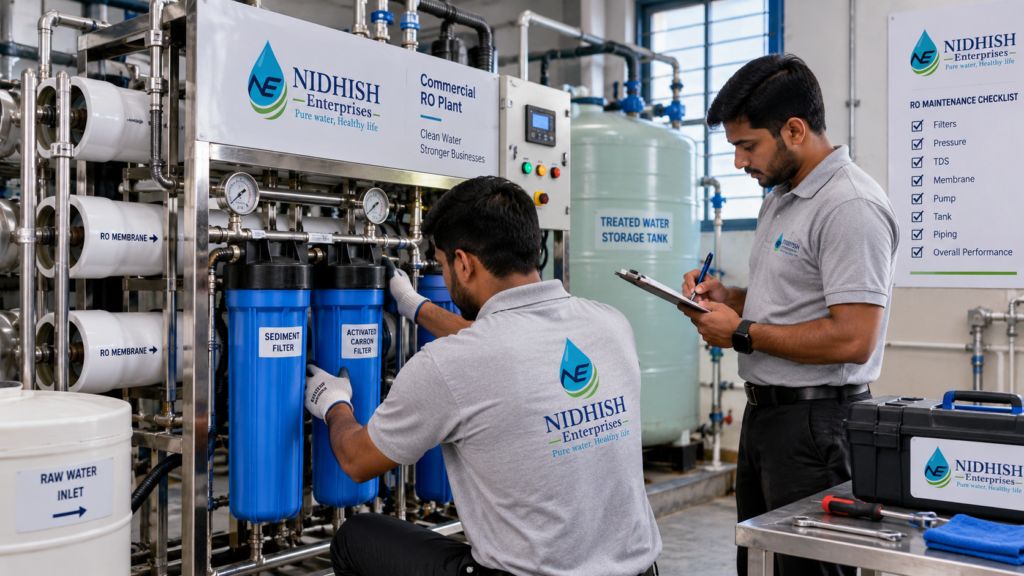
Best RO Water Purifier in Indore | Buying Guide

Choosing an RO water purifier may seem simple, but the right system depends on more than just the brand or price. Your water source, water quality, daily consumption, and intended use all play an important role in deciding which purification system is suitable for you. A purifier that works well for a small family may not be the right choice for an office, restaurant, hotel, or industrial facility. Similarly, homes using different water sources may have different purification requirements. This is particularly important in a city like Indore, where water quality and sources can vary from one location to another. So, instead of asking, “Which is the best RO purifier?”, a better question is: “Which water purification system is right for my specific needs?” Let’s look at the key factors you should consider before making a decision. 📑 Table of Contents Start by Understanding Your Water Source The first step is to identify where your water comes from. Your property may receive: Different water sources can have different characteristics. Groundwater, for example, may contain higher levels of dissolved minerals and salts, while other sources may have different purification requirements. This is why choosing a purifier simply because it works well for someone else may not always be the right approach. Your water source should be one of the first things you consider when selecting a purification system. Check Your Water Quality Many people focus only on TDS (Total Dissolved Solids) when choosing an RO purifier. While TDS is an important parameter, it doesn’t provide a complete picture of water quality. Depending on the source, you may also need to consider: A proper water quality assessment can help you understand what kind of purification technology your property actually requires. TDS is important, but it is not the whole story. Choose the Right Type of RO System A major mistake people make is choosing a purifier based only on its brand, appearance, or number of purification stages. Your actual requirement should come first. For a home, you may need a domestic RO purifier designed for regular household consumption. For an office, restaurant, hotel, school, or commercial facility, the water demand can be significantly higher. In such cases, a commercial RO system may be more appropriate. For manufacturing units and industries, the requirements can be much more complex, requiring specialised industrial water purification solutions. The right system depends on factors such as: Intended application Daily water consumption Number of people using the water Water quality Required purification capacity Available space Domestic RO Systems Designed for household drinking and cooking requirements. When choosing one, consider: Commercial RO Systems Commercial establishments often need significantly more purified water than a household. These systems may be suitable for: Capacity, operating hours, water demand, and water quality should be considered before selecting a system. Industrial RO Solutions Industrial facilities may require specialised water purification for manufacturing, production, equipment, boilers, or other processes. The right system depends on the incoming water quality, required output, desired water quality, and specific industrial application. If you want to understand the different water purification solutions available for homes, businesses, and industries, you can also read our guide on Complete Water Purification Solutions in Indore: A Guide to Domestic, Commercial & Industrial RO Systems. Consider Your Daily Water Consumption The right capacity depends on how much purified water you actually need. For homes, consider: For businesses, also consider: Choosing a system with insufficient capacity may create operational problems, while an unnecessarily large system may increase costs. The goal is to choose a system that matches your actual water demand. 5. Understand RO, UV, and UF Technologies When searching for a water purifier, you may come across technologies such as RO, UV, and UF. Many buyers assume that more technologies automatically mean better purification. However, the right combination depends on the quality of your water and your specific requirements. RO (Reverse Osmosis) RO uses a semi-permeable membrane to reduce dissolved salts and certain contaminants from water. It is commonly considered when water contains higher levels of dissolved solids or requires reduction of certain dissolved impurities. UV (Ultraviolet) UV technology uses ultraviolet light to help inactivate microorganisms present in water. UF (Ultrafiltration) UF uses a membrane to help remove certain suspended particles and microorganisms, depending on the system design and water quality. These technologies are not interchangeable. The right combination depends on your water quality and purification requirements. Choose the Right Storage and Capacity For domestic systems, storage capacity should match your family’s daily requirements. For commercial systems, both storage and purification output become important because water demand may vary throughout the day. Before choosing a system, consider: The right capacity can help ensure that the system meets your requirements without unnecessary additional costs. Don’t Ignore Maintenance and AMC Buying an RO system is not the end of the process. Filters and membranes may require periodic inspection, servicing, cleaning, or replacement depending on the system, water quality, and usage. Ignoring maintenance can affect: Before purchasing, ask about: A reliable service network is an important part of choosing a water purification system. Installation Quality Matters Even a good RO system may not perform as expected if it is not installed properly. Professional installation should consider: This becomes especially important for commercial and industrial systems, where installation requirements can be more complex. Consider the Long-Term Cost Don’t choose an RO purifier based only on its initial price. The overall cost may include: A cheaper system may not always be more economical if it requires frequent maintenance. Instead of asking: “Which purifier is the cheapest?” Ask: “Which system offers the right balance of performance, reliability, maintenance, and long-term value?” Think About Water Efficiency RO systems produce reject water during purification, and the amount can vary depending on the system design and incoming water quality. When selecting an RO system, ask about its water recovery and reject-water management. In homes, suitable reject water may sometimes be reused for non-drinking purposes, depending on its quality. For commercial and industrial facilities,

Real estate consultant discussing renting versus buying a property in Indore with a young Indian couple
Infra, Tesphero-blogs

Renting vs Buying a Property in Indore: Which Option Makes More Sense for You?

For many people in Indore, finding the right property is not just about choosing a location or comparing prices. One of the first questions is much simpler: Should you rent a property or buy one? There is no universal answer. For some people, renting offers flexibility and convenience. For others, buying a property can provide long-term stability and ownership. The right decision depends on your financial position, lifestyle, plans, and the type of property you need. The decision can also be different for someone looking for a home compared to a business owner searching for commercial space. With Indore continuing to attract professionals, families, students, entrepreneurs, and businesses, the city’s real estate market offers opportunities for both renters and property buyers. So, which option makes more sense for you? Let’s look at the key factors that can help you make a more informed decision. If you’re planning to buy a property in Indore, it’s also important to look beyond the price tag. Read our guide on Why Buying Property Based Only on Price Can Turn Into an Expensive Mistake in Indore to understand the factors that deserve your attention before making a purchase. Renting vs Buying: Understanding the Basic Difference Before deciding what is right for you, it’s important to understand what renting and buying actually mean from a financial and practical perspective. Renting a Property When you rent a property, you pay a regular amount to use the space without becoming its owner. For many people, renting offers: Renting can be particularly useful when your plans are uncertain or when you don’t want to make a long-term financial commitment immediately. However, rental payments do not create ownership of the property, and the terms of the tenancy may change over time depending on the agreement and applicable conditions. Buying a Property When you buy a property, you are making a long-term commitment toward ownership. Buying a property can provide: At the same time, property ownership comes with responsibilities. Buyers need to consider costs such as maintenance, property taxes, registration-related expenses, repairs, and financing costs where applicable. This means buying a property should be viewed as a long-term financial decision rather than simply a monthly EMI comparison. Consider How Long You Plan to Stay in Indore One of the most important questions to ask before choosing between renting and buying is: How long do I realistically plan to stay here? If you’re a young professional who may relocate because of your career, renting could provide the flexibility you need. Similarly, if you have recently moved to Indore and are still exploring different neighbourhoods, renting a property can give you time to understand the city before making a long-term purchase. On the other hand, if you are confident that you want to settle in Indore for many years, buying a property may offer greater stability and a stronger sense of ownership. Your expected timeline can make a significant difference to the decision. Evaluate Your Current Financial Position Buying a property usually requires a larger initial financial commitment than renting. Depending on the property and transaction, a buyer may need to plan for: Renting generally requires a smaller upfront commitment, although tenants may need to pay a security deposit and other applicable charges. Before deciding to buy, look at your complete financial position rather than focusing only on whether you can manage the monthly EMI. Consider your savings, regular expenses, emergency fund, existing financial commitments, and future goals. A property purchase should ideally fit into your broader financial plan without putting unnecessary pressure on your finances. Look Beyond the Monthly Rent or EMI It’s easy to compare a monthly rent with a monthly home loan EMI and assume that the lower number is automatically the better option. But the actual decision is more complicated. If you rent, you may have expenses related to: If you buy, your financial commitments may include: The right comparison is not simply “Rent vs EMI.” Instead, consider the overall cost of renting versus the complete cost of owning a property over the period you expect to use it. Think About Your Lifestyle and Future Plans Financial considerations are important, but your lifestyle also plays a major role in the rent-versus-buy decision. For example, a young professional who expects to change jobs or cities may value flexibility more than ownership. A family with children, on the other hand, may prefer the stability of owning a home close to schools, healthcare facilities, and other daily conveniences. Similarly, a business owner may want to rent a commercial space initially and consider buying only after the business becomes more established. Your current situation and plans should both be part of the decision. A Simple Question to Ask Yourself Before making a decision, ask: Am I looking for flexibility right now, or am I ready to commit to long-term ownership? Your answer can help you understand which direction makes more sense. Renting Offers Greater Flexibility One of the biggest advantages of renting is the freedom to adapt to changing circumstances. Life doesn’t always follow a fixed plan. Your job may change, your family may grow, or you may simply realise that another part of the city is better suited to your lifestyle. In such situations, renting can make it easier to move without dealing with the responsibilities involved in selling a property. Renting may be a practical option for: For example, if you’re new to Indore, renting a home in an area for a year or two can help you understand the neighbourhood, commute, connectivity, and daily conveniences before deciding whether you want to buy there. This flexibility can be especially valuable when your long-term plans are still evolving. Buying Can Offer Long-Term Stability While renting provides flexibility, buying a property can offer a different kind of value—stability and ownership. For families planning to settle in Indore for the long term, owning a home can provide a greater sense of permanence. You have more control over the property and, subject to applicable

The right loan begins with understanding your financial requirement and choosing an option that matches your actual needs.
Finserv, Tesphero-blogs

How to Choose the Right Loan for Your Financial Needs: A Practical Guide for Borrowers

/choose-right-loan-for-financial-needs Taking a loan is an important financial decision. Whether you need funds for a personal requirement, a new business, a home, or an important investment, the right loan can help you manage your financial goals more effectively. But choosing a loan should not be based only on the amount you can borrow or the interest rate advertised by a lender. The right loan depends on several factors, including your purpose, repayment capacity, income, existing financial commitments, loan tenure, and overall financial situation. A loan that works well for one borrower may not necessarily be the right choice for someone else.If you’re also planning your overall financial protection, you may find our guide on 10 Things You Must Check Before Buying a Health Insurance Policy in India helpful. This is why understanding your options before making a decision is important. In this guide, we’ll discuss how borrowers can evaluate different loan options, understand their financial requirements, and make a more informed borrowing decision. Why Choosing the Right Loan Matters A loan is not just about receiving money today. It also creates a financial commitment that may continue for months or years. Before choosing a loan, you should consider: Answering these questions can help you avoid borrowing more than necessary or selecting a loan that becomes difficult to manage later. The goal should not simply be to find a loan that gives you the highest amount. The goal should be to find a loan that fits your financial needs and repayment capacity. 1. Start by Understanding Why You Need the Loan The first step in choosing a loan is understanding its purpose. Different financial requirements may require different types of loans. For example: Personal Financial Needs If you need funds for a personal requirement, education, medical expenses, travel, or another planned expense, a personal loan may be one possible option depending on your eligibility and financial situation. Home Purchase If you’re planning to purchase a residential property, a home loan is generally structured specifically for property financing and typically comes with a longer repayment period. Business Requirements Businesses may require funds for working capital, expansion, equipment, inventory, or other operational needs. Depending on the requirement, a business loan or project finance solution may be considered. Property-Related Requirements If you are involved in real estate transactions or require financing against eligible property, specific loan options may be available based on the lender’s policies and your eligibility. Understanding the purpose of borrowing helps narrow down the options and makes the decision-making process more focused. 2. Decide How Much You Actually Need to Borrow One common mistake borrowers make is applying for the maximum loan amount available to them instead of calculating how much they actually need. A higher loan amount may seem attractive, but it also means higher repayment obligations. Before applying, create a simple estimate: Required Amount = Actual Financial Requirement + Necessary Additional Costs Try to avoid unnecessary borrowing. For example, if your requirement is ₹5 lakh, taking a loan of ₹8 lakh simply because you are eligible for it may increase your financial burden without providing any real benefit. Borrowing should be based on need, affordability, and repayment ability. 3. Understand Your Repayment Capacity Before taking any loan, look at your current financial position. Consider: Your monthly loan repayment should fit comfortably within your budget. A loan may appear affordable when you look only at the EMI, but you should also consider the total financial commitment over the entire loan tenure. A responsible borrowing decision is one where the repayment remains manageable even when unexpected expenses arise. 4. Compare Interest Rates Carefully Interest rate is one of the most important factors when comparing loans—but it should not be the only factor. Borrowers should understand whether the interest rate is: It’s also important to compare the overall cost of borrowing, not just the advertised interest rate. Two loans may have similar interest rates but different processing fees, documentation charges, insurance requirements, or other costs. Always look at the complete financial picture before making a decision. 5. Choose a Loan Tenure That Fits Your Budget Loan tenure affects both your EMI and the total amount you pay over time. Generally: Shorter tenure → Higher EMI → Lower total interest Longer tenure → Lower EMI → Higher total interest A shorter tenure may help reduce the overall interest cost, but the higher EMI may put pressure on your monthly budget. A longer tenure may make repayments more manageable, but the total cost of borrowing can increase. The right tenure balances monthly affordability with the overall cost of the loan. 💡 A Simple Rule to Remember Don’t choose a loan only because the EMI looks affordable. Always consider: Loan Amount + Interest + Fees + Tenure + Your Repayment Capacity Together, these factors give you a more realistic understanding of whether a loan is suitable for you. 6. Understand the Difference Between Secured and Unsecured Loans One of the important factors to consider when choosing a loan is whether it is secured or unsecured. Secured Loans A secured loan is generally backed by an asset or collateral. Depending on the type of loan, this could involve property or another eligible asset. Because the loan is secured against an asset, the terms and eligibility criteria may differ from unsecured borrowing. Examples can include: Unsecured Loans Unsecured loans do not typically require the borrower to provide an asset as collateral. However, eligibility may depend more heavily on factors such as income, credit profile, repayment history, and other financial criteria. Personal loans are a common example of unsecured borrowing. The right option depends on your financial requirements, eligibility, and ability to meet the repayment terms. 7. Check Your Loan Eligibility Before Applying Before applying for a loan, it’s important to understand whether you meet the eligibility requirements. Lenders may consider factors such as: Eligibility criteria can vary between lenders and loan products. Understanding your eligibility beforehand can help you approach suitable options and avoid unnecessary applications.

Successful digital marketing begins with clearly defined business goals—not just marketing activities.
Digi, Tesphero-blogs

How to Choose the Right Digital Marketing Services for Your Business: A Complete Beginner’s Guide

/choose-right-digital-marketing-services Every business wants to grow, attract more customers, and build a stronger brand. Digital marketing can certainly help achieve these goals—but only when the right strategy is in place. One of the biggest mistakes businesses make is investing in digital marketing services without understanding which ones actually fit their needs. Some start with paid advertising before having a professional website. Others focus only on social media while completely ignoring search visibility or content. As a result, they spend time and money without seeing meaningful results. In our previous article, “Why Businesses Fail at Digital Marketing (And How to Build a Strategy That Actually Works),“ we discussed the importance of having a clear marketing strategy. In this guide, we’ll take the next step and explain how to choose the right digital marketing services based on your business goals, target audience, and stage of growth. Why Choosing the Right Services Matters Digital marketing isn’t a single service—it’s a combination of strategies that work together. Every business has different objectives. A newly launched company needs something different from an established business looking to expand into new markets. Choosing services without understanding these differences often leads to wasted budgets and missed opportunities. Instead of asking, “Which digital marketing service is the best?“ The better question is, “Which digital marketing services are right for my business right now?” That simple change in perspective helps businesses make smarter marketing decisions. Start with Your Business Goals Before selecting any marketing service, define what you want to achieve. Your goals might include: When your marketing services align with your goals, every activity becomes more focused and measurable. Build a Strong Foundation with a Professional Website A professional website is often the first impression customers have of your business. Without a well-designed, informative, and user-friendly website, many marketing efforts become less effective. A good business website should: Think of your website as your digital headquarters. Every marketing effort eventually brings potential customers there. Improve Visibility Through Search Engine Optimisation (SEO) Even the best website has limited value if potential customers cannot find it. Search Engine Optimisation (SEO) improves your website’s visibility in search results, making it easier for people to discover your business when they’re looking for products or services like yours. A well-planned SEO strategy focuses on: Unlike short-term campaigns, SEO is an investment that can continue delivering results for months and even years. Use Social Media to Build Relationships, Not Just Visibility Social media is more than a place to post updates. It allows businesses to: Instead of focusing solely on posting frequently, businesses should create content that educates, informs, and builds trust. Quality conversations create stronger business relationships than simply increasing the number of posts.\ Why an Integrated Approach Works Better Many businesses expect one marketing service to deliver every result. In reality, the best outcomes come when different services work together. For example: Together, these services create a marketing ecosystem that supports sustainable business growth rather than isolated short-term results. Create Valuable Content That Builds Trust Digital marketing isn’t only about promoting products or services. It’s also about helping potential customers make informed decisions. Content marketing allows businesses to educate their audience through: When businesses consistently share valuable information, they position themselves as trusted industry experts rather than just service providers. Customers are far more likely to choose a business they trust. Use Performance Marketing to Reach the Right Audience Performance marketing can help businesses generate enquiries, increase visibility, and reach specific customer segments more efficiently. However, advertising should support an existing marketing strategy—not replace it. Before investing in paid campaigns, ensure that: When these elements are in place, performance marketing becomes much more effective and delivers better returns. Build a Brand That Customers Remember People don’t just buy products or services—they buy from businesses they recognise and trust. A strong brand creates consistency across every customer touchpoint, including: Consistent branding helps businesses appear more professional and makes them easier for customers to remember. Don’t Ignore Email Marketing While newer marketing channels receive a lot of attention, email marketing remains one of the most effective ways to stay connected with existing customers. Businesses can use email to: The key is to provide useful information rather than sending constant promotional messages. Choose Services Based on Your Current Stage of Growth Every business doesn’t need every marketing service from day one. Your priorities should depend on where your business is today. If You’re Just Starting Focus on: If Your Business Is Growing Add: If You’re Looking to Scale Consider: Choosing services in the right sequence helps businesses invest more wisely and achieve sustainable growth. 📋 Digital Marketing Services Checklist Before investing in digital marketing, ask yourself: Question Why It Matters Have I clearly defined my business goals? Creates a focused strategy Do I have a professional website? Builds credibility Can customers easily find my business? Improves visibility Am I creating valuable content? Builds trust Is my branding consistent? Strengthens recognition Am I using the right marketing channels? Improves efficiency Do I measure marketing performance? Supports better decisions Am I investing based on business priorities? Maximises return on investment ⚠️ Common Mistakes Businesses Make Many businesses struggle with digital marketing because they rush into activities without a structured plan. Some common mistakes include: Digital marketing works best when every activity supports a clear business objective. Why the Right Combination of Services Matters No single marketing service can deliver every result. A successful digital marketing strategy combines the right mix of services based on your goals, audience, and stage of business growth. When your website, SEO, content, branding, social media, and performance marketing work together, they create a stronger customer experience and support sustainable business growth. Work with the Right Digital Marketing Partner Choosing the right digital marketing services is important—but implementing them effectively is what drives real business growth. As businesses grow, managing websites, SEO, content, social media, advertising, and performance analysis becomes more complex. Having the right digital marketing partner ensures that every activity supports

Strong supplier relationships help businesses maintain consistent product quality and timely deliveries.
Ecom, Tesphero-blogs

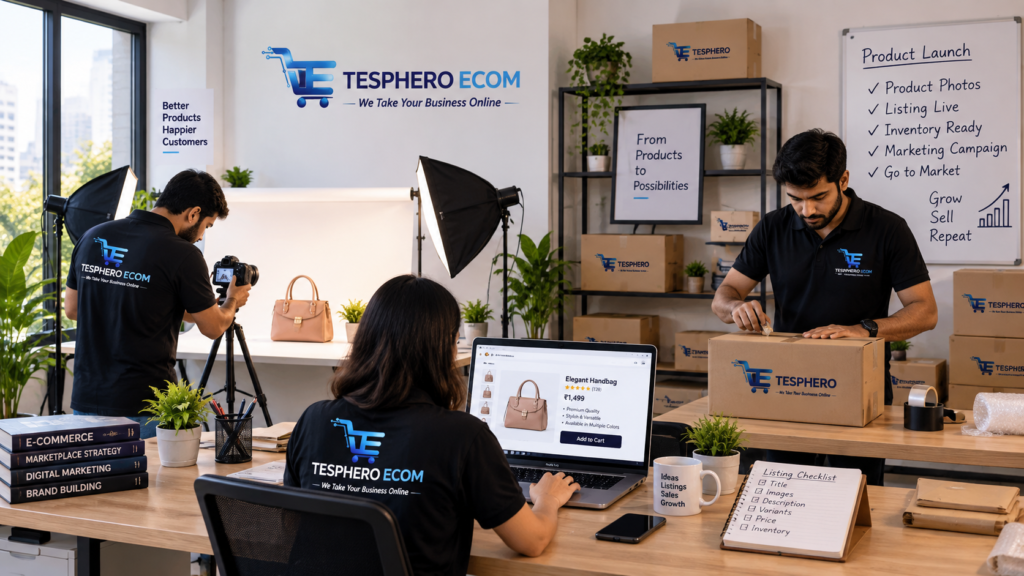
How to Choose the Right Products for Your E-commerce Business: A Complete Beginner’s Guide

choose-right-products-for-ecommerce-business Building a Successful E-commerce Business | Tesphero Ecom Every successful e-commerce business starts with one important decision—choosing the right products to sell. Many entrepreneurs believe that simply selecting products with high demand is enough to build a profitable business. In reality, product selection involves much more than following trends. The right product should match your target customers’ needs, offer healthy profit margins, and have long-term growth potential. Whether you’re starting your first e-commerce venture or planning to expand your existing product range, choosing the right products can significantly influence your business’s success. In our previous guide, “Building a Successful E-commerce Business: A Complete Guide to Sustainable Growth,” we discussed the foundation of building a strong digital commerce business. This article focuses on the next critical step—identifying products that can support sustainable business growth. Why Product Selection Matters Your products define your brand, customer experience, and long-term business potential. Choosing the wrong products may lead to: On the other hand, selecting the right products allows businesses to build customer trust, improve profitability, and create opportunities for expansion into new markets. Rather than asking, “What is everyone selling?”, successful businesses ask, “What problem does this product solve for customers?” That simple shift in thinking often makes a significant difference. 1. Understand Your Target Customers Before selecting products, clearly identify who you want to serve. Ask yourself questions such as: Understanding your audience helps you build a product portfolio that attracts the right customers instead of trying to sell to everyone. Businesses that focus on customer needs often achieve stronger brand loyalty and better long-term growth. 2. Focus on Products That Solve Real Problems Customers rarely purchase products simply because they’re popular—they buy products because they solve a need or improve their daily lives. When evaluating a product, ask questions like: Products with genuine value tend to generate stronger customer satisfaction, better reviews, and repeat purchases. 3. Evaluate Market Demand—Not Just Trends Trending products may generate short-term interest, but sustainable businesses are built around products that maintain consistent demand. Look for products that: A balanced product strategy often combines evergreen products with carefully selected seasonal opportunities, creating a more stable business over time. Why a Thoughtful Product Strategy Pays Off Choosing products isn’t just about filling a catalogue—it’s about building a business customers trust. A well-planned product portfolio helps you: Businesses that invest time in product selection are often better positioned for long-term success than those chasing every new trend. 4. Look Beyond Sales—Focus on Profit Margins A product that sells frequently isn’t always the most profitable. Many businesses make the mistake of selecting products based only on demand while ignoring factors such as sourcing costs, packaging, shipping, returns, and customer support. Before adding any product to your catalogue, estimate its complete cost and expected profit margin. Ask yourself: Healthy profit margins allow businesses to invest in better branding, customer service, and expansion opportunities. 5. Evaluate the Level of Competition Competition is a natural part of every business, but entering an overcrowded market without a clear strategy can make growth difficult. Instead of avoiding competitive categories completely, look for ways to differentiate your products through: Customers often choose businesses that offer greater value rather than simply the lowest price. 6. Never Compromise on Product Quality A single poor-quality product can damage customer trust much faster than any marketing campaign can build it. Before launching a product, ensure that it meets consistent quality standards. Things worth checking include: Reliable quality encourages positive reviews, repeat purchases, and long-term customer relationships. 7. Choose Reliable Product Suppliers Even the best product idea can fail if the supply chain isn’t dependable. When evaluating suppliers, consider: Working with dependable suppliers reduces delays and helps maintain customer satisfaction. 8. Build a Product Catalogue That Can Grow Instead of adding dozens of unrelated products, focus on creating a product range that complements your business. For example: A home essentials business could gradually expand from: A structured catalogue creates a better customer experience and makes future expansion easier. 9. Think About Scalability Before selecting any product, ask yourself one important question: “Can this product support my business as it grows?” Consider factors such as: Scalable products allow businesses to grow steadily without constantly rebuilding their product strategy. 📋 Product Selection Checklist Before launching any new product, review this simple checklist: Question Why It Matters Does the product solve a real customer need? Builds long-term demand Is there consistent market demand? Supports sustainable sales Are profit margins healthy? Improves business growth Is product quality reliable? Builds customer trust Can suppliers maintain stock? Reduces operational issues Is the product easy to ship? Improves customer experience Can the product line expand in the future? Supports business scalability Does it align with your brand? Strengthens business identity ⚠️ Common Product Selection Mistakes Many new businesses make avoidable mistakes during product selection. Some of the most common include: Successful businesses grow by making informed product decisions rather than chasing every opportunity. ⚠️ Common Product Selection Mistakes Many new businesses make avoidable mistakes during product selection. Some of the most common include: Successful businesses grow by making informed product decisions rather than chasing every opportunity. 10. Partner with the Right E-commerce Experts Building a successful e-commerce business involves much more than selecting the right products. As your business grows, managing product catalogues, marketplace operations, inventory, branding, and customer experience becomes increasingly important. Working with experienced e-commerce professionals helps businesses: Instead of relying on trial and error, businesses can benefit from expert guidance to make informed decisions that support sustainable growth. How Tesphero Ecom Helps Businesses Grow At Tesphero Ecom, we help businesses establish, manage, and grow their presence across leading digital marketplaces with a strategic and customer-focused approach. Whether you’re launching your first product or expanding an established catalogue, our team provides practical solutions designed to support long-term business success. Our Services Our goal is to simplify the complexities of digital commerce so businesses can focus on delivering quality products and serving their customers. Final Thoughts

Real estate consultant explaining property ownership documents to a couple in Indore | Tesphero Infra
Infra

The Complete Homebuyer’s Checklist: 10 Things to Verify Before Buying Property in Indore

/homebuyers-checklist-buying-property-indore Home > Real Estate > Buying Guide Buying a property is one of the biggest financial decisions you’ll ever make. Whether you’re purchasing your first home, investing in a residential plot, or looking for a commercial property, every decision deserves careful planning. In a rapidly growing city like Indore, new residential projects, plotted developments, and commercial spaces are emerging across areas such as Super Corridor, Nipania, MR-10, Bypass Road, Vijay Nagar, and Khandwa Road. While this growth creates exciting opportunities, it also makes property buying more complex than ever. Many buyers focus only on location, price, or attractive marketing offers. Unfortunately, these factors alone don’t guarantee a smart investment. Missing a single legal document, overlooking future infrastructure plans, or ignoring hidden costs can lead to unexpected challenges later. In our previous blog, “Why Buying Property Based Only on Price Can Turn Into an Expensive Mistake in Indore,” we discussed why the cheapest property isn’t always the best investment. This guide takes the next step by explaining 10 key things every buyer should verify before purchasing a property. Whether you’re buying a home for your family or investing for the future, this checklist will help you make informed decisions with greater confidence. Why Proper Verification Matters Buying property isn’t just about signing documents or making payments. It’s about protecting your investment for years to come. A properly verified property offers: Spending a little extra time on verification today can help you avoid expensive problems tomorrow. 1. Verify Property Ownership The first step before buying any property is confirming that the seller has clear legal ownership. Ask for important ownership documents and ensure the details match the current owner’s identity. If multiple owners are involved, verify that all necessary approvals and signatures are available before proceeding. A property with clear ownership records reduces the chances of future legal complications. 2. Check Legal Documents Carefully Every property transaction should be supported by complete and accurate documentation. Some commonly verified documents include: If you’re unsure about any document, seek professional guidance before making a financial commitment. Beginning can save significant time and expense later. 3. Confirm RERA Registration (Where Applicable) If you’re purchasing property in a new residential or commercial project, check whether the project is registered under the applicable real estate regulations. A registered project generally provides greater transparency regarding approvals, project details, and possession timelines. Always verify project information through official sources before booking. Why This Checklist Saves Time and Money Many property-related issues arise not because buyers choose the wrong property, but because they skip important verification steps. Taking time to review legal documents, ownership details, and project information can help you: A little preparation today can prevent costly mistakes in the future. 4. Evaluate the Location Beyond the Price Every plA property’s price may fit your budget today, but its location will determine its long-term value. Before making a decision, spend some time understanding the surrounding area instead of relying only on brochures or advertisements. Consider factors such as: A good location not only improves your lifestyle but also increases the property’s resale and rental potential in the future. 5. Understand Future Development Plans One of the biggest advantages of buying property in a growing city like Indore is the potential for long-term appreciation. Before investing, research planned infrastructure developments around the area, such as: Properties located near upcoming infrastructure projects often experience stronger demand and better value appreciation over time. 6. Check All Costs—Not Just the Property Price Many homeowners finalise plumbing and electrical work after the structural construction has already started. This often leads to unnecessary wall cutting, additional costs. Many buyers focus only on the advertised property price and forget about additional expenses that arise during the buying process. These may include: Calculating the total cost beforehand helps you plan your finances more effectively and avoid last-minute surprises. 7. Check Home Loan Eligibility Before Finalising the Property If you’re planning to purchase property with a home loan, it’s a good idea to understand your eligibility before paying a booking amount or token amount. Reviewing your loan eligibility early helps you: Having clarity on your finances before choosing a property makes the buying process much smoother. 8. Research the Builder or Property Seller Whether you’re buying from a developer or an individual seller, always take time to verify their credibility. Things worth checking include: Working with trusted professionals reduces risk and builds confidence throughout the transaction. 9. Visit the Property Personally Online listings and brochures provide useful information, but they should never replace a physical site visit. During your visit, observe: Seeing the property in person often reveals details that photographs cannot capture. 📊 Quick Homebuyer’s Verification Checklist Before Buying Why It Matters Verify Ownership Confirms legal ownership of the property Review Legal Documents Reduces future legal complications Check RERA Registration Adds transparency for eligible projects Evaluate the Location Supports long-term appreciation Research Future Development Improves investment potential Calculate Total Costs Prevents unexpected expenses Review Loan Eligibility Helps with financial planning Verify Builder/Seller Builds confidence before purchase Visit the Property Confirms actual site conditions Expert Tip: Never feel pressured to make a quick booking. Taking a little extra time to verify every detail can save you from expensive mistakes later. ⚠️ Common Mistakes Homebuyers Should Avoid Even experienced buyers sometimes overlook important details. Avoid these common mistakes: A well-informed buyer is more likely to make a secure and rewarding investment. 10. Work with a Trusted Real Estate Partner Buying, selling, renting, or investing in property involves several important decisions. From understanding market trends and verifying documents to negotiating the right deal, having professional guidance can make the entire process smoother and more secure. An experienced real estate consultant helps you: Whether you’re purchasing your first home or expanding your investment portfolio, expert guidance can help you avoid common mistakes and save valuable time. 🤝 How Tesphero Infra Helps You Build with Confidence At Tesphero Infra, we believe that every property decision should be based on trust,

Scroll to Top