
tesphero.com

Digi

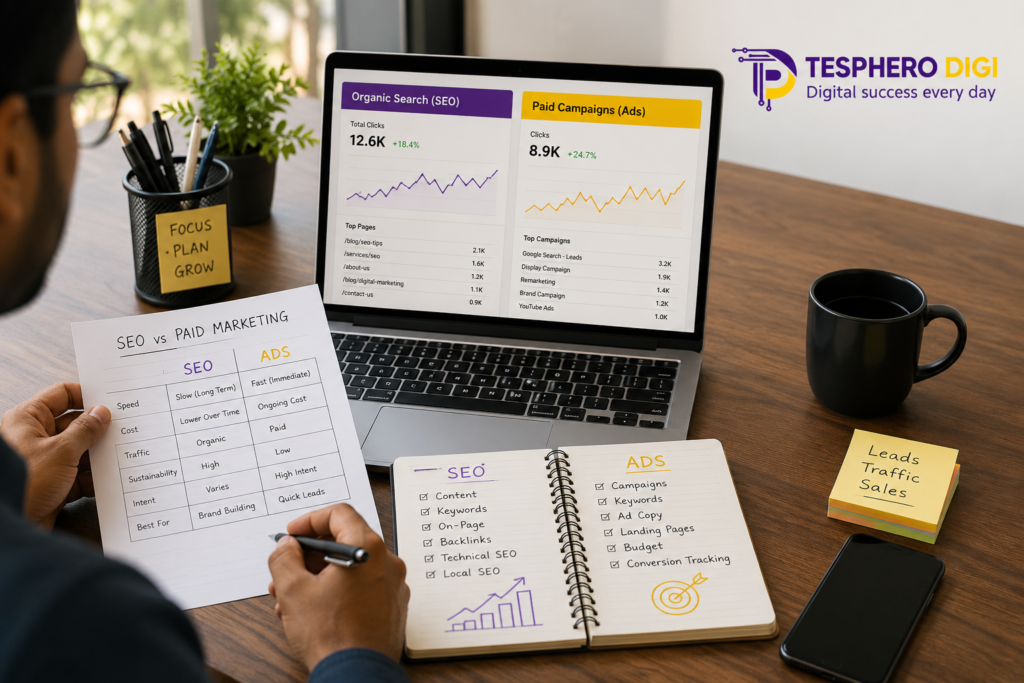
Indian business comparing SEO and paid marketing performance.
Digi, Tesphero-blogs

SEO vs Paid Marketing: Which Strategy Is Better for Your Business?

You want more customers from Google. One person tells you, “Invest in SEO. It will help you grow organically.” Another says, “SEO takes too long. Run paid ads and start generating traffic immediately.” Both can be right. The problem begins when a business treats SEO and paid marketing as competing choices without first understanding what each one is designed to achieve. Paid marketing can help you reach potential customers quickly. SEO can help build organic visibility that develops over time. However, neither strategy automatically guarantees leads, sales, or business growth. The better question isn’t: “SEO or paid marketing—which one wins?” Instead, ask: “What does my business need right now, and which strategy can support that goal?” In this guide, we’ll compare SEO and paid marketing based on speed, cost, lead generation, sustainability, customer intent, and long-term growth. More importantly, we’ll help you understand when to use one strategy—and when using both can make more sense. Understand What SEO and Paid Marketing Actually Do What Is SEO? Search Engine Optimization (SEO) is the process of improving your website and content so that your business can become more visible in relevant organic search results. Suppose you run an interior-design business in Indore. A potential customer searches: “Interior designer in Indore” If your website appears prominently in the organic results, that visibility may bring the person to your website without you paying for that individual click. SEO can involve several areas, including website structure, keyword targeting, content, technical improvements, internal linking, local SEO, and building the overall relevance and authority of a website. The important word here is time. SEO usually isn’t an instant traffic switch. Search visibility can take time to develop. Competition, website condition, content quality, market demand, and many other factors can influence results. Therefore, SEO is better viewed as a long-term digital growth strategy rather than a quick campaign. Businesses that want to understand how Google approaches website discovery and search visibility can also refer to Google Search Central. Its official documentation provides guidance on creating helpful, accessible and search-friendly websites. SEO results still depend on many factors, so the resource should be used for understanding best practices rather than expecting guaranteed rankings. What Is Paid Marketing? Paid marketing allows businesses to pay platforms to place advertisements in front of selected audiences. Search advertising is one common example. Suppose someone searches Google for a service you provide. A relevant paid search campaign may allow your advertisement to appear for that search, depending on campaign settings, competition, and other advertising factors. Paid marketing can also include social media advertising, remarketing, display campaigns, and other formats. The biggest difference is speed. You don’t necessarily need to wait months to start receiving visibility. Once a suitable campaign is created and active, advertisements can begin reaching potential customers relatively quickly. However, that visibility comes with a direct media cost. When advertising stops, the paid traffic generated by those campaigns generally stops as well. SEO Builds an Asset; Paid Marketing Buys Immediate Reach This is one of the easiest ways to understand the difference. With SEO, you invest in your website. You improve important service pages and publish useful content for your audience. At the same time, local relevance becomes stronger, while technical issues on the website are identified and fixed. Over time, these improvements can contribute to stronger organic visibility. Paid marketing works differently. You allocate an advertising budget to reach audiences through a platform. As a result, paid campaigns can provide faster visibility while SEO can build a stronger organic foundation over time. Neither approach is automatically better. They solve different problems. Which One Produces Results Faster? In most cases, paid marketing has the advantage when speed is the priority. For example, imagine you are launching a new service next week. Your website currently has very little organic visibility. Waiting for SEO alone may not support the immediate launch. A paid campaign could help introduce the service to relevant audiences sooner. SEO, meanwhile, may require weeks or months before meaningful improvements become visible, depending on the website and competition. However, speed should not be confused with profitability. Getting traffic quickly doesn’t mean the traffic will automatically convert into customers. Your offer, targeting, landing page, pricing, trust signals, and sales process still matter. Which Strategy Costs More? This question doesn’t have a simple answer. SEO isn’t “free marketing.” Even though you don’t normally pay Google for every organic click, effective SEO still requires resources. These may include strategy, content creation, website improvements, technical work, and ongoing optimization. Paid marketing has a more direct cost structure because advertising spend is part of the campaign. For example, your business may allocate a monthly media budget alongside campaign-management costs. Therefore, comparing them as “free SEO versus expensive ads” is misleading. A better comparison is: What are we investing, and what business value is that investment creating? SEO vs Paid Marketing — What Should Your Business Compare? Choosing between SEO and paid advertising should not be based on which strategy is currently more popular. Start with your business situation. 1. Speed: How Soon Do You Need Visibility? This is often the first major difference. SEO usually needs time. Paid advertising can generate visibility much sooner. If you’re promoting a time-sensitive offer, launching a new product, or trying to generate demand quickly, paid marketing may be useful. On the other hand, a business that wants to strengthen its Google presence over the next several years should not ignore SEO simply because it takes longer. Think about short-term demand and long-term visibility separately. You may need both. 2. Sustainability: What Happens When You Stop Spending? Suppose your paid campaign is generating regular website visits. Then you pause the advertising budget. The traffic from those ads will usually decline immediately because you are no longer buying that exposure. SEO behaves differently. A useful page that has earned strong organic visibility may continue receiving search traffic without paying for each visit. That doesn’t mean rankings are permanent. Competitors improve their

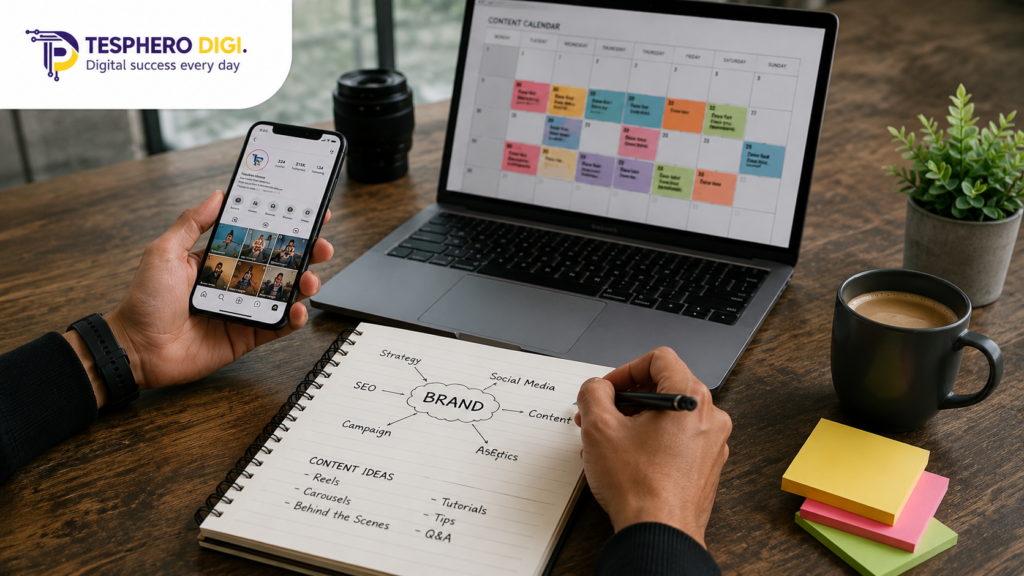
Social media marketing and brand content strategy being planned for an Indian business.
Digi, Tesphero-blogs

How Social Media Marketing Can Help Businesses Build a Stronger Brand

A customer discovers your business on Instagram. They don’t contact you immediately. A few days later, they see another post from your brand. Then a customer testimonial. Later, they come across a useful video explaining a problem they have been facing. By the time they finally visit your website or send you a message, your business no longer feels completely unfamiliar. That familiarity is one of the real strengths of social media marketing. Many businesses still look at social media primarily as a place to post offers, announce products, or increase followers. While those activities can have a role, social media can contribute to something much bigger: building a brand people recognise, understand and eventually trust. A strong brand isn’t created by one viral Reel or a beautifully designed Instagram feed. It develops through consistent communication, useful content, clear positioning and repeated positive interactions with the right audience. So, how can businesses use social media for more than just posting? Let’s look at it practically. Social Media Gives Your Brand a Voice 1. Branding Is More Than a Logo When people hear the word “branding”, they often think about logos, colours, fonts, and graphic design. These are important parts of visual identity, but they are not the complete brand. Your brand also includes how customers perceive your business. Are you professional? Affordable? Premium? Helpful? Innovative? Friendly? Specialised? Trustworthy? Social media allows businesses to communicate these qualities regularly. For example, two companies may offer similar financial services. One account only posts promotional graphics saying, “Contact us today.” The other explains financial concepts in simple language, answers common customer questions, and shares useful insights consistently. Even if both companies provide similar services, customers may develop very different perceptions of them. Your content tells people what kind of business you are before they ever speak to you. 2. Consistency Creates Recognition Think about brands you recognise immediately on social media. You may identify them through their colours, photography, writing style, or the type of content they publish. That recognition usually isn’t created by one post. It comes from consistency. Your social media presence should have some continuity across: This doesn’t mean every post should look the same. In fact, a feed where every creative uses an identical template can eventually feel repetitive. The goal is to create enough consistency that different pieces of content still feel like they belong to the same business. When customers repeatedly encounter a recognisable brand, familiarity begins to develop. And familiarity can make future communication easier. 3. Social Media Helps Explain What Makes You Different Most businesses have competitors. If you’re a real-estate consultant, there are other property businesses. If you sell products online, customers can probably find alternatives within seconds. If you run a restaurant, salon, financial consultancy, or service company, customers have choices. So why should they remember you? Social media gives you space to communicate your difference over time. Instead of repeatedly saying: “We provide the best service.” Show people what makes your approach different. A manufacturer could show how products are made. A consultant could explain how they approach common client problems. A restaurant could introduce the thinking behind its menu. An e-commerce brand could demonstrate product quality and practical use cases. A service business could answer questions customers normally ask before purchasing. Specific content gives people something meaningful to associate with your name. 4. Educational Content Can Build Authority You don’t need to reveal every detail of your service for free. But answering useful questions can demonstrate that you understand your field. Suppose an interior-design company regularly shares content about space planning, material selection, budgeting mistakes, and renovation decisions. Someone planning a renovation may start following the account long before they are ready to hire an interior designer. Months later, when they finally need professional help, which businesses are likely to come to mind? Probably the ones they already know. This is where social media becomes more than a short-term lead-generation channel. Good content can help your business become familiar before the customer is ready to buy. 5. Your Brand Needs a Human Side Businesses sometimes make social media so polished that the brand starts feeling distant. Perfect graphics. Generic stock photographs. Formal captions. Promotional message after promotional message. But social platforms are built around people. Where appropriate, show the human side of the business. That could include your team at work, behind-the-scenes processes, project preparation, customer stories, workplace moments or the thinking behind a product or service. You don’t need to put a smiling employee in every photograph. Sometimes a genuine workspace, hands working on a product, or an authentic project location can create more human connection than a staged team photograph. The objective is authenticity—not forced informality. From Followers to Brand Trust Getting attention is useful. But attention alone doesn’t build a strong business. A Reel may receive thousands of views and still have very little impact if viewers don’t understand who you are, what you do, or why they should remember you. The next stage is turning visibility into trust and meaningful engagement. 6. Social Media Creates Repeated Brand Touchpoints Customers don’t always purchase after seeing a business once. They may first discover you through a Reel. Later, they see an educational post. Then they notice a testimonial. A week later, they visit your profile. Eventually, they may search for your business, visit your website, or send a message. Social media creates multiple opportunities for that interaction. This matters particularly for services and higher-consideration purchases where customers need time before making a decision. Your job isn’t to make every post generate an immediate enquiry. Some posts should educate. Some should create awareness. Some should build trust. Some can demonstrate your work. And some should invite people to take action. Together, they create the overall brand experience. 7. Customer Stories Make the Brand More Believable A business talking about itself will naturally say positive things. Customers expect that. What can be more persuasive is seeing evidence of real customer experiences.

Business owner reviewing company website and lead generation strategy on a laptop.
Digi, Tesphero-blogs

Why Your Business Website Is Not Generating Enough Leads

Your Website May Be Getting Visitors—but Are They Taking Action? You have a website. It looks professional. Your services are listed. Your contact number is visible. You may even be getting visitors through Google, social media, or paid advertising. But there is one problem. The enquiries aren’t coming in. This is more common than many business owners realise. A website can receive traffic and still generate very few leads. The reason is simple: getting someone to visit your website and convincing them to contact your business are two different things. Think about a physical store. A person walks in, looks around, and leaves without asking anything. You wouldn’t automatically assume that the person wasn’t interested. Perhaps the products weren’t clearly displayed. Maybe they couldn’t find what they needed. Maybe nobody explained the value. A business website can face the same problem. Your website may have visitors, but if the message is unclear, the navigation is confusing, the content doesn’t answer customer questions or there is no strong reason to take the next step, visitors can simply leave. So before spending more money on advertising, it is worth asking: Is your website actually designed to generate leads? Let’s look at some of the most common reasons why business websites fail to convert visitors into enquiries. 1. Your Website Doesn’t Clearly Explain What You Do One of the first things a visitor should understand when landing on your website is: What does this business do, and can it help me? Unfortunately, many websites make this harder than it needs to be. The homepage may say things like: “We deliver innovative solutions for a better tomorrow.” It sounds professional, but it doesn’t tell the visitor much. A better approach is to communicate the actual service clearly. For example: Digital Marketing Services That Help Local Businesses Generate More Qualified Enquiries Now the visitor immediately has an idea of what the company does and who it helps. Your website doesn’t need complicated language to look professional. In fact, clarity often builds more trust than clever wording. Your homepage should quickly communicate: If visitors need to scroll through three or four sections just to understand your business, you may already be losing potential leads. 2. Your Website Is Talking About Your Business—Not the Customer This is another common problem. Businesses often build websites around themselves. “We are a leading company…” “We have years of experience…” “We provide the best solutions…” These statements aren’t necessarily wrong. But customers are usually thinking about something else: “Can you solve my problem?” Suppose someone is looking for accounting services. They aren’t primarily interested in reading about how innovative your company is. They want to know: Your website content should therefore connect your services with the customer’s actual problems. Instead of simply saying: “We provide SEO services.” You could explain: “Not getting enough enquiries from Google? Our SEO strategy focuses on improving your search visibility and attracting people actively looking for your services.” The second version starts a conversation with the customer. Your website should answer the visitor’s question, not just describe your company. 3. Your Call-to-Action Is Weak or Missing Imagine a visitor reads your entire service page and decides: “This company might be able to help me.” What happens next? If the page doesn’t make the next step obvious, the visitor may simply close the tab. This is where a clear Call-to-Action (CTA) becomes important. Instead of generic buttons such as: Submit or Click Here Use action-oriented language that tells the visitor what will happen next. For example: The CTA should also match the visitor’s stage in the buying journey. Someone reading a detailed service page may be ready to enquire. Someone reading an educational blog may simply want to learn more. You don’t necessarily need to push everyone toward the same action. The right CTA gives the visitor a clear next step without making them feel pressured. Your Website May Be Losing Leads Before They Contact You A visitor can understand your service and still leave without enquiring. Why? Because lead generation depends on more than content. The user experience, website speed, trust signals, mobile experience, and overall presentation can all influence the decision. 4. Your Website Is Too Slow Nobody likes waiting for a website to load. If pages take too long to open, visitors may leave before they even see your offer. This becomes especially important on mobile devices, where people often browse using mobile data or less stable connections. A slow website can affect more than user experience. It can also make your business appear less professional. Review elements such as: You don’t need a website filled with animations to impress customers. A fast, clean website that loads quickly can often do more for conversions than a visually complicated one. 5. Your Mobile Website Isn’t Good Enough A website may look excellent on a desktop and still provide a poor experience on a smartphone. This matters because many potential customers will discover your business through: And much of that traffic can come from mobile devices. Check your website on an actual phone. Can visitors read the text comfortably? Are buttons easy to tap? Does the enquiry form work properly? Do images load correctly? Can someone find your phone number or WhatsApp option quickly? If the answer to these questions is no, you may be losing leads without realising it. Your website needs to work for the customer—not just look good on your designer’s screen. 6. There Isn’t Enough Trust on the Website People don’t usually submit their details to a business they don’t trust. Especially when the service involves a significant amount of money. Before contacting you, visitors may want to know: “Has this company actually helped people like me?” Your website can answer that through genuine trust signals. Consider including: For example, instead of simply writing: “We provide high-quality digital marketing.” Show what that means. You could present a real case study explaining the client’s challenge, the strategy used, and the outcome. Specific

Digital marketing professional analyzing SEO performance, keyword research, and website traffic in a modern office.
Digi, Tesphero-blogs

What Is SEO and Why Is It Important for Business Growth?

Understanding SEO and Its Importance for Businesses In a world where customers search online before making buying decisions, being visible on search engines has become an important part of business growth. Whether someone is looking for a local service, comparing products, researching a company, or searching for a solution to a specific problem, Google is often one of the first places they turn to. This creates a valuable opportunity for businesses. A company with a strong online presence can reach potential customers while they are actively searching for something it offers. But simply having a website does not guarantee that people will find it. This is where SEO, or Search Engine Optimization, becomes important. SEO helps businesses improve their visibility in organic search results. When done properly, it can bring relevant visitors to a website, build brand credibility, support lead generation, and contribute to long-term business growth. However, SEO is much more than adding keywords to web pages. It involves content, website structure, technical performance, user experience, search intent, authority, and many other factors that influence how search engines understand and evaluate a website. In this blog, we will explain what SEO is, how it works, why it matters for business growth, and how businesses can build a practical SEO strategy. Content Table What Is SEO? SEO stands for Search Engine Optimization. In simple terms, SEO is the process of improving a website so that search engines can understand its content and users can discover it through relevant organic searches. For example, imagine you run a digital marketing agency in Delhi. A potential customer searches: “digital marketing agency in Delhi” If your website is properly optimized and provides relevant information, your business has an opportunity to appear in the search results. The customer may then visit your website, explore your services, read your content, and contact your team. This is one of the basic ways SEO can support business growth. The important point is that SEO focuses on organic visibility rather than paying directly for every click. However, SEO is not a shortcut. Search engines want to provide users with useful and relevant results. Therefore, businesses need to create valuable content, maintain a technically sound website, and provide a good experience for visitors. How Does SEO Work? Search engines use automated systems to discover, understand, and organize information available on websites. While search algorithms are complex and constantly evolving, businesses can understand SEO through three basic stages. Crawling Search engines use automated programs, often called crawlers or bots, to discover web pages. These systems follow links and examine websites to find new or updated content. If important pages cannot be accessed properly, search engines may have difficulty discovering them. Indexing Once a page is discovered, search engines analyze its content and store information about it in their index. This allows the search engine to consider the page when a user performs a relevant search. Ranking When someone enters a search query, the search engine evaluates available pages and determines which results are most relevant and useful. Many factors can influence these results, including content relevance, website quality, technical performance, authority, and user experience. This is why SEO requires a complete approach rather than focusing on just one factor. For more information about how Google Search works and how website owners can improve their search presence, readers can explore Google Search Central’s SEO documentation. Why Is SEO Important for Business Growth? SEO can help a business become visible at the exact moment potential customers are looking for information, products, or services. This makes search traffic particularly valuable. For example, someone searching for “best website development company for small business” is already showing interest in a specific solution. If your website provides a useful answer and clearly explains your services, that visitor could become a potential lead. SEO can support business growth in several ways. 1. Increased Online Visibility A business cannot benefit from online searches if potential customers cannot find it. SEO helps improve the chances of your website appearing for relevant search queries. Greater visibility can create more opportunities to introduce your products, services, and brand to potential customers. 2. Relevant Website Traffic SEO is not simply about attracting more visitors. The quality and relevance of that traffic matter. A website receiving 10,000 visitors who have no interest in its services may generate fewer business opportunities than a website receiving 1,000 highly relevant visitors. Effective SEO focuses on reaching people whose search intent matches what your business offers. 3. Better Brand Awareness When a business appears consistently for relevant searches, people may become more familiar with the brand. For example, a customer researching digital marketing may come across the same company through several useful articles, service pages, or search results. Even if they don’t contact the business immediately, repeated exposure can contribute to brand recognition. 4. Long-Term Marketing Value Paid advertising can generate traffic while campaigns are running. SEO works differently. A well-optimized page can continue attracting organic visitors over time. Its performance may change, and ongoing optimization is still required, but useful content can continue creating value long after publication. This makes SEO a potential long-term digital marketing asset. SEO vs Paid Advertising SEO and paid advertising are often treated as competing strategies, but they serve different purposes. Factor SEO Paid Advertising Traffic Type Organic Paid Results Usually gradual Often faster Ongoing Ad Spend Not required for each organic click Required for active campaigns Long-Term Potential Strong Depends on continued campaigns Content Importance Very high Important but varies by campaign Best Use Sustainable visibility Immediate reach and targeted campaigns For many businesses, using both can be effective. Paid campaigns can help generate immediate visibility, while SEO can build organic traffic and authority over the long term. The right combination depends on the business, budget, goals, and target audience. Main Types of SEO SEO is not a single activity. It includes several areas that work together. On-Page SEO On-page SEO focuses on the content and elements that exist directly

Digital marketing consultant reviewing website traffic and lead conversion strategy with a business owner
Digi, Tesphero-blogs

Why Your Digital Marketing Isn’t Generating Leads — 10 Common Reasons and How to Fix Them

You are running Google Ads. At the same time, are posting regularly on social media. Your website is live. With a strong content strategy, your business is visible online. But there is one problem: The leads aren’t coming in. Or perhaps you are getting enquiries, but most of them are irrelevant. Some people ask for prices and disappear. Others fill out a form but never respond again. This is one of the most frustrating situations for businesses investing in digital marketing. The common reaction is often: “Maybe we need to spend more on advertising.” But more advertising isn’t always the answer. Sometimes, the real problem lies somewhere else. Your business may be reaching the wrong audience. However, your website may not be convincing visitors to take action. Your landing page may be confusing. Your content may be attracting attention but not building trust. Or your marketing channels may be working separately instead of as one connected strategy. The truth is that traffic, engagement, leads, and customers are four different things. A successful digital marketing strategy needs to move people through each stage of the journey. Right Audience → Attention → Interest → Trust → Lead → Customer If there is a problem at any stage, your marketing performance can suffer. In this blog, we’ll look at 10 common reasons why digital marketing fails to generate quality leads and what businesses can do to fix them. If you’re still building your overall digital marketing strategy, you can also read our guide on Why Businesses Fail at Digital Marketing (And How to Build a Strategy That Actually Works). 1. You’re Targeting the Wrong Audience One of the most common reasons businesses don’t generate quality leads is simple: They are reaching the wrong people. You can have an excellent website, attractive advertisements, and great content—but if your marketing is reaching people who don’t need your product or service, conversions will remain low. For example, a premium interior design company targeting users who are only looking for low-cost services may receive plenty of enquiries—but very few qualified leads. The problem isn’t necessarily the marketing campaign. The problem is audience targeting. Before running a campaign, businesses should understand: A clear understanding of your target audience helps your marketing become more relevant. How to Fix It Create a clear customer profile before planning your campaigns. Instead of targeting everyone, focus on the people who are most likely to need, afford, and value your offering. Better targeting often improves lead quality without simply increasing the marketing budget. 2. Your Marketing Message Is Too Generic Imagine seeing an advertisement that says: “We provide the best services for your business.” It sounds professional, but it doesn’t tell the customer much. What problem does the business solve? Why should the customer care? What makes the service different? A strong marketing message should quickly communicate: Who you help + What problem you solve + Why your solution matters Customers don’t usually search for businesses just because they want to buy something. They are usually trying to solve a problem. Your marketing should speak to that problem. For example: Instead of: “Professional Digital Marketing Services.” A more specific message could be: “Struggling to Generate Quality Leads Online? Build a Digital Strategy Designed to Attract the Right Customers.” The second message is more focused on the customer’s problem. How to Fix It Review your website headlines, advertisements, social media content, and landing pages. Ask yourself: “If someone sees this for five seconds, will they understand what we do and why it matters to them?” If the answer is no, your messaging needs improvement. 3. You’re Getting Traffic, But Your Website Isn’t Converting Getting visitors to your website is only the first step. The next question is: What happens after they arrive? A website can receive thousands of visitors and still generate very few leads. This can happen when: Think of your website as a salesperson. If a potential customer walks in and doesn’t understand what you offer, can’t find the information they need, and doesn’t know how to contact you, they may simply leave. How to Fix It Review your website from the customer’s perspective. Make sure visitors can quickly understand: Your website should make the next step obvious. That could be: Call Now | Request a Quote | Book a Consultation | Send an Enquiry The easier you make the next step, the fewer opportunities you lose. 4. Your Landing Page Is Not Doing Its Job If you’re running paid advertising, your landing page plays a critical role. A customer clicks your advertisement because something caught their attention. But if the landing page doesn’t match what the advertisement promised, the customer may leave. A good landing page should be: For example, if an advertisement promotes a specific service, sending users to a generic homepage may create unnecessary confusion. The customer should ideally land on a page that continues the same message they saw in the advertisement. How to Fix It Create dedicated landing pages for important campaigns. Keep the message consistent from: Advertisement → Landing Page → Enquiry Form → Follow-Up This creates a smoother customer journey and can improve the chances of generating qualified leads. 5. You’re Creating Content, But It Isn’t Helping the Customer Posting regularly doesn’t automatically mean your content strategy is working. Some businesses post every day but still struggle to generate enquiries. Why? Because the content is often focused on the business rather than the customer. For example: “We are the leading digital marketing company.” “Our team provides the best services.” “We have years of experience.” These statements may be true, but they don’t always answer the customer’s biggest question: “How can you help me?” Effective content should educate, solve problems, build trust, or help customers make decisions. It can include: How to Fix It Before creating a piece of content, ask: “What will the customer learn or gain from this?” When content consistently provides value, it can help build authority and trust before the customer

Successful digital marketing begins with clearly defined business goals—not just marketing activities.
Digi, Tesphero-blogs

How to Choose the Right Digital Marketing Services for Your Business: A Complete Beginner’s Guide

/choose-right-digital-marketing-services Every business wants to grow, attract more customers, and build a stronger brand. Digital marketing can certainly help achieve these goals—but only when the right strategy is in place. One of the biggest mistakes businesses make is investing in digital marketing services without understanding which ones actually fit their needs. Some start with paid advertising before having a professional website. Others focus only on social media while completely ignoring search visibility or content. As a result, they spend time and money without seeing meaningful results. In our previous article, “Why Businesses Fail at Digital Marketing (And How to Build a Strategy That Actually Works),“ we discussed the importance of having a clear marketing strategy. In this guide, we’ll take the next step and explain how to choose the right digital marketing services based on your business goals, target audience, and stage of growth. Why Choosing the Right Services Matters Digital marketing isn’t a single service—it’s a combination of strategies that work together. Every business has different objectives. A newly launched company needs something different from an established business looking to expand into new markets. Choosing services without understanding these differences often leads to wasted budgets and missed opportunities. Instead of asking, “Which digital marketing service is the best?“ The better question is, “Which digital marketing services are right for my business right now?” That simple change in perspective helps businesses make smarter marketing decisions. Start with Your Business Goals Before selecting any marketing service, define what you want to achieve. Your goals might include: When your marketing services align with your goals, every activity becomes more focused and measurable. Build a Strong Foundation with a Professional Website A professional website is often the first impression customers have of your business. Without a well-designed, informative, and user-friendly website, many marketing efforts become less effective. A good business website should: Think of your website as your digital headquarters. Every marketing effort eventually brings potential customers there. Improve Visibility Through Search Engine Optimisation (SEO) Even the best website has limited value if potential customers cannot find it. Search Engine Optimisation (SEO) improves your website’s visibility in search results, making it easier for people to discover your business when they’re looking for products or services like yours. A well-planned SEO strategy focuses on: Unlike short-term campaigns, SEO is an investment that can continue delivering results for months and even years. Use Social Media to Build Relationships, Not Just Visibility Social media is more than a place to post updates. It allows businesses to: Instead of focusing solely on posting frequently, businesses should create content that educates, informs, and builds trust. Quality conversations create stronger business relationships than simply increasing the number of posts.\ Why an Integrated Approach Works Better Many businesses expect one marketing service to deliver every result. In reality, the best outcomes come when different services work together. For example: Together, these services create a marketing ecosystem that supports sustainable business growth rather than isolated short-term results. Create Valuable Content That Builds Trust Digital marketing isn’t only about promoting products or services. It’s also about helping potential customers make informed decisions. Content marketing allows businesses to educate their audience through: When businesses consistently share valuable information, they position themselves as trusted industry experts rather than just service providers. Customers are far more likely to choose a business they trust. Use Performance Marketing to Reach the Right Audience Performance marketing can help businesses generate enquiries, increase visibility, and reach specific customer segments more efficiently. However, advertising should support an existing marketing strategy—not replace it. Before investing in paid campaigns, ensure that: When these elements are in place, performance marketing becomes much more effective and delivers better returns. Build a Brand That Customers Remember People don’t just buy products or services—they buy from businesses they recognise and trust. A strong brand creates consistency across every customer touchpoint, including: Consistent branding helps businesses appear more professional and makes them easier for customers to remember. Don’t Ignore Email Marketing While newer marketing channels receive a lot of attention, email marketing remains one of the most effective ways to stay connected with existing customers. Businesses can use email to: The key is to provide useful information rather than sending constant promotional messages. Choose Services Based on Your Current Stage of Growth Every business doesn’t need every marketing service from day one. Your priorities should depend on where your business is today. If You’re Just Starting Focus on: If Your Business Is Growing Add: If You’re Looking to Scale Consider: Choosing services in the right sequence helps businesses invest more wisely and achieve sustainable growth. 📋 Digital Marketing Services Checklist Before investing in digital marketing, ask yourself: Question Why It Matters Have I clearly defined my business goals? Creates a focused strategy Do I have a professional website? Builds credibility Can customers easily find my business? Improves visibility Am I creating valuable content? Builds trust Is my branding consistent? Strengthens recognition Am I using the right marketing channels? Improves efficiency Do I measure marketing performance? Supports better decisions Am I investing based on business priorities? Maximises return on investment ⚠️ Common Mistakes Businesses Make Many businesses struggle with digital marketing because they rush into activities without a structured plan. Some common mistakes include: Digital marketing works best when every activity supports a clear business objective. Why the Right Combination of Services Matters No single marketing service can deliver every result. A successful digital marketing strategy combines the right mix of services based on your goals, audience, and stage of business growth. When your website, SEO, content, branding, social media, and performance marketing work together, they create a stronger customer experience and support sustainable business growth. Work with the Right Digital Marketing Partner Choosing the right digital marketing services is important—but implementing them effectively is what drives real business growth. As businesses grow, managing websites, SEO, content, social media, advertising, and performance analysis becomes more complex. Having the right digital marketing partner ensures that every activity supports

Why Businesses Fail at Digital Marketing (And How to Build a Strategy That Actually Works)
Digi

Why Businesses Fail at Digital Marketing (And How to Build a Strategy That Actually Works)

/why-businesses-fail-at-digital-marketing Why Businesses Fail at Digital Marketing | A Complete Business Growth Guide Digital marketing has transformed the way businesses connect with customers. Today, having a website or creating social media posts is no longer enough to stay competitive. Customers expect valuable content, a professional online presence, and consistent brand communication across every digital touchpoint. Despite investing time and money, many businesses struggle to generate meaningful results. Some attract website visitors but fail to convert them into customers. Others publish content regularly yet see little engagement or business growth. In most cases, the problem isn’t the effort—it’s the lack of a clear digital marketing strategy. Successful businesses don’t rely on isolated marketing activities. They build an integrated digital ecosystem where websites, search visibility, content, branding, and customer engagement work together toward a common goal. In this guide, we’ll explore the common reasons businesses struggle with digital marketing and explain how a strategic approach can help build sustainable growth in today’s competitive marketplace. Table of Contents Why Many Businesses Struggle with Digital Marketing Digital marketing doesn’t fail because of technology—it usually fails because of planning. Many businesses invest in individual marketing activities without connecting them to a larger business strategy. As a result, they experience inconsistent branding, low customer engagement, and limited return on investment. Some common challenges include: Digital marketing works best when every activity supports a larger business objective, whether that’s building brand awareness, generating qualified leads, or improving customer retention. The Foundation of a Successful Digital Marketing Strategy Businesses that achieve sustainable growth usually focus on building strong foundations before investing heavily in promotions. A well-planned strategy combines multiple elements that work together rather than operating independently. These foundational pillars include: When these elements align, businesses create a more reliable and scalable path toward long-term growth. 🚀 The Core Pillars of a Successful Digital Marketing Strategy Successful digital marketing isn’t built on a single campaign or one marketing channel. Businesses that achieve consistent growth focus on multiple areas working together to create a seamless customer experience. Let’s explore the key pillars that form the foundation of a successful digital growth strategy. 🌐 A Professional Website – Your Digital Business Hub Your website is often the first interaction potential customers have with your business. A slow, outdated, or difficult-to-navigate website can create a poor first impression and reduce customer trust. A professional business website should: A well-designed website not only represents your brand but also supports lead generation and long-term customer engagement. 🔍 Search Engine Optimization (SEO) – Helping Customers Find You Creating a great website is only the beginning. Businesses also need to ensure that potential customers can discover their products and services when searching online. SEO focuses on improving website visibility by creating high-quality content, optimizing website structure, and delivering a better user experience. A strong SEO strategy can help businesses: Unlike short-term campaigns, SEO continues delivering value over time when supported by quality content and regular optimization. Content Marketing – Building Trust Through Valuable Information Modern customers research before making decisions. They look for answers, compare options, and evaluate brands based on the information they provide. That’s why valuable content has become one of the strongest tools for business growth. Effective content may include: Instead of focusing only on promotions, businesses that educate their audience often build stronger relationships and long-term trust. 🎯 Branding – Creating a Consistent Business Identity Branding is much more than a logo or colour palette. It’s how customers recognize, remember, and experience your business across every digital touchpoint. Strong branding creates consistency in: A consistent brand identity helps businesses stand out in competitive markets and creates stronger customer recognition over time. 📈 Lead Generation – Turning Interest into Business Growth Generating website visitors is important, but the ultimate goal is converting those visitors into enquiries, customers, and long-term business relationships. An effective lead generation strategy focuses on: Businesses that optimise their customer journey often experience better engagement and improved conversion rates. ⚠️ Common Digital Marketing Mistakes Businesses Make Many businesses invest in digital marketing but don’t achieve the results they expect because they overlook the fundamentals. Some of the most common mistakes include: Avoiding these mistakes helps businesses build a stronger digital presence and achieve more sustainable growth. 📊 Digital Marketing: Random Activities vs Strategic Growth Random Marketing Strategic Digital Marketing Inconsistent branding Consistent brand identity Irregular content publishing Planned content strategy Low website visibility Strong SEO foundation Short-term campaigns Sustainable business growth Limited customer engagement Better customer experience Guesswork Data-driven decision making Business Insight: Digital marketing delivers the best results when every activity supports a clear business objective rather than operating in isolation. Measuring Digital Marketing Success One of the biggest mistakes businesses make is measuring success using only likes, followers, or website visits. While these metrics provide useful insights, they don’t always reflect real business growth. A successful digital marketing strategy focuses on meaningful business outcomes rather than vanity metrics. Here are some of the most important performance indicators every business should monitor: Regular performance reviews help businesses understand what’s working, identify improvement opportunities, and make informed decisions for future growth. Why a Long-Term Digital Strategy Matters Digital marketing is not a one-time activity. Markets evolve, customer behaviour changes, and search trends continue to shift. Businesses that consistently update their website, publish valuable content, optimise their digital presence, and analyse performance are more likely to achieve sustainable growth than those relying on occasional marketing efforts. Long-term success comes from consistency, adaptability, and continuous improvement—not from chasing quick results. 🤝 How Tesphero Digi Helps Businesses Grow Every business has unique goals, challenges, and target audiences. That’s why a one-size-fits-all marketing approach rarely delivers consistent results. At Tesphero Digi, we help businesses build a strong digital foundation through strategic planning, creative execution, and continuous optimisation. Our solutions are designed to improve visibility, strengthen brand identity, and generate meaningful business growth. Our Core Services Rather than focusing only on marketing campaigns, we focus on building long-term digital assets that continue delivering

Scroll to Top