
tesphero.com

Ecom

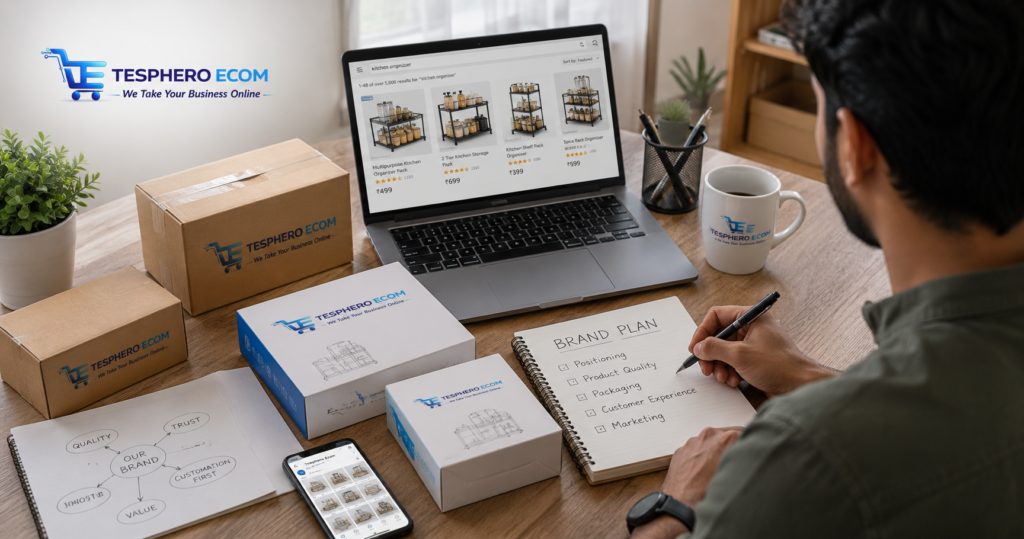
Indian marketplace seller developing consistent packaging and e-commerce brand identity.
Ecom, Tesphero-blogs

Selling on Marketplaces Is Not Enough: How to Build a Brand That Customers Remember

Getting your products listed on Amazon, Flipkart, Meesho, or another online marketplace can put your business in front of thousands of potential customers. But there is one problem. Your competitors are standing on the same digital shelf. A customer searches for a product, compares several similar options, checks prices and reviews, places an order—and may completely forget the seller’s name a few days later. That is the difference between selling a product and building a brand. Marketplace sales can help you generate revenue, but long-term e-commerce growth requires something more: customers should recognise your business, understand what makes it different and have a reason to choose it again. You don’t need to become a national brand overnight. However, you do need to start building an identity that exists beyond one listing, one discount or one marketplace. If customers remember the product but forget who sold it, you may be making sales—but you haven’t fully built the brand yet. Stop Thinking Like Only a Marketplace Seller 1. Marketplace Visibility Is Not the Same as Brand Recognition Marketplaces are powerful because customers already visit them with buying intent. Someone searching for a storage organiser, mobile accessory, kitchen product, or personal-care item may be ready to purchase. This creates opportunity. However, the customer may see dozens of competing listings within seconds. Similar specifications. Similar reviews. Similar photographs. Similar delivery timelines. You may win the order. But will the customer remember your brand three months later? That is a different challenge. Visibility helps people find your product. Branding gives them something to remember after they find it. 2. Decide What You Want Your Brand to Stand For Before choosing colours or redesigning packaging, answer a more important question: What should customers associate with your brand? Perhaps you want to be known for affordable everyday products. Maybe your focus is premium quality. Perhaps you solve practical household problems through simple, useful products. Or your brand may target a very specific customer group. Without clear positioning, businesses often create random product catalogues. Today they sell kitchen organisers. Tomorrow they add mobile accessories. Next month they introduce beauty products simply because those categories appear popular. The store may generate orders, but customers have little reason to understand what the brand represents. You don’t necessarily need to remain in one narrow product category forever. But your product range should ideally have enough logic that customers can understand the business behind it. 3. Give Customers a Reason to Choose You Imagine five marketplace listings offering almost the same product. The specifications look almost identical. Customer reviews are equally competitive, the photographs feel similar, and even the delivery timelines offer little difference. Why should a customer choose yours? The only answer is “because ours is ₹30 cheaper”; the business may become dependent on discounts. Another seller can reduce their price tomorrow. Strong brands gradually compete on more than price. Your difference could come from better materials, useful features, stronger packaging, clearer instructions, thoughtful bundles, dependable quality or a better understanding of a particular customer need. It doesn’t always require inventing something completely new. Sometimes the opportunity is simply to take a familiar product and deliver a more thoughtful customer experience around it. 4. Make Your Product Listings Feel Like One Brand Look at several products from your catalogue together. Do they feel as if they come from the same company? Or does every listing look unrelated? Brand consistency can be reflected through product photography, packaging presentation, visual communication, and the way product information is written. This does not mean placing a giant logo on every image. The objective is recognition, not distraction. For example, your secondary images could follow a consistent visual approach. Product benefits could be communicated in a similar style. Packaging could carry recognisable design elements. Over time, these details can help customers associate multiple products with the same brand. Even a strong product can be overlooked when its listing fails to communicate its value. Our guide “Your Product Is Good, But Is Your Listing Selling It? 8 Ways to Improve Product Listings” explains how better product presentation can improve the way customers understand your offer. 5. Your Product Quality Is Part of Your Branding Marketing can create the first impression. The actual product determines whether that impression survives. If your listing promises premium quality but the customer receives poor finishing, weak packaging, or an item that looks significantly different from the photographs, branding cannot solve the problem. In fact, strong marketing combined with a disappointing product can make the negative experience even stronger because expectations were higher. Before investing heavily in brand promotion, make sure the basics work. Product quality should be reasonably consistent. Packaging should protect the item. Descriptions should set realistic expectations. And common customer complaints should be taken seriously. Your brand is not only what you say about the product. It is also what the customer experiences after opening the package. Build the Brand Around the Customer Experience A memorable brand isn’t created only before the sale. What happens after the customer clicks “Buy” can be equally important. 6. Packaging Is More Than a Shipping Requirement For many online businesses, the package arriving at the customer’s home may be the first physical interaction they have with the brand. That moment matters. Packaging doesn’t need to be expensive or luxurious. It needs to be appropriate for the product, protective, and consistent with the experience you want to create. The practical everyday brand may use simple, clean packaging. The premium product may require a more refined presentation. Most importantly, the product should arrive safely and as expected. A beautiful box that fails to protect the item isn’t good branding. Likewise, excessive packaging that adds unnecessary cost may not make business sense. Aim for packaging that balances protection, presentation, and economics. 7. Use Customer Reviews as Brand Research Reviews aren’t only ratings. They are customer research available directly from the market. Read your positive reviews to understand what customers appreciate. Then read the negative ones even

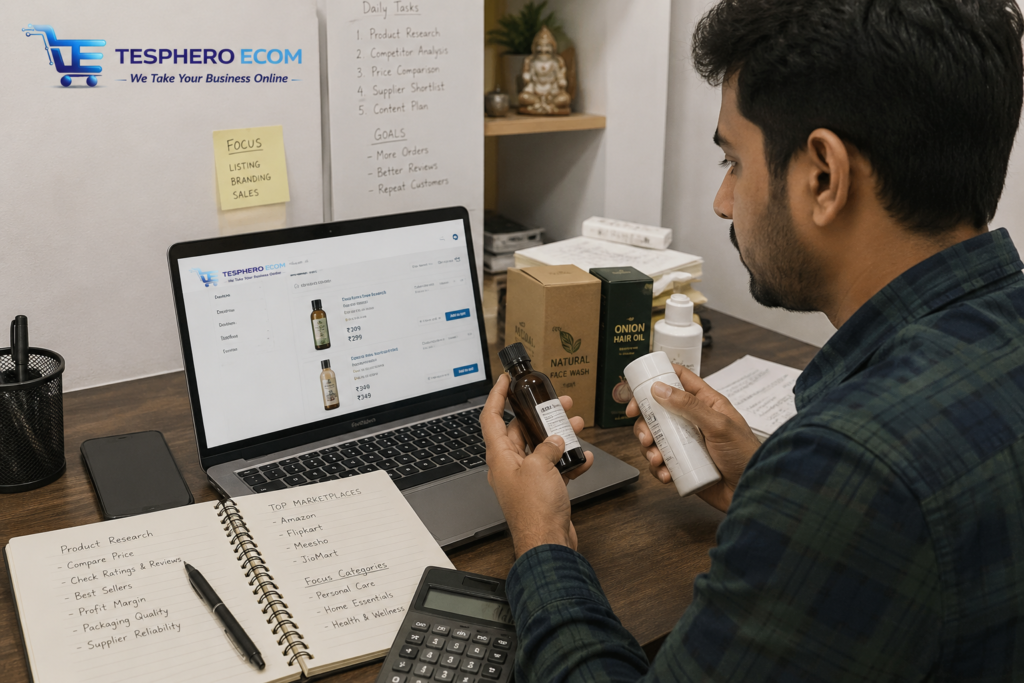
Indian online seller researching products before starting an e-commerce business.
Ecom, Tesphero-blogs

What Should You Sell Online? A Practical Guide to Choosing the Right E-commerce Product

Starting an online business often begins with one question: “What should I sell?” It sounds simple, but this decision can influence almost everything that follows—from pricing and product listings to advertising, inventory, returns, and profitability. Many first-time sellers make the mistake of choosing a product because it is trending, easily available, or already selling well on Amazon, Flipkart, or Meesho. But a popular product isn’t automatically the right product for your e-commerce business. The better question is: “Can I sell this product profitably, competitively, and consistently?” A strong e-commerce product sits at the intersection of customer demand, manageable competition, healthy margins, reliable sourcing and practical operations. This guide explains how to evaluate those factors before investing heavily in inventory or launching online. Part 1: Don’t Start With a Product—Start With the Market 1. Look for Demand, Not Just Trends A viral product can look like an easy opportunity. You see hundreds of videos about it, marketplace listings have thousands of reviews, and suddenly it feels like something everyone wants. But trends can disappear quickly. By the time a new seller sources inventory, prepares packaging, creates listings, and starts advertising, customer interest may already be moving elsewhere. Instead of asking whether a product is trending, investigate whether it has sustainable demand. Think about why people buy it. Does it solve a recurring problem? Is it used regularly? Does it belong to a stable category? Would customers still need it six months from now? For example, everyday kitchen organisers may not receive the attention of a viral gadget, but they can address a clear and recurring household need. Trends can create opportunities. However, they shouldn’t be your only reason for entering a category. 2. Understand the Customer Behind the Product Before choosing what to sell online, define who is likely to buy it. Suppose you’re considering premium desk accessories. Your potential customer may be a working professional who cares about design, organisation and quality. If you’re considering affordable storage products, the target customer may be much more price-sensitive. These audiences won’t respond to the same product positioning. Ask yourself: The clearer your customer is, the easier it becomes to evaluate whether the product opportunity actually makes sense. 3. Study Competition Before Entering the Category Competition isn’t necessarily bad. If several established sellers are successfully selling a product, that can indicate existing demand. The problem begins when you enter a crowded category without a reason for customers to choose you. Search for similar products on the marketplaces where you plan to sell. Look at how competitors are presenting them. Pay attention to their pricing, reviews, ratings, product images, specifications, packaging, and customer complaints. Most importantly, read the negative reviews. They can reveal opportunities. If customers repeatedly complain about weak packaging, confusing sizing, or poor durability, there may be room for a better offer. Your goal isn’t to copy the bestseller. It is to understand: “What can I offer differently or better?” That difference doesn’t always need to be revolutionary. Better packaging, a useful bundle, improved quality, clearer sizing, or stronger product presentation can sometimes create meaningful differentiation. 4. Don’t Confuse High Sales With High Profit This is one of the most important lessons for a new marketplace seller. A product selling thousands of units isn’t necessarily generating excellent profits. Imagine you source an item for ₹250 and sell it online for ₹499. At first glance: ₹499 – ₹250 = ₹249 profit. But that’s not your actual profit. You may still need to account for marketplace-related charges, shipping or fulfilment costs, packaging, advertising, taxes where applicable, returns and other operating expenses. Once these costs are considered, the margin may look very different. Before selecting a product, create a basic unit economics calculation. Ask: “After all expected costs, is there still enough margin for this product to make business sense?” This calculation should happen before you order large quantities. 5. Consider Whether the Product Is Practical to Sell Online Some products are easier to manage online than others. A fragile product may require stronger packaging and can carry a higher risk of damage. A very heavy or bulky item may increase logistics costs. Products with multiple sizes or variations can make inventory more complex. Certain categories may also involve specific documentation, compliance requirements, or marketplace restrictions. This doesn’t mean you should automatically avoid these products. It means you should understand the operational challenges before entering the category. A product can look highly profitable on a spreadsheet but become difficult to manage once packaging, shipping, and returns enter the picture. A good e-commerce product should work operationally as well as commercially. Test Whether the Product Can Become a Real Business Finding a product with demand is only the beginning. Now you need to determine whether you can source it reliably, price it competitively, and build a sustainable business around it. 6. Calculate Your Real Product Margin Before committing to a product, understand the complete cost structure. Your calculation may need to consider: Product Cost + Packaging + Logistics + Marketplace Charges + Advertising + Expected Returns + Other Applicable Business Costs Then compare this with the realistic selling price. Notice the word realistic. Don’t calculate profitability using the highest price in the category if most customers are purchasing products at a much lower price point. Suppose similar products commonly sell between ₹600 and ₹750. If your business only becomes profitable at ₹1,100, you need a strong reason why customers would pay that difference. Maybe your quality is significantly better. Maybe you offer more quantity. Maybe the product has a useful feature competitors lack. Without a clear value difference, pricing can become difficult. Healthy margins also give you room to handle advertising, promotions, and unexpected costs without immediately making the product unprofitable. 7. Check Whether You Can Source Consistently Imagine launching a product successfully, getting good reviews and seeing orders increase. Then your supplier says: “Stock will be available next month.” Suddenly your growth stops. Reliable sourcing matters just as much as finding a good product.

Indian e-commerce seller reviewing product images and listing details on a laptop.
Ecom, Tesphero-blogs

Your Product Is Good, But Is Your Listing Selling It? 8 Ways to Improve Product Listings

Your Product May Not Be the Problem You have a good product. The quality is right. The packaging is decent. The price is competitive. You may even have a product that customers genuinely like. But still, sales aren’t coming in as expected. So, what’s going wrong? In many cases, the problem isn’t the product. It’s the product listing. When customers shop on Amazon, Flipkart, Meesho, or another online marketplace, they cannot physically touch your product, check its material, or speak to a salesperson. They make their decision based on what they see on the screen. Your product images, title, description, specifications, pricing, and reviews together create the first impression. And that first impression has to do a lot of work. A customer may see dozens of similar products within seconds. If your listing doesn’t clearly explain why your product is worth considering, they can simply scroll past it. That’s why product listing optimization is not just about adding keywords. It’s about presenting the right information in a way that helps customers understand the product and feel confident about buying it. In this blog, we’ll look at 8 practical ways to improve product listings and turn them into a stronger part of your e-commerce strategy. 1. Write a Product Title That Actually Helps the Customer Your product title is one of the first things a customer notices. A weak title may simply say: “Premium Cotton Bedsheet” It sounds fine, but it doesn’t tell the customer much. A stronger title could communicate important information such as the product type, material, size, design, or key feature. For example: “Premium Cotton Double Bedsheet – King Size, Floral Print, Soft & Breathable Fabric” The second title gives the customer a much clearer idea of what they’re looking at. However, don’t try to put every possible keyword into the title. A title filled with repeated keywords can look unnatural and may make the product harder to understand. Instead, focus on the information a customer would genuinely want to know. Think about: Your title should be clear first and optimized second. 2. Your Main Product Image Has One Job: Stop the Scroll Online shoppers don’t read every listing. They scan. That’s why your main product image is extremely important. If the image is dark, cluttered, poorly cropped, or difficult to understand, customers may move on before reading anything else. A strong product image should immediately answer: “What am I looking at?” Use clear, high-quality photography that shows the product properly. Depending on the marketplace and product category, consider using: For example, if you’re selling a bedsheet, showing only a folded bedsheet may not communicate its actual appearance. A well-shot lifestyle image showing the bedsheet on a properly made bed can help the customer visualise how the product may look in their own home. The goal isn’t to make the image look expensive. The goal is to make the product easy to understand. 3. Use Images to Answer Customer Questions Your product images shouldn’t only make the product look attractive. They should also reduce uncertainty. Think about the questions customers normally ask before purchasing. For example: “What size is it?” “What material is used?” “How does the product look from the side?” “What exactly will I receive?” “How does it look when actually used?” Your image set can answer many of these questions before the customer even reaches the description. A good image sequence might include: This can make the listing more informative without making the customer read a long paragraph. The Difference Between Showing a Product and Selling It This is where many sellers struggle. They upload photographs, add a few specifications, and assume the listing is complete. But an effective listing does more than show the product. It explains: What is it? Why should I care? What problem does it solve? Why should I choose this one instead of another product? That’s the difference between simply uploading a product and actually building a marketplace listing designed to support conversions. A good product deserves a good presentation. Make Your Listing Easier to Understand—and Easier to Buy Getting a customer to stop scrolling is only the first step. Once they open your listing, the next challenge is convincing them that your product is worth buying. This is where your product description, bullet points, specifications, and keywords become important. A customer shouldn’t have to work hard to understand what you’re selling. 4. Focus on Benefits, Not Just Features One of the most common listing mistakes is simply listing product features without explaining why they matter. For example: 100% Cotton Fabric180 GSMMachine Washable These details are useful, but they don’t tell the customer what they gain from them. A better approach is to connect the feature with a practical benefit: Soft Cotton Fabric – Designed for comfortable everyday use and easy maintenance. The difference is small, but the second version speaks more directly to the buyer. When writing your product description, ask: “What does this feature mean for the customer?” If your product has a durable material, explain how it helps with everyday use. If it is lightweight, explain why that makes the product convenient. If it is easy to clean, explain how it saves effort. Features provide information. Benefits give customers a reason to care. 5. Make Your Bullet Points Easy to Scan Most online shoppers don’t read a product description from beginning to end. They scan. That’s why bullet points can be extremely useful. Instead of writing long paragraphs, use short points to highlight the information customers are most likely to look for. For example: The exact format will depend on the product and marketplace, but the principle remains the same. Each bullet should communicate one clear idea. Avoid filling bullets with unnecessary adjectives such as “best,” “amazing,” “premium,” or “No.1” unless they are genuinely supported and appropriate. Clear information builds more trust than exaggerated claims. 6. Use Keywords Naturally Keywords matter because customers need to find your product. If someone searches for cotton bedsheet, wireless keyboard,

Business owner planning product strategy before starting an e-commerce business.
Ecom, Tesphero-blogs

Starting Your E-commerce Journey? What You Need Before Setting Up a Seller Account

Build the Right Foundation Before You Sell Online Over the last few years, selling online has evolved from being an option to becoming a major growth opportunity for businesses of every size. Whether you’re a local retailer, a manufacturer, a wholesaler, a home-based entrepreneur, or someone planning to launch your own D2C brand, online marketplaces have made it easier than ever to reach customers across India. Platforms like Amazon, Flipkart, Meesho, and other online marketplaces give businesses access to millions of potential buyers without the need for a physical store in every city. This accessibility has encouraged thousands of new entrepreneurs to begin their e-commerce business journey every year. However, there’s one common misconception that catches many first-time sellers off guard. Many believe that creating a seller account is the biggest step toward success. In reality, it’s only the beginning. Opening a seller account takes relatively little time. Building a profitable online business requires much more. Successful marketplace sellers spend time researching products, understanding customers, preparing high-quality listings, planning inventory, and creating a strategy long before they click the “Register” button. Without this preparation, even a well-designed seller account can struggle to generate consistent sales. If you’re starting your e-commerce journey, investing time in planning before your seller account setup can save you from costly mistakes later. A strong foundation not only improves your chances of getting early sales but also helps you build a sustainable business that can grow over time. In this blog, we’ll explore the essential things every new seller should prepare before launching on an online marketplace. Instead of focusing on the technical registration process, we’ll discuss the groundwork that positions your business for long-term success. Why Planning Matters Before Selling Online Launching an online store is exciting, and it’s easy to rush into the process. Many first-time sellers assume that once their products are listed, customers will automatically start placing orders. Unfortunately, that’s rarely how e-commerce works. Marketplace competition is stronger than ever. Customers compare dozens of similar products before making a purchase, and marketplaces reward sellers who consistently deliver a good customer experience. Without proper planning, new sellers often face challenges such as: These issues don’t usually appear on the first day. Instead, they slowly affect visibility, customer trust, and profitability over time. Think of launching an e-commerce business like opening a physical retail store. Before welcoming customers, you would decide what products to stock, understand your local market, arrange inventory, train staff, and organize your finances. Selling online deserves the same level of preparation. The more work you complete before launching, the smoother your business operations become later. Good planning reduces avoidable mistakes, improves customer satisfaction, and allows you to focus on growing your business instead of constantly solving preventable problems. Preparation isn’t about delaying your launch. It’s about launching with confidence. Know What You Want to Sell One of the most important decisions you’ll make before becoming a marketplace seller is choosing the right product. Many beginners make the mistake of selecting products based only on personal preference or because they saw someone else achieving success with them. Instead, product selection should be based on research and business potential. Here are a few questions worth asking before finalizing your product range: Is There Consistent Market Demand? A product may look attractive, but does it solve a real customer need? Products with steady demand generally offer more stable sales opportunities than items driven purely by short-term trends. Understanding customer search behaviour can help you identify categories with long-term potential. How Competitive Is the Category? Some product categories already have thousands of established sellers competing for attention. That doesn’t mean you should avoid competitive markets altogether. Instead, look for ways to differentiate your offering through better quality, unique features, attractive packaging, value-added bundles, or exceptional customer service. Standing out often matters more than simply joining a popular category. Will the Product Be Profitable? Sales alone don’t determine business success. Before launching, estimate all major costs, including manufacturing or procurement, packaging, shipping, marketplace commissions, advertising, and possible returns. A product that sells in high volumes but generates little profit may not support long-term e-commerce growth. Healthy margins give your business the flexibility to invest in marketing, improve operations, and handle unexpected expenses. Who Is Your Ideal Customer? Every successful product solves a problem for a specific audience. Ask yourself: The clearer your target customer, the easier it becomes to create compelling product listings and marketing strategies later. Instead of trying to sell to everyone, focus on serving one customer group exceptionally well. Understand Your Target Audience Great products succeed because they meet customer expectations—not because they simply exist online. Before preparing your product listing, spend time understanding who your customers are and what influences their purchasing decisions. Modern online shoppers have plenty of choices. They compare prices, read reviews, study product images, and evaluate seller credibility before placing an order. Understanding these behaviours allows you to create a better buying experience from day one. Learn What Customers Expect Customers generally look for: When your business consistently meets these expectations, trust begins to grow naturally. Understand Buying Behaviour Different customer groups make purchasing decisions differently. For example: Knowing how your audience shops helps you position your products more effectively. Price Is Only One Part of the Decision Many first-time sellers believe offering the lowest price guarantees success. In reality, customers often choose products that provide the best overall value rather than the cheapest option. Professional presentation, detailed product information, positive reviews, and reliable service all influence buying decisions. A slightly higher-priced product with better credibility often performs better than a cheaper alternative that appears less trustworthy. Customer Feedback Is Valuable Reviews are more than ratings—they provide insight into what customers appreciate and where improvements are needed. Reading reviews on similar products can help you identify common complaints, unmet expectations, and opportunities to improve your own offerings before launch. This research enables you to build a stronger product strategy from the beginning instead of making corrections

E-commerce business owner discussing sales performance and growth strategy with a professional consultant
Ecom, Tesphero-blogs

Why Most E-commerce Sellers Struggle to Grow — And What They’re Missing

Starting an e-commerce business has never been easier. A seller can create an online marketplace account, list products, run advertisements, and start receiving orders. While getting started may be relatively simple, consistently growing an e-commerce business is a completely different challenge. Many sellers experience a similar pattern. They launch their products with excitement. The first few orders come in. They invest in advertising and try different offers. But after some time, growth starts slowing down. Orders become inconsistent. Advertising costs increase. Competition becomes stronger. And the seller starts wondering: “Why is my business not growing even though I’m doing everything I can?” The answer is often not one single problem. In many cases, sellers are missing the bigger picture of e-commerce growth. Selling online is not just about putting a product on a marketplace and waiting for customers to buy it. Sustainable growth requires the right combination of product strategy, visibility, listing quality, pricing, customer trust, marketing, operations, and continuous improvement. If you’re building an online business from the ground up, you can also explore our guide on Building a Successful E-commerce Business: A Complete Guide to Sustainable Growth. 1. They Focus on Selling Products Instead of Building a Business One of the biggest mistakes sellers make is focusing only on individual sales. Their thinking becomes: “How can I get more orders today?” But sustainable e-commerce growth requires a broader question: “How can I build a business that consistently attracts, converts, and retains customers?” Getting one order is a transaction. Building a repeatable system that generates sales is a business. Successful sellers think beyond individual orders. They look at: When sellers focus only on daily orders, they may make short-term decisions that don’t support long-term growth. 2. They Choose Products Without Understanding the Market A product may be good, but that doesn’t automatically mean it will sell successfully online. Before launching a product, sellers should understand: Many sellers enter a category simply because they see other sellers making sales. But by the time they enter, the category may already be highly competitive. The problem isn’t always the product itself. Sometimes, the problem is a lack of market understanding and positioning. A strong e-commerce strategy begins before the product is listed. 3. They Underestimate the Importance of Product Listings A marketplace listing is often the first interaction between your product and a potential customer. Think of it as your digital salesperson. If the listing doesn’t communicate the product clearly, customers may simply move on to another option. A strong product listing should answer basic questions quickly: This is where many sellers lose potential customers. They may have a good product, but the title is unclear, the description is weak, or the images don’t explain the product properly. The result? The product may receive visibility, but customers don’t convert. Visibility brings attention. A strong listing turns that attention into sales. 4. They Treat Product Images as Decoration Product images are not just there to make a listing look attractive. They help customers understand what they are buying. In a physical store, customers can pick up a product, examine it, and compare it with alternatives. Online, images have to do much of that work. Good product images should help communicate: Depending on the product, lifestyle images, infographics, close-up shots, and usage demonstrations can help customers make better decisions. If customers cannot understand the product quickly, they may hesitate to buy—even if the product itself is excellent. 5. They Try to Compete Only on Price Price is important. But it should not be the only reason customers choose your product. When sellers constantly reduce prices to compete, they may increase orders but reduce profitability. Over time, this can create a difficult cycle: Lower Price → Lower Margin → Less Budget for Marketing → Slower Growth Instead of competing only on price, sellers should think about value. Value can come from: Customers don’t always choose the cheapest product. They often choose the option that feels like the best value for the money. 6. They Don’t Understand Who Their Customer Real One of the most overlooked factors in e-commerce growth is customer understanding. A seller may know what they are selling but still not know who is most likely to buy it. Understanding your customer means knowing: For example, two products in the same category may target completely different customers. One may appeal to budget-conscious buyers, while another may target customers looking for premium quality. The product, pricing, images, messaging, and advertising should all reflect the intended audience. When sellers try to sell to everyone, their communication often becomes too generic. A clearer customer profile can lead to better positioning and more relevant marketing. 7. They Expect Advertising to Fix Everything Advertising can help increase visibility. But ads cannot fix every problem. If a product has: then increasing the advertising budget may not solve the real issue. It may simply bring more people to a listing that isn’t ready to convert them. This is why sellers should look at the entire customer journey. Visibility → Click → Product Page → Trust → Purchase → Experience → Review → Repeat Purchase Advertising is only one part of this journey. Before increasing ad spending, sellers should ask: “If more customers see my product today, are they actually likely to buy it?” If the answer is no, the underlying problem needs attention first. 8. They Don’t Track the Right Numbers Many sellers look at only one metric: Sales. But sales alone don’t explain why the business is growing—or why it isn’t. Sellers should also pay attention to metrics such as: For example, if a product gets many views but very few orders, the issue may be related to pricing, listing quality, trust, or product-market fit. If the product gets very few views, the problem may be visibility or discoverability. Data helps sellers move from guessing to making informed decisions. 9. They Ignore Customer Reviews and Feedback Reviews are more than just ratings. They are direct feedback from the market. Customers

Strong supplier relationships help businesses maintain consistent product quality and timely deliveries.
Ecom, Tesphero-blogs

How to Choose the Right Products for Your E-commerce Business: A Complete Beginner’s Guide

choose-right-products-for-ecommerce-business Building a Successful E-commerce Business | Tesphero Ecom Every successful e-commerce business starts with one important decision—choosing the right products to sell. Many entrepreneurs believe that simply selecting products with high demand is enough to build a profitable business. In reality, product selection involves much more than following trends. The right product should match your target customers’ needs, offer healthy profit margins, and have long-term growth potential. Whether you’re starting your first e-commerce venture or planning to expand your existing product range, choosing the right products can significantly influence your business’s success. In our previous guide, “Building a Successful E-commerce Business: A Complete Guide to Sustainable Growth,” we discussed the foundation of building a strong digital commerce business. This article focuses on the next critical step—identifying products that can support sustainable business growth. Why Product Selection Matters Your products define your brand, customer experience, and long-term business potential. Choosing the wrong products may lead to: On the other hand, selecting the right products allows businesses to build customer trust, improve profitability, and create opportunities for expansion into new markets. Rather than asking, “What is everyone selling?”, successful businesses ask, “What problem does this product solve for customers?” That simple shift in thinking often makes a significant difference. 1. Understand Your Target Customers Before selecting products, clearly identify who you want to serve. Ask yourself questions such as: Understanding your audience helps you build a product portfolio that attracts the right customers instead of trying to sell to everyone. Businesses that focus on customer needs often achieve stronger brand loyalty and better long-term growth. 2. Focus on Products That Solve Real Problems Customers rarely purchase products simply because they’re popular—they buy products because they solve a need or improve their daily lives. When evaluating a product, ask questions like: Products with genuine value tend to generate stronger customer satisfaction, better reviews, and repeat purchases. 3. Evaluate Market Demand—Not Just Trends Trending products may generate short-term interest, but sustainable businesses are built around products that maintain consistent demand. Look for products that: A balanced product strategy often combines evergreen products with carefully selected seasonal opportunities, creating a more stable business over time. Why a Thoughtful Product Strategy Pays Off Choosing products isn’t just about filling a catalogue—it’s about building a business customers trust. A well-planned product portfolio helps you: Businesses that invest time in product selection are often better positioned for long-term success than those chasing every new trend. 4. Look Beyond Sales—Focus on Profit Margins A product that sells frequently isn’t always the most profitable. Many businesses make the mistake of selecting products based only on demand while ignoring factors such as sourcing costs, packaging, shipping, returns, and customer support. Before adding any product to your catalogue, estimate its complete cost and expected profit margin. Ask yourself: Healthy profit margins allow businesses to invest in better branding, customer service, and expansion opportunities. 5. Evaluate the Level of Competition Competition is a natural part of every business, but entering an overcrowded market without a clear strategy can make growth difficult. Instead of avoiding competitive categories completely, look for ways to differentiate your products through: Customers often choose businesses that offer greater value rather than simply the lowest price. 6. Never Compromise on Product Quality A single poor-quality product can damage customer trust much faster than any marketing campaign can build it. Before launching a product, ensure that it meets consistent quality standards. Things worth checking include: Reliable quality encourages positive reviews, repeat purchases, and long-term customer relationships. 7. Choose Reliable Product Suppliers Even the best product idea can fail if the supply chain isn’t dependable. When evaluating suppliers, consider: Working with dependable suppliers reduces delays and helps maintain customer satisfaction. 8. Build a Product Catalogue That Can Grow Instead of adding dozens of unrelated products, focus on creating a product range that complements your business. For example: A home essentials business could gradually expand from: A structured catalogue creates a better customer experience and makes future expansion easier. 9. Think About Scalability Before selecting any product, ask yourself one important question: “Can this product support my business as it grows?” Consider factors such as: Scalable products allow businesses to grow steadily without constantly rebuilding their product strategy. 📋 Product Selection Checklist Before launching any new product, review this simple checklist: Question Why It Matters Does the product solve a real customer need? Builds long-term demand Is there consistent market demand? Supports sustainable sales Are profit margins healthy? Improves business growth Is product quality reliable? Builds customer trust Can suppliers maintain stock? Reduces operational issues Is the product easy to ship? Improves customer experience Can the product line expand in the future? Supports business scalability Does it align with your brand? Strengthens business identity ⚠️ Common Product Selection Mistakes Many new businesses make avoidable mistakes during product selection. Some of the most common include: Successful businesses grow by making informed product decisions rather than chasing every opportunity. ⚠️ Common Product Selection Mistakes Many new businesses make avoidable mistakes during product selection. Some of the most common include: Successful businesses grow by making informed product decisions rather than chasing every opportunity. 10. Partner with the Right E-commerce Experts Building a successful e-commerce business involves much more than selecting the right products. As your business grows, managing product catalogues, marketplace operations, inventory, branding, and customer experience becomes increasingly important. Working with experienced e-commerce professionals helps businesses: Instead of relying on trial and error, businesses can benefit from expert guidance to make informed decisions that support sustainable growth. How Tesphero Ecom Helps Businesses Grow At Tesphero Ecom, we help businesses establish, manage, and grow their presence across leading digital marketplaces with a strategic and customer-focused approach. Whether you’re launching your first product or expanding an established catalogue, our team provides practical solutions designed to support long-term business success. Our Services Our goal is to simplify the complexities of digital commerce so businesses can focus on delivering quality products and serving their customers. Final Thoughts

Ecom

Building a Successful E-commerce Business: A Complete Guide to Sustainable Growth in 2026

/building-successful-ecommerce-business Building a Successful E-commerce Business | Tesphero Ecom The way businesses connect with customers has changed dramatically over the last decade. Today, a strong digital commerce strategy is no longer an advantage—it’s an essential part of building a competitive and scalable business. Whether you’re a manufacturer, retailer, distributor, or an emerging brand, expanding your presence across digital sales channels allows you to reach more customers, improve operational efficiency, and create new opportunities for long-term growth. However, success in e-commerce isn’t simply about listing products. It requires a well-planned strategy that combines optimized product information, professional catalog management, pricing consistency, inventory planning, customer experience, and continuous performance improvement. Many businesses enter the e-commerce space expecting quick results, only to discover that sustainable growth comes from building the right foundation rather than relying on short-term tactics. In this guide, we’ll explore the essential elements of building a successful e-commerce business and explain how the right strategy can help businesses grow with confidence in an increasingly competitive marketplace. Table of Contents 🌍 Why E-commerce Has Become Essential for Modern Businesses Consumer purchasing behaviour has evolved significantly. Businesses are no longer limited by geographical boundaries or traditional sales channels. A well-managed digital commerce strategy enables companies to connect with customers across multiple regions while maintaining operational flexibility. Some of the biggest advantages include: Businesses that invest in structured e-commerce operations today are often better positioned to adapt to changing customer expectations and future market trends. 🏗️ Building a Strong Digital Commerce Foundation Successful e-commerce businesses don’t grow by chance. They are built on a strong operational foundation that supports consistent customer experiences and efficient business processes. Before focusing on expansion, businesses should establish clear processes for: When these core elements work together, businesses can scale more efficiently while maintaining quality and customer satisfaction. 📦 Product Catalog Management – The Foundation of E-commerce Success Many businesses believe that uploading product information is enough to start selling. In reality, a product catalog is much more than a list of items—it’s often the first impression customers have of your brand. A well-structured product catalog helps customers quickly understand what you’re offering, compare products, and make confident purchasing decisions. On the other hand, incomplete descriptions, inconsistent specifications, or poor-quality visuals can reduce customer trust and affect overall sales performance. An effective product catalog should include: When product information is organised and customer-focused, businesses create a better buying experience that supports long-term growth rather than short-term sales. 📈 Marketplace Optimization – Improving Product Visibility Launching products is only the beginning. Long-term success depends on how easily customers can discover your products across digital commerce platforms. Marketplace optimization focuses on improving product visibility through accurate product information, structured categories, competitive pricing, professional content, and consistent catalog management. Businesses that regularly optimise their product listings often benefit from: Instead of constantly chasing trends, successful businesses focus on creating a reliable customer experience that builds trust over time. 📦 Order & Inventory Management – Keeping Operations Efficient As an e-commerce business grows, managing orders and inventory becomes increasingly important. Even businesses with excellent products can struggle if inventory levels are inaccurate or order processing is delayed. An organised inventory management process helps businesses: When inventory, product catalogs, and order management work together, businesses create a smoother experience for both customers and internal teams. ⚠️ Common Challenges Businesses Face Many businesses enter digital commerce with enthusiasm but face avoidable challenges because the right systems and strategies aren’t in place. Some of the most common issues include: Addressing these challenges early allows businesses to build a stronger and more scalable e-commerce operation. 📊 Building an E-commerce Business: DIY vs Professional Support Business Activity Without a Structured Strategy With Professional E-commerce Support Product Catalog Inconsistent information Optimized and well-structured catalog Product Visibility Limited reach Improved discoverability Inventory Management Manual tracking Organized inventory processes Customer Experience Inconsistent Professional and reliable Business Growth Slower and reactive Scalable and sustainable Business Insight: Sustainable e-commerce growth isn’t achieved by simply adding more products—it’s built through organized operations, optimized product information, and continuous improvement. 🚀 How Tesphero Ecom Helps Businesses Grow Every business has different goals, products, and operational challenges. That’s why a standard approach rarely delivers long-term success. At Tesphero Ecom, we work closely with businesses to create structured e-commerce solutions that support sustainable growth. Our focus is on improving operational efficiency, enhancing product presentation, and helping businesses build a stronger digital presence. Our services include: Rather than focusing only on launching products, we help businesses create a scalable foundation that supports long-term success. 🚀 How to Build a Scalable E-commerce Business Building a successful e-commerce business isn’t about chasing quick wins. It’s about creating systems that can support consistent growth as your business expands. Whether you’re launching your first product or managing an established brand, focusing on the right fundamentals can make a significant difference in long-term performance. Here are a few best practices every business should follow: Businesses that invest in these areas are better prepared to scale efficiently while delivering a reliable customer experience. 📈 Key Factors That Drive Long-Term E-commerce Growth Growth Factor Why It Matters Product Catalog Management Helps customers understand products quickly and improves buying decisions. Product Content Optimization Creates a better shopping experience and builds customer confidence. Inventory Management Prevents stock shortages and improves order fulfilment. Marketplace Optimization Increases product visibility and customer reach. Performance Monitoring Supports data-driven business decisions and continuous improvement. Customer Experience Encourages repeat purchases and long-term brand loyalty. Expert Insight: Sustainable growth isn’t achieved by adding more products alone. Businesses grow faster when operations, product information, and customer experience work together. ❓ Frequently Asked Questions 🏢 About Tesphero Ecom At Tesphero Ecom, we believe successful e-commerce isn’t built on shortcuts—it’s built on strategy, consistency, and continuous improvement. We partner with businesses to simplify digital commerce through structured product catalog management, marketplace optimization, operational support, and scalable growth strategies. Every business is different, which is why our approach is tailored to each client’s products, goals, and target

Scroll to Top