tesphero.com

Nidish-Enterprises

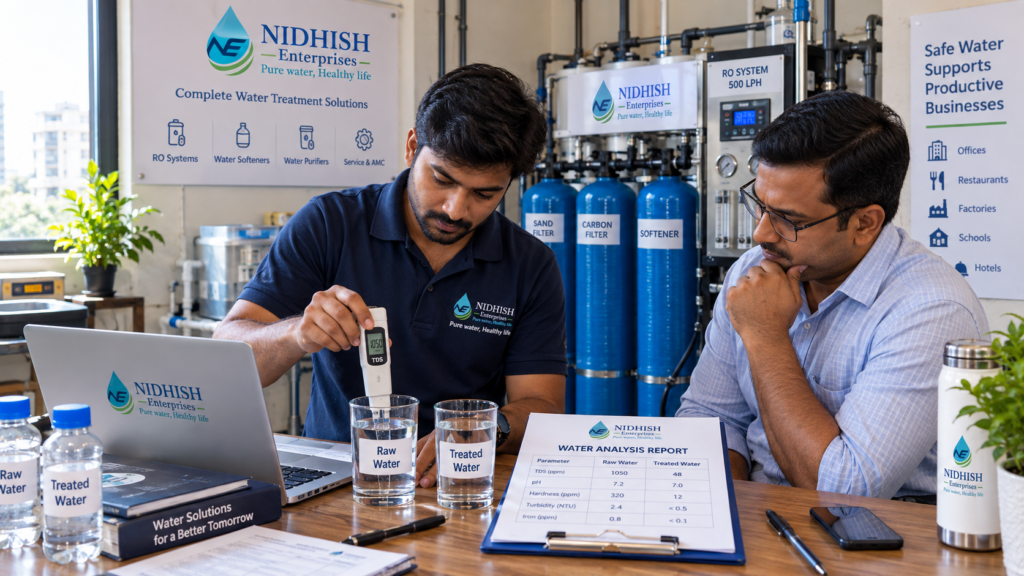
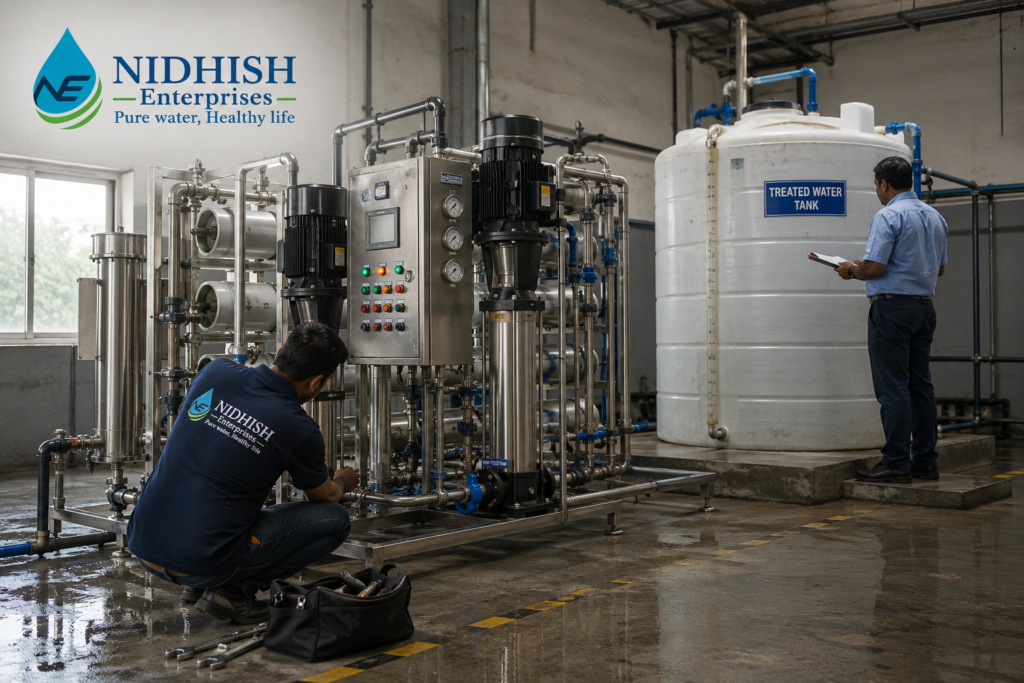
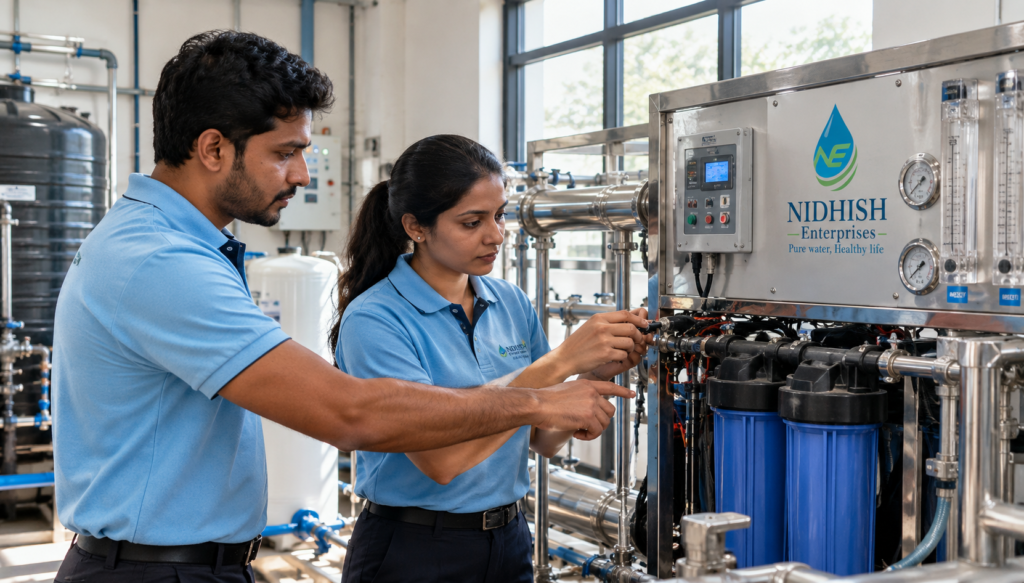
Commercial RO technician inspecting an unexpected RO system failure at an Indian facility.
Nidish-Enterprises, Tesphero-blogs

What Happens When Your Business Water System Fails? The Real Cost of RO Downtime

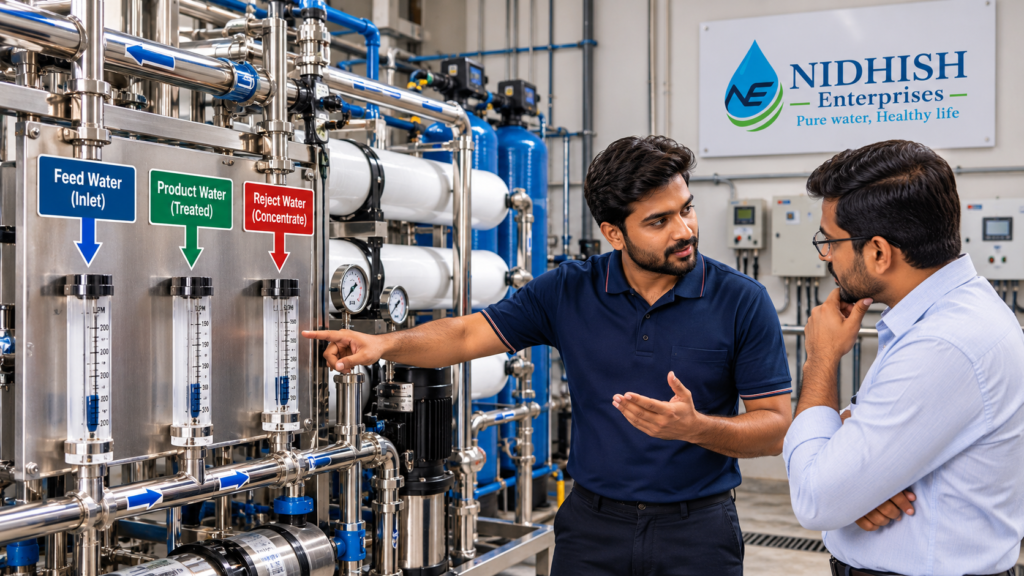
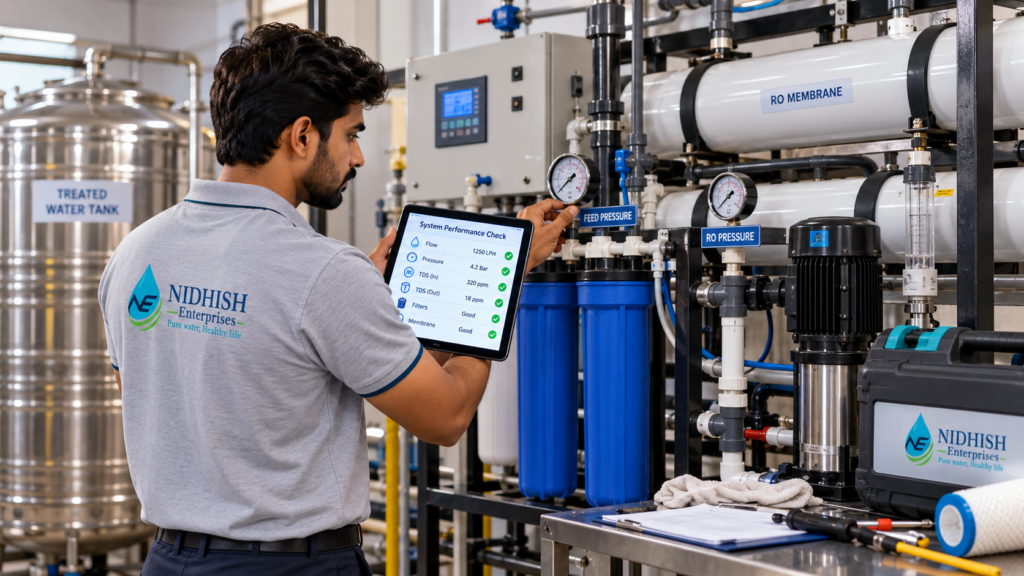
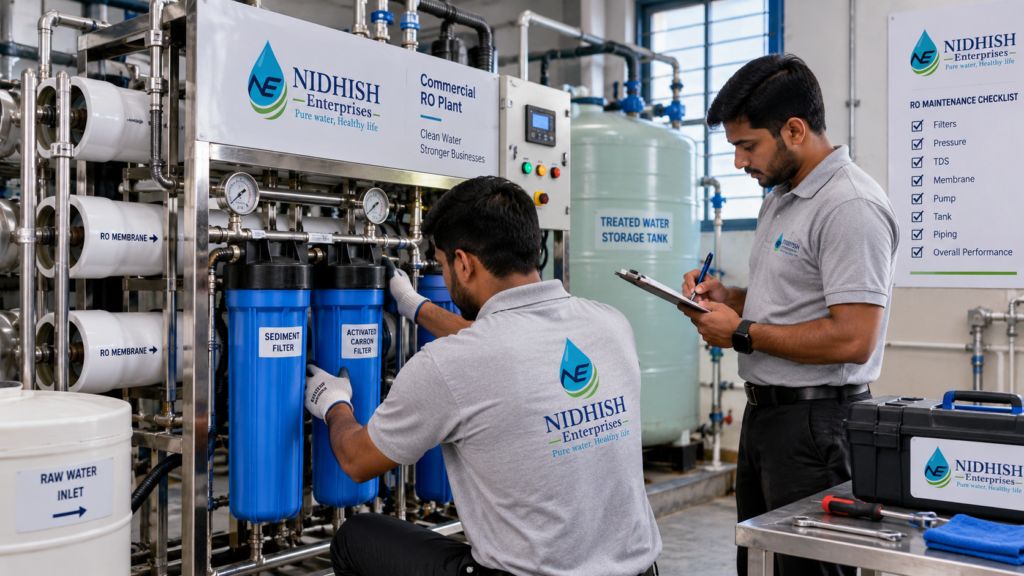
Your commercial RO system stops working at 10:30 in the morning. At first, it may seem like a maintenance problem that can wait. Then employees start asking for drinking water. Production needs treated water. Storage levels begin falling. Someone has to arrange an emergency alternative, and the team starts calling technicians while normal work continues. Suddenly, one RO breakdown is no longer just a water problem—it is a business problem. For offices, schools, factories, hospitals, hotels, restaurants, and other commercial facilities, a reliable water-treatment system can be part of everyday operations. When that system goes down, the real cost may include much more than the repair bill. There can be lost working time, emergency water purchases, operational disruption, delayed production, and unnecessary pressure on staff. That’s why businesses shouldn’t only ask: “How much will it cost to repair our RO?” They should also ask: “How much is every hour of RO downtime costing our business?” RO Downtime Costs More Than the Repair Bill 1. What Does RO Downtime Actually Mean? RO downtime is the period during which a reverse osmosis system cannot provide the quantity or quality of treated water required for normal operations. A complete shutdown is the most obvious example. However, downtime can also be partial. For instance, the RO may continue operating but produce significantly less water than required. Pressure may fall, water quality may change, or storage tanks may fail to refill quickly enough. From an operational perspective, the system is still creating a problem. Therefore, businesses should not define RO reliability only as: “Machine chal rahi hai ya nahi?” A better question is: “Is the system consistently delivering the water our facility requires?” 2. The Immediate Cost: Emergency Water When an RO system suddenly stops working, one of the first expenses can be arranging an alternative water supply. For an office, that might mean purchasing packaged drinking water. A larger facility may need water cans, tankers, or another temporary arrangement depending on the intended use and water-quality requirements. These emergency purchases may cost considerably more than normal in-house water treatment. In addition, someone has to coordinate them. Staff members make calls, confirm availability, arrange payment, and manage delivery. So the real emergency cost isn’t just the water. It also includes the time and effort required to keep operations moving. 3. Employee Productivity Can Be Affected In an office, drinking water may not directly produce revenue. Yet employees still depend on convenient access to suitable drinking water throughout the working day. Imagine hundreds of employees relying on one central water-treatment system. If it fails, the administration team has to respond. Employees may need to walk farther to temporary water points, and normal workplace routines can be disrupted. Individually, these interruptions may appear small. Across a large workforce, however, they can add up. Factories can face an even greater challenge, particularly when treated water supports processes in addition to drinking-water requirements. That is why the cost of downtime should include lost productive time, not simply technician charges. 4. Production Can Slow Down or Stop For some businesses, treated water isn’t merely an employee facility. It is an operational input. Depending on the industry and process, suitable water may be required for manufacturing, cleaning, food and beverage operations, commercial kitchens, or other applications. When the water-treatment system fails, operations may have to slow down until an alternative is arranged. In some cases, a particular process may need to stop. Suppose a facility loses several hours of production because its water-treatment system cannot supply the required output. The repair itself may cost relatively little compared with the value of the production lost during those hours. This is where RO downtime becomes an operational risk rather than simply a maintenance issue. 5. Customer Experience May Also Suffer Water-system failures can sometimes affect customers. Consider a hotel, restaurant, educational institution, or customer-facing commercial facility. If the water arrangement becomes unreliable, the business may need to change normal operations while the issue is resolved. Even when customers never learn exactly what happened behind the scenes, service quality may be affected. For hospitality and other service businesses, maintaining reliable supporting infrastructure is part of providing a consistent customer experience. A customer may never compliment you because the water-treatment system worked perfectly. They may certainly notice when essential services don’t. 6. A Small Problem Can Become a Bigger Repair Commercial equipment often gives warning signs before a complete breakdown. Reduced flow. Unusual pressure. Frequent pump cycling. Leaks. Changes in water quality. Unusual sounds. Filters requiring more frequent attention. Ignoring these signs can allow a manageable issue to develop into a more disruptive failure. For example, waiting until a component stops working completely may result in emergency service rather than planned maintenance. Consequently, businesses should treat unusual RO performance as something worth investigating early. Preventive attention is usually easier to plan than an unexpected shutdown. Why Commercial RO Systems Fail Unexpected breakdowns can happen. However, many RO problems don’t appear without warning. Understanding common causes can help businesses reduce avoidable downtime. 7. Delayed Filter Replacement Pre-filters play an important role in protecting the components that follow them. Over time, filters collect contaminants, and their performance can decline. When replacement is delayed beyond what the actual water conditions and system usage require, flow and pressure can be affected. The problem with using a fixed calendar alone is that every site is different. A commercial system operating for long hours with challenging feed water may require attention differently from a lightly used system with better incoming water. Therefore, maintenance should consider actual operating conditions, along with manufacturer recommendations. 8. Scaling and Hard Water Can Create Problems Hard water contains dissolved minerals that can contribute to scale formation under certain conditions. In commercial water systems, scaling can affect components and reduce performance if the pretreatment arrangement isn’t suitable for the incoming water. This is especially important for businesses operating in areas where hardness is a recurring concern. The correct solution depends on water analysis and the system

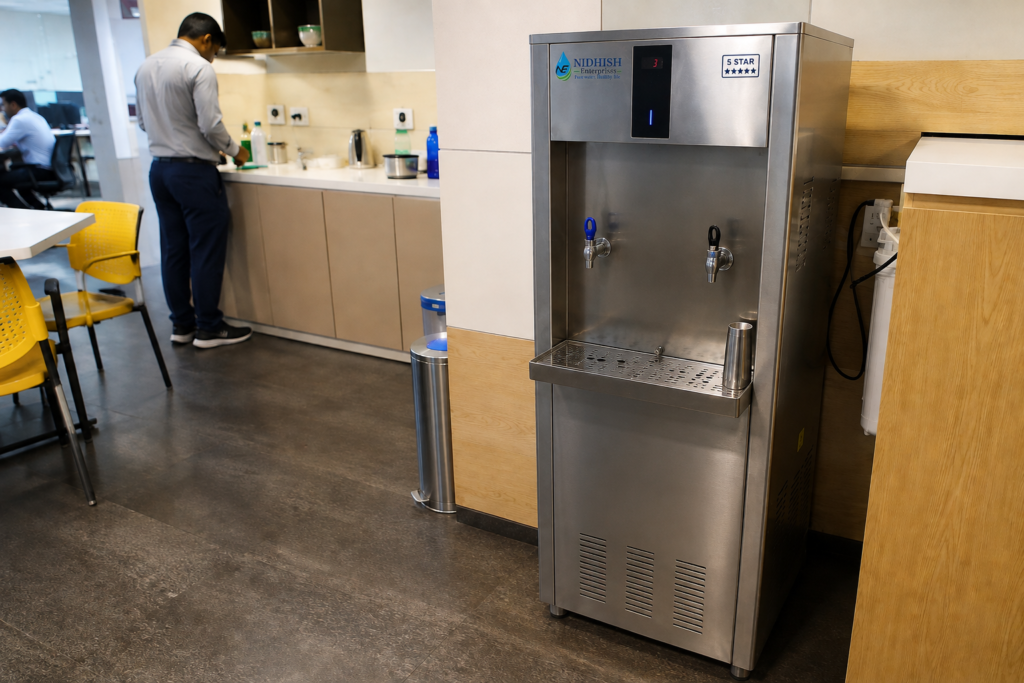
Commercial water cooler installed in an Indian office pantry.
Nidish-Enterprises, Tesphero-blogs

How to Choose the Right Water Cooler for Offices, Schools, Factories and Commercial Spaces

A water cooler is one of those pieces of equipment that most people don’t think about—until it stops meeting the requirements. For a small office, a basic unit may work perfectly well. Put the same water cooler in a busy school, factory, or commercial facility, and the experience can be completely different. Water runs out quickly. Cooling struggles during peak hours. People have to wait. Storage capacity feels insufficient. Maintenance becomes frequent. The problem isn’t always the quality of the machine. Sometimes, the water cooler simply wasn’t selected according to the actual usage. When choosing a commercial water cooler, capacity, cooling performance, water source, number of users, installation conditions, and maintenance requirements all matter. So instead of asking, “Which water cooler is best?”, start with a more practical question: “Which water cooler is right for this particular space and its daily demand?” Let’s understand how to make that decision. Start With Usage, Not the Machine 1. Understand How Many People Will Use It The first factor is obvious but often underestimated. How many people will regularly use the water cooler? An office with 20 employees has a very different requirement from a school with hundreds of students or a factory where several workers may approach the drinking-water point during the same break. Don’t only think about total users. Think about usage patterns. An office may have relatively distributed water consumption throughout the day. In a school, demand can rise sharply during recess. In a factory, many employees may need drinking water at the same time during scheduled breaks or shift changes. A water cooler that works comfortably for 100 people over several hours may still struggle if a large number of those users arrive within a short period. This is why capacity should be evaluated according to both total demand and peak demand. 2. Understand Cooling Capacity vs Storage Capacity These two specifications can sound similar, but they describe different things. Storage capacity generally refers to how much water the unit can hold in its storage tank. Cooling capacity indicates how much water the machine can cool over a given period under specified conditions. Both matter. Imagine a water cooler with adequate storage but insufficient cooling performance. During heavy usage, users may eventually receive water that isn’t as cool as expected because the system needs time to cool incoming water. On the other hand, strong cooling performance with inadequate storage may also be inconvenient in a high-demand environment. Therefore, don’t select a unit only because the tank looks large. Ask about both capacities and evaluate them against expected usage. 3. Consider Where the Cooler Will Be Installed The installation environment can influence what kind of water cooler you need. An air-conditioned corporate office and a factory floor are very different environments. For an office, factors such as compact design, noise, and appearance may matter. A school may require a durable system that can handle frequent use. A factory may need equipment suitable for heavier usage and a more demanding working environment. A commercial establishment may prioritise both performance and professional appearance. Before purchasing, inspect the intended installation area. Consider available floor space, ventilation, drainage, electrical connection, and water inlet. Also make sure users can access the cooler comfortably without creating unnecessary congestion. Choosing the installation location before choosing the machine can prevent practical problems later. 4. Check Your Water Source A water cooler cools water. It should not automatically be assumed to solve every water-quality problem. Before installation, understand where the incoming water is coming from and whether additional treatment is required. Depending on the source and test results, a facility may need a separate purification or treatment system. For example, a commercial facility may combine a drinking-water cooler with an appropriate RO or other treatment system where water conditions require it. The treatment decision should be based on the actual water-quality requirement rather than assumptions. This distinction is important: Cooling and purification are two different functions. If your facility requires both, the complete system should be planned accordingly. Cooling the water is only one part of planning a drinking-water system. If your facility is also dealing with hardness, scale, or mineral buildup, read our guide “Hard Water Problems in Indore: How Water Softeners Can Protect Your Home and Business” to understand why water quality should be assessed separately. Before selecting any drinking-water treatment or cooling system, it is useful to understand the quality of the incoming water. The Bureau of Indian Standards (BIS) provides standards related to drinking-water quality that can serve as a useful general reference when evaluating important water-quality parameters. However, a water cooler is primarily designed to cool water; it should not be treated as a substitute for appropriate purification or water treatment where that is required. Water testing and the actual source of water should guide the choice of treatment system. 5. Think About Build Quality and Daily Use Commercial equipment can experience much more frequent use than household equipment. Buttons, taps, faucets, and other components may be operated hundreds of times in busy environments. This makes build quality important. Stainless-steel water coolers are commonly considered for commercial environments because they can offer durability and are relatively straightforward to maintain when properly designed and serviced. However, material alone shouldn’t determine the purchase. Also evaluate construction quality, internal components, accessibility for cleaning and servicing, and the availability of replacement parts. A water cooler is something your employees, students, workers, or visitors may depend on every day. Choose accordingly. Different Spaces Need Different Water Cooler Planning A common mistake is assuming that one commercial water cooler specification can work everywhere. The actual requirement changes considerably depending on the type of facility. Choosing a Water Cooler for an Office Office water consumption is usually easier to estimate because the number of employees is relatively stable. Start with the number of regular employees, then consider visitors and peak periods. For smaller offices, a compact water cooler with suitable capacity may be sufficient. For larger corporate spaces, one high-capacity

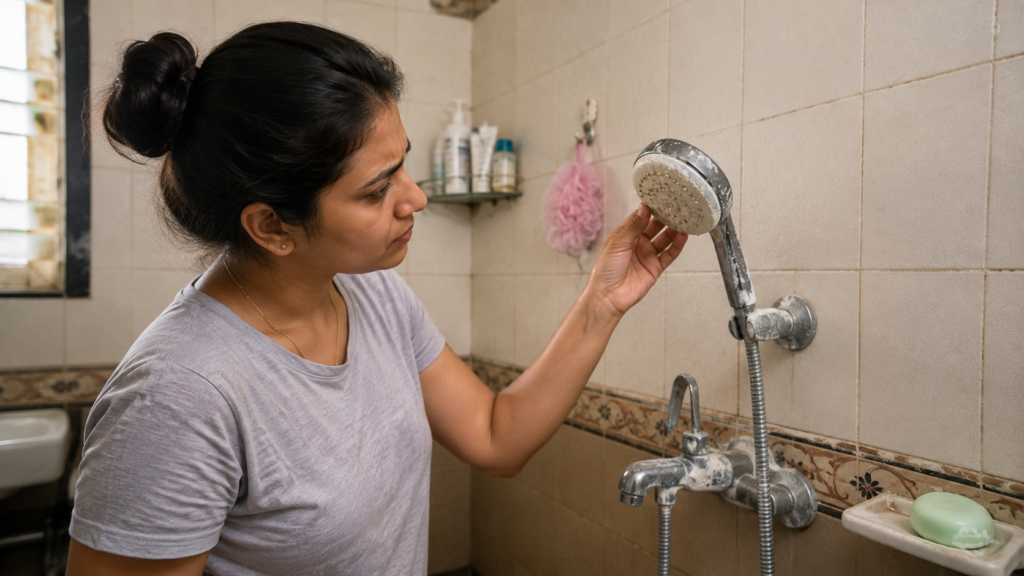
Mineral scale deposits on bathroom fixtures caused by hard water.
Nidish-Enterprises, Tesphero-blogs

Hard Water Problems in Indore: How Water Softeners Can Protect Your Home and Business

Is Hard Water Becoming a Daily Problem? Water may look clean, but that doesn’t always mean it is free from problems. In many parts of Indore, people deal with water that contains a higher level of dissolved minerals, particularly calcium and magnesium. This type of water is commonly known as hard water. For some households, the first signs may be simple—a white layer around taps, spots on bathroom fittings, or soap that doesn’t seem to rinse properly. But over time, hard water can affect much more than the appearance of your bathroom. It can leave deposits inside pipes and appliances, reduce the effectiveness of soaps and detergents, affect water-heating equipment and create additional maintenance work. The impact can be even more noticeable in businesses where water is used every day and in larger quantities. Hotels, restaurants, salons, laundries, offices, hospitals, and manufacturing facilities may all have different water requirements, but one thing remains common: water quality affects operations. This is where understanding hard water—and knowing when a water softener may be useful—becomes important. What Is Hard Water? Hard water is water that contains relatively high levels of dissolved minerals, mainly calcium and magnesium. These minerals are naturally present in groundwater and can enter the water supply as it moves through rocks and soil. Hard water isn’t necessarily unsafe to drink simply because it is hard. The bigger concern is often its effect on plumbing, appliances, cleaning, and everyday use. You may notice signs such as: These signs can be easy to ignore because they usually don’t appear as a major problem overnight. The issue develops gradually. And that is exactly why many people don’t think about water hardness until maintenance costs start increasing. Why Hard Water Can Be a Concern in Indore Indore has a mix of municipal water supply and groundwater usage across different areas and properties. Water quality can vary depending on the source, location, building, storage, and distribution system. This means you shouldn’t assume that every home or business has the same water quality. If you’re noticing repeated scale deposits, poor soap performance, or problems with water-using appliances, testing the water can be a sensible first step. Rather than guessing whether your water is hard, test it and understand what you’re dealing with. That information can then help determine whether a water softener or another water-treatment solution is appropriate. Hardness is only one part of overall water quality. Read our Complete Water Purification Solutions in Indore to understand some of the other factors that can affect the water you use every day. 1. Hard Water Can Create Scale on Fixtures One of the easiest signs of hard water is the white or chalky deposit that appears around taps, showerheads, and other fixtures. At first, cleaning the deposits may seem like a minor household chore. But when the deposits keep returning, it can become frustrating. Scale can also build up in less visible areas, including pipes and components where water regularly flows. This is why simply cleaning the surface doesn’t always solve the underlying issue. If hard water is the cause, the deposits may continue to return until the water itself is treated appropriately. 2. It Can Affect Water-Using Appliances Many homes and businesses depend on appliances and equipment that use water regularly. These may include: Mineral scale can accumulate on internal components over time. For water-heating equipment, this can be particularly relevant because deposits can interfere with heat transfer and contribute to reduced efficiency. The result may be higher energy consumption, more frequent cleaning or maintenance, and potentially shorter equipment life. For a household, that means additional expense. For a business, repeated equipment downtime can become an operational issue. How Hard Water Affects Everyday Life and Business 3. Cleaning Can Become More Difficult Have you ever noticed that you need more soap or detergent to get the result you expect? Hard water can make cleaning less efficient because calcium and magnesium can interact with soap and reduce its ability to lather effectively. This can mean using more cleaning products for the same task. In a home, the difference may seem small. But imagine a hotel, restaurant, laundry, or facility that uses cleaning products every single day. Small inefficiencies can add up. This is why businesses that consume significant amounts of water should consider water quality as part of their overall operating costs—not just as a basic utility issue. 4. Your Clothes and Laundry May Be Affected Hard water can also create problems during laundry. Mineral deposits can interact with detergents and may contribute to clothes feeling less soft or looking dull over repeated washing. For homes, this may mean using additional detergent or fabric-care products. For commercial laundries, hotels, hospitals, and similar businesses, the impact can be much larger because of the volume of washing involved. When water quality affects a high-frequency process, even a relatively small issue can become expensive over time. 5. Hard Water Can Increase Maintenance This is one of the biggest reasons businesses and homeowners should pay attention to water hardness. Think about everything that comes into regular contact with your water: Pipes → taps → heaters → washing machines → kitchen equipment → bathroom fittings If scale continues to accumulate, these components may require more frequent cleaning and maintenance. This doesn’t mean hard water will automatically damage every appliance. The actual impact depends on factors such as water hardness, usage, equipment design, and maintenance practices. But if your water is consistently hard, managing the hardness can be one way to reduce unnecessary scale-related problems. What Is a Water Softener? A water softener is a water-treatment system designed to reduce hardness-causing minerals, primarily calcium and magnesium, from water. One common method uses an ion-exchange process. In simple terms, the system exchanges hardness ions in the water with other ions through a specialised resin. The result is water with reduced hardness. However, not every property needs the same type or size of softener. A household with a small family will have very different

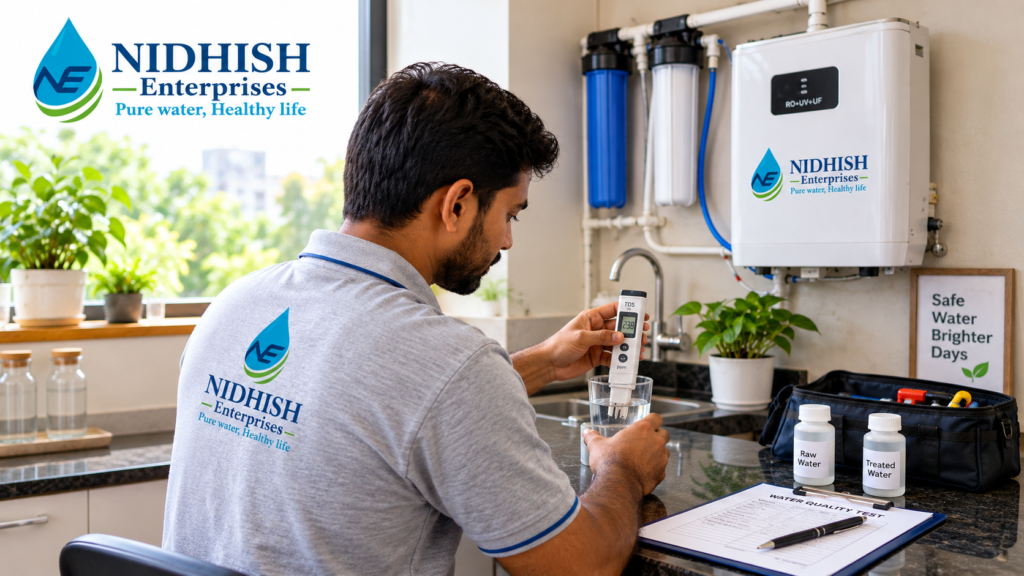
Professional technician servicing a domestic RO water purifier in a modern kitchen to maintain water quality and system performance.
Nidish-Enterprises, Tesphero-blogs

The Hidden Cost of Neglecting RO Maintenance: How Regular Servicing Can Save You Money

Installing a Reverse Osmosis (RO) water purifier is one of the smartest investments you can make for your family’s health or your business. Whether it’s a home, office, restaurant, hospital, school, or manufacturing unit, access to clean and safe drinking water is essential. As water quality concerns continue to grow across India, more people are choosing RO systems to remove harmful contaminants and improve the taste and safety of their drinking water. However, many people believe that once an RO system is installed, the job is done. In reality, buying an RO purifier is only the first step. Like any other machine, an RO system requires regular maintenance to perform efficiently. Filters become clogged, membranes gradually lose their effectiveness, and internal components experience normal wear and tear over time. Unfortunately, this is where many users make a costly mistake. To avoid spending money on routine servicing, they postpone maintenance until the purifier stops working or the water quality noticeably deteriorates. While this may seem like a way to save money in the short term, it often leads to expensive repairs, reduced purification efficiency, higher electricity consumption, and even health risks. These are the hidden costs of neglecting RO maintenance. Regular servicing is not simply about replacing filters. It’s about protecting your investment, ensuring consistent water quality, extending the life of your purifier, and preventing unexpected breakdowns that could cost significantly more than scheduled maintenance. In this blog, we’ll explore why routine water purifier maintenance is essential, the early warning signs that your RO system needs attention, and how preventive servicing can save you money while ensuring safe drinking water for years to come. If you want to understand the broader challenges involved in treating water for industrial applications, read our guide on Industrial Water Purification. Why RO Maintenance Is Often Ignored Most people understand the importance of servicing their car or maintaining an air conditioner, yet many overlook the maintenance needs of their water purifier. One reason is that an RO system usually continues to operate even when its filters or membrane begin to lose efficiency. Since the purifier still dispenses water, users assume everything is functioning normally. However, appearances can be misleading. Inside the purifier, filters may already be clogged with dirt, sediment, and other impurities. The RO membrane may be working harder than necessary, and the purification process may no longer be as effective as it was when the system was new. There are several reasons why regular RO service is often delayed. “The Water Still Looks Fine” Many people judge water quality by its appearance. If the water looks clear and there is no unusual smell, they assume it is safe to drink. The reality is that many harmful contaminants cannot be seen, tasted, or smelled. This is why relying only on visual inspection can be risky. Waiting Until Something Goes Wrong Another common mistake is waiting until the purifier completely stops working. By this stage, what could have been a simple filter replacement may have turned into a costly repair involving the membrane, booster pump, or other internal components. Preventive maintenance is almost always more affordable than emergency repairs. Trying to Save on Service Costs Some users postpone servicing because they see it as an unnecessary expense. Ironically, this decision often results in much higher repair bills later. Replacing damaged components generally costs far more than routine maintenance performed at the right time. Assuming Filters Last Forever Every filter inside an RO system has a recommended service life. How long these filters last depends on several factors, including local water quality, usage, and the amount of impurities present in the water supply. Delaying replacement beyond the recommended period can reduce purification performance and place unnecessary stress on the entire system. Understanding these common mistakes is the first step toward protecting both your purifier and your long-term maintenance budget. How an RO System Works To appreciate the importance of regular maintenance, it helps to understand how an RO purifier cleans water. Although different models may include additional technologies, most modern water purification systems follow a multi-stage filtration process. Each stage performs a specific job, and every component requires timely maintenance to continue working efficiently. Sediment Filter The sediment filter acts as the first line of defence. It removes visible particles such as dust, sand, rust, and suspended solids from the incoming water. If this filter becomes clogged, water flow decreases, forcing the rest of the purification system to work harder. Activated Carbon Filter The carbon filter helps remove chlorine, unpleasant odours, organic compounds, and certain chemicals that affect the taste and smell of drinking water. Over time, the carbon loses its ability to absorb these impurities, making regular replacement essential. RO Membrane The RO membrane is the heart of the purification process. It removes dissolved salts, heavy metals, bacteria, viruses, and many other microscopic contaminants that ordinary filters cannot eliminate. Since the membrane performs the most critical purification function, protecting it through timely filter changes and routine RO maintenance is extremely important. A neglected membrane may lose efficiency or require premature replacement, increasing maintenance costs. UV or UF Purification (Where Applicable) Many modern RO systems also include UV (Ultraviolet) or UF (Ultrafiltration) technology as an additional layer of protection. These stages help improve microbiological safety by targeting harmful microorganisms that may still be present after earlier filtration stages. Like other components, these systems should also be inspected during routine servicing to ensure they continue performing effectively. When every stage works together, your purifier delivers clean, safe, and great-tasting drinking water. However, if even one component is neglected, the overall performance of the entire system can be affected. Regular servicing ensures that every part of the purification process continues to function as intended. Early Warning Signs Your RO Needs Servicing Your RO system often gives small warning signs before a major problem develops. Recognising these signs early can help you schedule maintenance before minor issues become expensive repairs. Here are some of the most common indicators that

"Aqua Moor black RO water purifier with digital display in a modern kitchen."
Nidish-Enterprises, Tesphero-blogs

Best RO Water Purifier in Indore | Buying Guide

Choosing an RO water purifier may seem simple, but the right system depends on more than just the brand or price. Your water source, water quality, daily consumption, and intended use all play an important role in deciding which purification system is suitable for you. A purifier that works well for a small family may not be the right choice for an office, restaurant, hotel, or industrial facility. Similarly, homes using different water sources may have different purification requirements. This is particularly important in a city like Indore, where water quality and sources can vary from one location to another. So, instead of asking, “Which is the best RO purifier?”, a better question is: “Which water purification system is right for my specific needs?” Let’s look at the key factors you should consider before making a decision. 📑 Table of Contents Start by Understanding Your Water Source The first step is to identify where your water comes from. Your property may receive: Different water sources can have different characteristics. Groundwater, for example, may contain higher levels of dissolved minerals and salts, while other sources may have different purification requirements. This is why choosing a purifier simply because it works well for someone else may not always be the right approach. Your water source should be one of the first things you consider when selecting a purification system. Check Your Water Quality Many people focus only on TDS (Total Dissolved Solids) when choosing an RO purifier. While TDS is an important parameter, it doesn’t provide a complete picture of water quality. Depending on the source, you may also need to consider: A proper water quality assessment can help you understand what kind of purification technology your property actually requires. TDS is important, but it is not the whole story. Choose the Right Type of RO System A major mistake people make is choosing a purifier based only on its brand, appearance, or number of purification stages. Your actual requirement should come first. For a home, you may need a domestic RO purifier designed for regular household consumption. For an office, restaurant, hotel, school, or commercial facility, the water demand can be significantly higher. In such cases, a commercial RO system may be more appropriate. For manufacturing units and industries, the requirements can be much more complex, requiring specialised industrial water purification solutions. The right system depends on factors such as: Intended application Daily water consumption Number of people using the water Water quality Required purification capacity Available space Domestic RO Systems Designed for household drinking and cooking requirements. When choosing one, consider: Commercial RO Systems Commercial establishments often need significantly more purified water than a household. These systems may be suitable for: Capacity, operating hours, water demand, and water quality should be considered before selecting a system. Industrial RO Solutions Industrial facilities may require specialised water purification for manufacturing, production, equipment, boilers, or other processes. The right system depends on the incoming water quality, required output, desired water quality, and specific industrial application. If you want to understand the different water purification solutions available for homes, businesses, and industries, you can also read our guide on Complete Water Purification Solutions in Indore: A Guide to Domestic, Commercial & Industrial RO Systems. Consider Your Daily Water Consumption The right capacity depends on how much purified water you actually need. For homes, consider: For businesses, also consider: Choosing a system with insufficient capacity may create operational problems, while an unnecessarily large system may increase costs. The goal is to choose a system that matches your actual water demand. 5. Understand RO, UV, and UF Technologies When searching for a water purifier, you may come across technologies such as RO, UV, and UF. Many buyers assume that more technologies automatically mean better purification. However, the right combination depends on the quality of your water and your specific requirements. RO (Reverse Osmosis) RO uses a semi-permeable membrane to reduce dissolved salts and certain contaminants from water. It is commonly considered when water contains higher levels of dissolved solids or requires reduction of certain dissolved impurities. UV (Ultraviolet) UV technology uses ultraviolet light to help inactivate microorganisms present in water. UF (Ultrafiltration) UF uses a membrane to help remove certain suspended particles and microorganisms, depending on the system design and water quality. These technologies are not interchangeable. The right combination depends on your water quality and purification requirements. Choose the Right Storage and Capacity For domestic systems, storage capacity should match your family’s daily requirements. For commercial systems, both storage and purification output become important because water demand may vary throughout the day. Before choosing a system, consider: The right capacity can help ensure that the system meets your requirements without unnecessary additional costs. Don’t Ignore Maintenance and AMC Buying an RO system is not the end of the process. Filters and membranes may require periodic inspection, servicing, cleaning, or replacement depending on the system, water quality, and usage. Ignoring maintenance can affect: Before purchasing, ask about: A reliable service network is an important part of choosing a water purification system. Installation Quality Matters Even a good RO system may not perform as expected if it is not installed properly. Professional installation should consider: This becomes especially important for commercial and industrial systems, where installation requirements can be more complex. Consider the Long-Term Cost Don’t choose an RO purifier based only on its initial price. The overall cost may include: A cheaper system may not always be more economical if it requires frequent maintenance. Instead of asking: “Which purifier is the cheapest?” Ask: “Which system offers the right balance of performance, reliability, maintenance, and long-term value?” Think About Water Efficiency RO systems produce reject water during purification, and the amount can vary depending on the system design and incoming water quality. When selecting an RO system, ask about its water recovery and reject-water management. In homes, suitable reject water may sometimes be reused for non-drinking purposes, depending on its quality. For commercial and industrial facilities,

Nidish-Enterprises

Complete Water Purification Solutions in Indore: A Guide to Domestic, Commercial & Industrial RO Systems

/Complete Water Purification Solutions in Indore | Nidhish Enterprises Access to clean drinking water has become more important than ever. Whether it’s a home, an office, a restaurant, or a manufacturing unit, water quality directly impacts health, productivity, and equipment lifespan. In a growing city like Indore, water quality can vary significantly depending on the source. Municipal water, borewell water, and groundwater often have different TDS levels and may contain sediments, dissolved minerals, or other impurities. That’s why choosing the right water purification system isn’t simply about buying an RO—it’s about selecting a solution that matches your specific needs. A domestic RO system designed for a family of four cannot meet the requirements of a busy office, just as a commercial RO unit isn’t suitable for a large manufacturing facility. Every environment has different water consumption, purification requirements, and installation needs. In this guide, we’ll explain the differences between Domestic RO Systems, Commercial RO Systems, Industrial RO Solutions, and Professional RO Installation Services. By the end, you’ll have a clear understanding of which solution is right for your home or business. Table of Contents 💧 Why Choosing the Right RO System Matters One of the most common mistakes people make is choosing an RO system based only on price or brand. While these factors are important, they shouldn’t be the only deciding points. The right RO system depends on several factors, including: A system that is too small may struggle to meet daily demand, while an oversized system can lead to unnecessary costs. Understanding your water quality and usage before making a decision helps ensure better performance and long-term value. 🏡 Domestic RO Systems – Safe Drinking Water for Every Home A Domestic RO System is designed for households that require safe and great-tasting drinking water every day. Whether your home receives municipal water or borewell water, the right RO purifier helps reduce impurities and improve overall water quality. Modern domestic RO systems are compact, energy-efficient, and easy to maintain, making them suitable for apartments, independent houses, and residential societies. Benefits of a Domestic RO System If you’re planning to buy a Domestic RO System in Indore, choosing the right capacity based on your family’s daily water consumption is just as important as selecting the brand. 🏢 Commercial RO Systems – Reliable Water Purification for Businesses Every business depends on clean drinking water, but the water needs of an office or restaurant differ greatly from those of a home. When dozens or even hundreds of people rely on the same water source every day, a domestic RO purifier simply isn’t enough. A Commercial RO System is designed to deliver a continuous supply of purified water for workplaces with higher daily consumption. It combines higher filtration capacity, better storage, and reliable performance, making it suitable for businesses that cannot afford interruptions in their drinking water supply. Whether you manage a corporate office, hospital, school, hotel, café, or restaurant, a Commercial RO System helps provide safe drinking water while maintaining workplace hygiene and customer confidence. Benefits of a Commercial RO System Tip: Before selecting a Commercial RO System, always assess your daily water usage and source water quality. The right capacity ensures better efficiency and lower operating costs. 🏭 Industrial RO Solutions – High-Capacity Water Treatment for Industries Industrial operations require far more than drinking water. In many sectors, water plays a critical role in production, cleaning processes, cooling systems, and equipment performance. When water contains high TDS, dissolved minerals, or other impurities, it can affect product quality, increase maintenance costs, and reduce the lifespan of machinery. An Industrial RO System is engineered to handle large volumes of water while delivering consistent quality for demanding industrial applications. Industries that commonly benefit from Industrial RO solutions include: Why Industries Choose Industrial RO Systems ✔ High-capacity water purification ✔ Reduces scaling in pipelines and equipment ✔ Improves process water quality ✔ Supports consistent production ✔ Designed for continuous industrial operation Industrial RO systems are custom-designed based on water analysis, daily consumption, and production requirements, ensuring reliable performance over the long term. 🛠️ Professional RO Installation Services – Why Proper Installation Matters Even the best RO system cannot perform efficiently if it is installed incorrectly. Professional installation ensures that the system operates safely, delivers optimal water quality, and continues to perform reliably over time. At Nidhish Water Solutions, every installation begins with an assessment of the water source, available space, water pressure, and daily consumption. This helps ensure that the selected system is installed correctly from day one. Our installation services include: A properly installed RO system not only performs better but also reduces the chances of unexpected breakdowns and costly repairs in the future. 📊 Domestic vs Commercial vs Industrial RO Systems Feature Domestic RO Commercial RO Industrial RO Ideal For Homes & Apartments Offices, Restaurants, Schools & Hospitals Factories & Manufacturing Units Daily Water Capacity Low Medium to High High Volume Number of Users 2–10 20–500+ Large Workforce / Industrial Processes Installation Standard Professional Custom Engineered Best Use Drinking Water Workplace Drinking Water Process & Utility Water Maintenance Basic Scheduled Planned Preventive Maintenance Quick Tip: Choosing the right RO system isn’t about buying the biggest machine—it’s about selecting the one that matches your water quality, daily usage, and operational requirements. ✅ How to Choose the Right RO System for Your Needs Choosing the right RO system isn’t just about selecting a popular brand or the lowest price. The best solution depends on your water quality, daily usage, and the environment where the system will be installed. Before making a decision, consider these factors: If you’re unsure which system is right for your home or business, a professional water quality assessment can help you make the right choice. 📊 Quick Guide to Choosing the Right RO System Your Requirement Recommended Solution Family Home Domestic RO System Office (20–100 Employees) Commercial RO System School / Hospital Commercial RO System Restaurant / Hotel Commercial RO System Manufacturing Unit Industrial RO Solution High-TDS Borewell Water RO

Nidish-Enterprises

Why Monsoon Water Is More Dangerous Than You Think: Why Every Commercial Space in Indore Needs a Commercial RO System

/commercial-ro-system-indore-monsoon-water-safety Introduction The monsoon season transforms Indore into one of the most pleasant cities in Central India. Cooler temperatures, fresh greenery, and much-needed rainfall bring relief after months of intense summer heat. But while the weather improves, drinking water quality often becomes less predictable. Heavy rainfall can disturb both municipal and groundwater sources. Overflowing drains, ageing pipelines, construction activity, and surface runoff may introduce mud, suspended particles, and harmful microorganisms into the water supply. In many cases, water may look clear but still contain contaminants that aren’t visible to the naked eye. For commercial establishments, this isn’t just a maintenance issue—it’s a workplace health concern. Offices, factories, hospitals, restaurants, hotels, schools, and retail businesses serve drinking water to employees, customers, and visitors every day. If that water isn’t properly purified, it can affect employee well-being, business operations, and customer confidence. This is why many businesses now consider a Commercial RO System an essential part of their infrastructure rather than an optional upgrade. It helps provide consistently safe drinking water, even when water quality changes during the rainy season. In this guide, we’ll explain why monsoon water becomes more challenging in Indore, why ordinary water filters may not be enough, and how a Commercial RO System can help protect your workplace. Table of Contents Why Water Quality Changes During the Monsoon in Indore Every monsoon brings a noticeable change in water quality across many parts of Indore. As rainwater flows through roads, open areas, and drainage systems, it carries mud, dust, organic waste, and other impurities into nearby water sources. These changes can affect both municipal water and groundwater used by commercial buildings. In some areas, ageing pipelines, overflowing drains, or poorly maintained storage tanks may further increase the risk of contamination. Groundwater quality can also fluctuate during the rainy season, resulting in changes in TDS (Total Dissolved Solids), taste, and clarity. Commercial hubs such as Vijay Nagar, Scheme No. 54, Palasia, Bhanwarkuan, Super Corridor, and nearby industrial zones rely heavily on a consistent supply of clean drinking water. During the monsoon, businesses in these areas should pay extra attention to water quality, especially if they use borewell water or overhead storage tanks. Some of the most common monsoon water quality concerns include: These issues may not always be visible, which is why proper water purification becomes even more important during the rainy season. This is why relying on appearance alone is never enough when assessing drinking water quality. How Poor Water Quality Can Affect Businesses in Indore For businesses, clean drinking water is more than just a basic facility—it’s an important part of employee well-being, customer satisfaction, and daily operations. During the monsoon, contaminated water can create problems that extend beyond health concerns. Frequent employee sick leaves, customer complaints, and disruptions in daily work can all impact productivity and business reputation. Whether you run a corporate office, restaurant, hospital, manufacturing unit, or educational institution, providing safe drinking water should be a priority throughout the rainy season. Common business challenges caused by poor water quality include: For businesses operating in busy commercial areas such as Vijay Nagar, Palasia, Scheme No. 54, Bhanwarkuan, Super Corridor, and Pithampur, ensuring consistent water quality is essential to maintaining a healthy workplace. Why Basic Water Filters Are Not Enough During the Monsoon Many businesses assume that installing any water purifier is enough to solve seasonal water quality issues. However, monsoon water often contains a mix of sediments, dissolved impurities, and microbial contaminants that basic filtration systems may not fully address. For example: As water quality changes during the rainy season, businesses need a purification system that can consistently handle varying conditions rather than relying on a single-stage filtration process. Why a Commercial RO System Is the Better Choice A Commercial RO System is specifically designed to purify large volumes of water while addressing multiple water quality concerns simultaneously. Instead of focusing on just one type of impurity, it uses a multi-stage purification process that helps remove: This makes Commercial RO systems a practical solution for workplaces where many people depend on the same drinking water source every day. Key Benefits for Businesses ✔ Consistent drinking water quality throughout the year ✔ Better workplace hygiene ✔ Improved employee confidence ✔ Suitable for offices, factories, restaurants, hospitals, schools, and hotels ✔ Reliable performance even when seasonal water quality changes Commercial RO System vs Basic Water Filter Feature Basic Water Filter Commercial RO System Removes Mud & Sediments Limited ✔ Yes Reduces High TDS ✖ No ✔ Yes Improves Taste & Odour Partial ✔ Excellent Suitable for Large Workplaces Limited ✔ Yes Handles Seasonal Water Quality Changes Limited ✔ Excellent Ideal for Offices, Factories & Restaurants Limited ✔ Yes Quick Tip: Choosing a water purification system based only on price can be costly in the long run. A Commercial RO System offers better protection against changing water quality and helps ensure safe drinking water for employees and customers throughout the monsoon. 🛠️ Monsoon RO Maintenance Checklist Installing a Commercial RO System is only the first step. Regular maintenance ensures consistent performance and safe drinking water throughout the monsoon. Maintenance Task Recommended Frequency Check Water TDS Once Every Month Clean or Replace Pre-Filters Every 30–45 Days Inspect the RO Membrane As Recommended Clean the Water Storage Tank Every 3–6 Months Schedule Professional Servicing As Per Manufacturer Guidelines Pro Tip: If your business relies on borewell water or experiences frequent water quality changes during the monsoon, periodic water testing can help ensure your RO system continues to perform efficiently. Frequently Asked Questions (FAQs) 1. Why does water quality become poor during the monsoon? Heavy rainfall can introduce mud, sediments, and microbial contaminants into water sources, making proper purification more important during the rainy season. 2. Is a Commercial RO System suitable for offices? Yes. Commercial RO Systems are ideal for offices, factories, restaurants, hospitals, schools, hotels, and other workplaces where multiple people require safe drinking water every day. 3. Can a Commercial RO System reduce high TDS? Yes. Reverse Osmosis

Scroll to Top