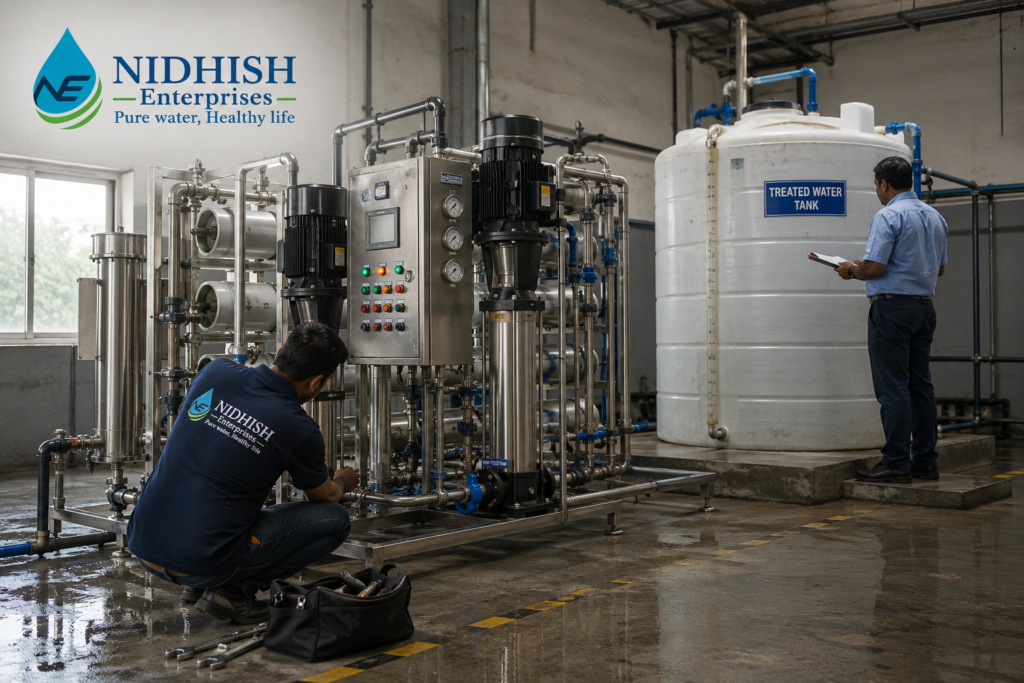

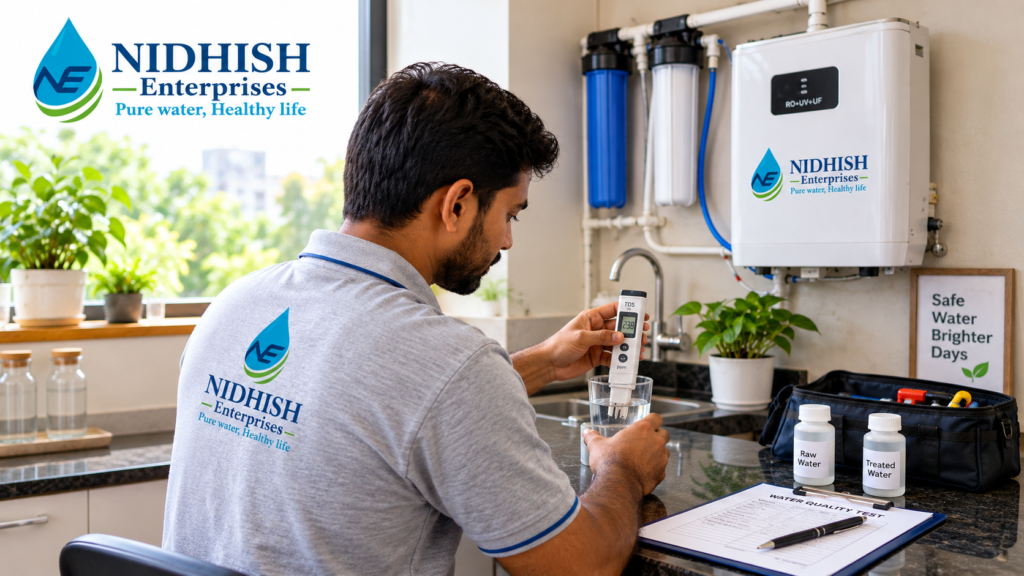
RO vs UV vs UF Water Purification: Which Technology Is Right for Your Water?
RO vs UV vs UF is one of the most common comparisons people make when choosing a water purifier for their home or business. So, asking “Which purifier is best?” may not be the right starting point. A better question is: “What is actually present in my water, and which treatment does it need?” The answer can change based on your water source, TDS level, hardness, microbial risk, and daily water use. In addition, homes and commercial spaces may have very different requirements. This guide explains the difference between RO, UV, and UF in simple terms. It will also help you understand why testing your water before choosing a system can lead to a better decision. Table of Contents Understanding RO vs UV vs UF Water Purification 1. Start With Your Water, Not the Purifier Many people start their search by looking at purifier brands. That is usually too early. First, understand your water source. Does your property receive municipal water? Do you depend on borewell water? Is tanker water also used? Perhaps your water comes from more than one source during the year. Each source can have different characteristics. For example, some groundwater sources may contain higher levels of dissolved minerals. On the other hand, microbial contamination can be a concern in certain water conditions. Therefore, the right treatment depends on the quality of the incoming water. A purifier should solve a known problem. It should not simply be chosen because a certain technology sounds more advanced. 2. What Is RO Water Purification? RO stands for Reverse Osmosis. An RO system pushes water through a special semi-permeable membrane. As a result, it can reduce many dissolved substances present in the water. RO is commonly considered when the incoming water has high TDS or other dissolved contaminants that the selected system is designed to reduce. However, RO should not automatically be used for every water source. Its suitability depends on the quality of the raw water and the treatment goal. RO systems also produce a reject-water stream during purification. Therefore, system efficiency and reject-water management should be considered when selecting and operating an RO plant or purifier. For homes, this may involve a relatively small system. Commercial users may require much larger RO plants based on daily demand and water quality. 3. What Is UV Water Purification? UV stands for Ultraviolet purification. Unlike RO, UV does not primarily work by removing dissolved salts. Instead, water passes through a chamber where it is exposed to ultraviolet light. With suitable design and operating conditions, UV can inactivate many microorganisms. Therefore, UV can play an important role where microbial treatment is required. However, water quality matters here too. Cloudy or highly turbid water can affect UV performance because particles may interfere with UV exposure. For this reason, suitable pre-treatment may be needed before the UV stage. The UV lamp and related components also require maintenance. So, installing a UV unit does not mean it can be ignored afterward. 4. What Is UF Water Purification? UF stands for Ultrafiltration. UF systems use a membrane with very small pores. Water passes through this membrane while certain suspended particles and microorganisms are physically retained. Unlike RO, UF generally does not remove dissolved salts in the same way. This difference is important. Suppose your main problem is high dissolved mineral content. A UF membrane alone may not solve that issue. However, UF can be useful as part of a treatment process when its filtration capability matches the water problem. It may also be combined with other technologies. Again, the right configuration depends on the incoming water. 5. How RO, UV and UF Are Different Feature RO UV UF Main purpose Reduces many dissolved substances Inactivates microorganisms Filters fine suspended particles and certain microorganisms Reduces TDS Yes, depending on system No Generally no Uses membrane Yes No Yes Uses UV light No Yes No Reject water Usually yes No Usually no Best considered when Dissolved impurities need treatment Microbial treatment is needed Fine physical filtration is needed Pre-treatment may be needed Yes Yes Yes, depending on water quality Maintenance Membrane and filters UV lamp and filters Membrane and filters However, this comparison is only a starting point. Water quality can vary from one source to another. Therefore, the right system should be selected after checking the incoming water, treatment goal, and daily requirement. 6. Why TDS Matters When Considering RO TDS stands for Total Dissolved Solids. It is commonly measured in milligrams per litre (mg/L), often displayed as ppm on consumer TDS meters. A TDS reading gives an indication of the total amount of dissolved substances in water. However, it does not tell you exactly which substances are present. This distinction matters. Two water samples can have similar TDS readings but different chemical compositions. Therefore, a TDS meter can provide useful basic information, but it should not always be treated as a complete water-quality test. Where water quality is uncertain, or treatment decisions are important, proper testing can provide more useful information. How to Choose RO vs UV vs UF Water Purification 7. Check the Water Source First Your water source can provide useful clues about what to test. For example, borewell water may have a different mineral profile from treated municipal water. Tanker water can vary based on its source. In addition, some properties switch between municipal, borewell, and tanker supplies. That makes testing even more useful. Instead of assuming that all water in one city or neighbourhood is the same, check the water reaching your property. For businesses, testing can become even more important because water use may be much higher. 8. High TDS Does Not Automatically Tell the Whole Story People often hear: “TDS high hai, RO laga do.” That may sometimes lead in the right direction, but TDS alone does not provide the full picture. A TDS meter measures overall dissolved solids. It does not identify every individual substance or tell you whether microbial contamination is present. Therefore, treatment decisions may require more