

The right rental property starts with understanding your lifestyle and budget.
Before You Start Looking, Understand What You Actually Need
Renting a property sounds simple.
You decide your budget, search for a house or apartment, visit a few options, and choose the one you like.
But anyone who has actually rented a property knows that the process is rarely that straightforward.
A house may look perfect in photos but turn out to be far from your workplace. A cheaper apartment may save money on rent but add significantly to your daily travel expenses. A well-located property may fit your lifestyle but stretch your monthly budget.
This is why choosing a rental property isn’t just about finding a good house.
It’s about finding the right combination of location, lifestyle, convenience, and cost.
For people living in or moving to Indore, this becomes even more important because different parts of the city offer very different living experiences. A location that works perfectly for a student may not be ideal for a family. Similarly, a professional working in one part of the city may find another locality attractive but impractical for everyday travel.
So before you start scrolling through property listings, take a step back.
First, understand what you actually need from your location.
Why Location Matters More When You’re Renting
When buying a property, people often think about long-term appreciation, construction quality, and future development.
When renting, your priorities can be slightly different.
You are paying for the convenience of living in that location every single day.
Think about your morning routine.
How far is your workplace?
How long does it take to reach the main road?
Are grocery stores nearby?
Can you easily find public transport?
Is the area comfortable after evening hours?
Are schools, hospitals, or other important services accessible?
These questions may not seem important during a quick property visit.
But after moving in, they can become part of your everyday life.
A property that saves you ₹3,000–₹5,000 in monthly rent may not actually be cheaper if you spend much more on fuel, transport and travel time.
That’s why the cheapest rental option isn’t always the most economical one.
Start With Your Lifestyle, Not the Property
One of the most common mistakes renters make is starting their search with the property itself.
They see a beautiful 2BHK and immediately think:
“This looks perfect.”
Only later do they check where it is located.
A better approach is to reverse the process.
Start by understanding your lifestyle.
Are You a Working Professional?
If your office requires daily travel, commute time should be one of your biggest considerations.
A slightly smaller home closer to your workplace may provide more value than a larger apartment that requires a long daily commute.
Saving an hour every day can also mean more time for family, exercise, hobbies or simply rest.
Are You a Student?
Students often have different priorities.
Access to college, coaching centres, public transport, food outlets and affordable daily conveniences may matter more than having a large apartment.
Are You Renting With Family?
For families, the checklist becomes broader.
You may need to consider:
- Nearby schools
- Hospitals and clinics
- Grocery and daily shopping
- Parks and open spaces
- Traffic and road access
- Safety and neighbourhood environment
- Parking
- Building facilities
The “best” location depends heavily on who will be living there.
Define Your Real Rental Budget
Before looking at properties, decide how much you can comfortably spend every month.
But don’t calculate your budget based only on rent.
This is where many renters make a mistake.
Your actual monthly housing cost can include:
Rent + Maintenance + Electricity + Water + Internet + Parking + Transport
There may also be a security deposit, brokerage, or moving expenses at the beginning.
For example, suppose Property A costs ₹18,000 per month and Property B costs ₹15,000.
At first glance, Property B looks like the obvious choice.
But if Property B is much farther from your workplace and adds ₹3,000–₹4,000 to your monthly travel cost, the difference becomes much smaller.
And you’re also spending more time commuting.
So instead of asking:
“What is the lowest rent I can find?”
ask:
“What is the total monthly cost of living in this location?”
That’s a much more useful calculation.
Don’t Ignore the Commute
Your commute is one of the most important parts of rental planning.
Before finalising a property, try checking the route during the time you would normally travel.
Morning traffic can tell you something that a map cannot.
The same route may look short during the afternoon but become significantly slower during office hours.
If possible, visit the location at different times of the day.
Check:
- Morning traffic
- Evening traffic
- Road conditions
- Public transport availability
- Parking situation
- Connectivity to major roads
For people working in and around commercial areas such as Vijay Nagar, Palasia, Rau, Super Corridor or other major employment and residential zones, commute requirements can vary significantly depending on where their workplace is located.
The right location isn’t necessarily the most popular locality.
It’s the one that works for your daily routine.
Think About What You Need Nearby
A rental property doesn’t exist in isolation.
The neighbourhood becomes part of your lifestyle.
Before choosing a location, make a simple list of the places you regularly need.
For example:
Daily: Grocery store, pharmacy, transport, workplace
Weekly: Market, shopping, gym, salon or other services
Occasionally: Hospital, bank, school, entertainment or recreation
Now check how accessible these places are from the property.
You don’t necessarily need everything within walking distance.
But basic conveniences shouldn’t require a major journey every time you need them.
This is especially useful when comparing properties in different parts of Indore.
A location with slightly higher rent may offer better everyday convenience and reduce the need for frequent travel.
Renting for One Year? Think About the Next One Year
Another useful question is:
How long do you realistically expect to stay?
If you’re renting for only a few months, flexibility may matter more than premium facilities.
If you’re planning to stay for several years, neighbourhood quality, connectivity and long-term convenience become much more important.
Your plans matter too.
For example, a young couple may initially need a compact apartment close to work. But if they expect their family requirements to change soon, choosing a location with better access to schools, healthcare and everyday facilities may make more sense.
You don’t need to predict your entire future.
Just think one or two steps ahead.
Don’t Choose a Location Only Because It Looks Good Online
Property portals and social media can make almost any property look attractive.
Professional photography can highlight the best parts of a home while leaving out important details about the surrounding area.
That’s why physical visits still matter.
When you visit, don’t only look at the interiors.
Look outside the property too.
Notice the roads, nearby buildings, noise levels, parking, surroundings, and general accessibility.
A beautiful apartment in an inconvenient location can become frustrating very quickly.
The home is only one part of the rental decision. The neighbourhood matters just as much.
How to Evaluate a Rental Property Before You Say Yes
Once you have shortlisted a few locations based on your lifestyle and budget, the next step is to evaluate the actual property.
This is where you need to look beyond the rent amount and the first impression.
A rental home may look great during a 20-minute visit. But you are not renting it for 20 minutes. You are going to live there for months or possibly years.
So take your time and check the things that will affect your everyday experience.
Check the Property, Not Just the Photos
Photos are useful for shortlisting properties, but they should never be the final basis for your decision.
During the visit, look carefully at:
- Natural light and ventilation
- Room sizes and layout
- Water availability
- Electrical points and fittings
- Bathroom condition
- Kitchen storage
- Doors and windows
- Lift condition, if applicable
- Parking arrangement
- Mobile network connectivity
Also look for signs of dampness, seepage, or unusual cracks.
You don’t need to become a construction expert.
The idea is simply to notice anything that could become a problem after moving in.
If something doesn’t look right, ask the owner or property manager about it before committing.
Understand What Is Included in the Rent
Two properties with the same monthly rent may offer very different value.
One may include maintenance or parking, while the other may charge separately.
Before finalising a property, clarify what your monthly payment actually includes.
Ask about:
Maintenance charges: Is maintenance included in the rent or paid separately?
Parking: Is a dedicated parking space available?
Water: Are there any additional charges or restrictions?
Appliances: Which appliances, if any, are being provided?
Society charges: Are there additional resident or facility charges?
Repairs: Who is responsible for routine repairs and maintenance?
Getting these details clear at the beginning can prevent disagreements later.
It also makes it easier to compare properties fairly.
Think About Safety and the Surrounding Area
A location may look attractive during the day but feel completely different in the evening.
If possible, visit the neighbourhood at more than one time of day.
Pay attention to:
- Street lighting
- Road activity
- Nearby establishments
- General neighbourhood environment
- Building entry and exit
- Parking and access
- Noise levels
For families, students, and people who regularly return home late, these details can have a major impact on comfort.
You don’t need a neighbourhood to be completely silent or inactive.
You simply want to understand whether its environment fits your lifestyle.
Check Connectivity Before Finalising the Property
Indore has continued to develop across multiple residential and commercial zones, which means connectivity can vary considerably between locations.
A property might be close to one major road but poorly connected to another part of the city that you regularly need to visit.
Before making a decision, check your regular routes.
For example:
Home → Office
Home → School
Home → Main Market
Home → Hospital
Home → Railway Station or Airport
You don’t have to live close to every destination.
Instead, identify the two or three routes that matter most to your daily life.
A convenient location can make a noticeable difference to your routine over the long term.
Don’t Forget Your Neighbours
This is one factor that people often overlook.
When you rent a property, you’re not only choosing a house or apartment.
You’re also choosing the environment around you.
During your visit, observe the general character of the building or neighbourhood.
Is it mostly families?
Working professionals?
Students?
Mixed occupancy?
Does the environment feel quiet, social, or busy?
There is no universally “best” type of neighbourhood.
A student may prefer an active area with restaurants and easy transport.
A family may prefer a quieter residential environment.
Your preference should guide the decision.
Read the Rental Agreement Carefully
The rental agreement is one of the most important parts of the process.
Before signing, make sure you understand the terms agreed between you and the property owner.
For official information related to property registration, documentation and applicable processes in Madhya Pradesh, renters and property owners can also refer to the Madhya Pradesh Registration and Stamps Department. Government resources can be useful for understanding the official process, while any specific legal or contractual questions should be discussed with an appropriate professional.
Pay attention to areas such as:
- Monthly rent
- Security deposit
- Rent revision terms
- Notice period
- Maintenance responsibilities
- Repair responsibilities
- Lock-in period, if applicable
- Restrictions on use of the property
- Conditions for returning the deposit
The exact terms can vary from one rental arrangement to another.
If you are unsure about any clause or its implications, consider getting appropriate professional advice before signing.
Don’t assume that a verbal conversation automatically forms part of the final agreement.
If something is important to you, make sure it is clearly documented.
Compare at Least Three Options
Finding one property that looks good can create an emotional bias.
You start imagining yourself living there and stop comparing objectively.
A simple solution is to shortlist at least three reasonable options.
Create a comparison table with factors such as:
| Factor | Property A | Property B | Property C |
|---|---|---|---|
| Monthly Rent | |||
| Maintenance | |||
| Travel Cost | |||
| Commute Time | |||
| Parking | |||
| Nearby Facilities | |||
| Property Condition | |||
| Neighbourhood | |||
| Overall Comfort |
This doesn’t need to be complicated.
Even a simple comparison can help you identify which property actually offers the best overall value.
Remember:
Best value ≠ lowest rent.
Best value means the property provides the right combination of cost, convenience, and quality for your situation.
Be Careful With a Property That Seems “Too Good”
If a property is significantly cheaper than similar properties in the same area, don’t immediately assume you’ve found a great deal.
There may be a perfectly reasonable explanation.
Perhaps the owner wants to rent it quickly.
Perhaps the property has fewer facilities.
Or perhaps there is an issue that you haven’t noticed yet.
Instead of assuming the worst, simply investigate.
Compare the asking rent with similar properties nearby and ask clear questions.
The goal isn’t to reject cheaper properties.
It’s to understand why the price is different.
Consider Your Future Flexibility
Rental situations can change.
You may change jobs.
Your family may grow.
You may decide to move closer to your workplace.
You may eventually decide to buy a property.
That’s why flexibility can be valuable, especially for people who aren’t sure about their long-term plans.
Before signing, understand the notice period, lock-in conditions, and other relevant terms.
A slightly more flexible rental arrangement may be worth considering if your plans are uncertain.
Make the Final Decision With Confidence
Once you’ve shortlisted the location, compared the costs, and visited the property, the final decision should come down to one question:
Will this property actually make your everyday life easier?
A rental home doesn’t need to be perfect. It needs to offer the right balance of location, budget, convenience, and comfort for your lifestyle.
Balance Location, Budget, and Lifestyle
Every rental involves some compromise.
A property closer to your workplace may offer less space. A larger apartment may require a longer commute. A premium locality may provide better convenience but come with higher monthly expenses.
So decide what matters most to you.
For a working professional, commute may be the priority. For a family, schools, healthcare, and neighbourhood comfort may matter more. Someone working from home may prefer extra space and a quieter environment.
The best location is the one that fits your routine—not simply the most popular area in Indore.
If buying property may eventually be your next step, you can also read our guide “Buying Property in Indore? 7 Things You Should Check Before Making the Final Decision” to understand what changes when you move from renting to purchasing.
Renting can help you understand a locality before making a longer-term property decision. If buying may be your next step, read our guide “Buying Property in Indore? 7 Things You Should Check Before Making the Final Decision.”
Calculate the Complete Monthly Cost
Before finalising, calculate more than just the rent.
Consider maintenance, parking, utilities, and regular travel expenses along with your monthly rental payment. Also account for initial costs such as the security deposit, moving expenses, and applicable brokerage.
This helps you compare properties based on their real cost of living, rather than the advertised rent alone.
A slightly more expensive property closer to your workplace could sometimes make more financial and practical sense than a cheaper property with a costly daily commute.
Clarify Important Details Before Paying
Don’t hesitate to ask questions before paying the security deposit or signing an agreement.
Confirm important details such as water availability, parking, maintenance responsibilities, notice period, move-in date, and deposit-related terms.
If the owner has promised repairs or improvements before you move in, make sure there is clear communication about them.
Also consider recording the property’s existing condition through photographs or videos before taking possession. This can provide a useful reference later.
Common Rental Mistakes to Avoid
Some rental mistakes are surprisingly easy to prevent. Avoid choosing solely because the rent is low, depending completely on online photographs, ignoring commute time, overlooking additional monthly charges, or signing without understanding important terms.
It is also worth checking the neighbourhood at different times of the day instead of judging it from a single property visit.
A little extra attention before moving in can prevent months of inconvenience afterward.
How Tesphero Infra Can Help
Finding a rental property isn’t simply about looking at available flats or houses.
At Tesphero Infra, we help property seekers evaluate options based on their preferred location, budget, property type, connectivity, and lifestyle requirements.
Whether you’re relocating within Indore, moving to the city for work, or searching for a rental home for your family, understanding your priorities first can make the property search more focused and practical.
The objective is simple: find a property that works not only on paper, but in everyday life.
Final Thoughts
Renting a property in Indore isn’t about choosing the cheapest house or the most popular locality.
It’s about finding the right balance.
Your location should support your daily routine. Your rent should remain comfortable within your budget. The neighbourhood should offer the convenience you need, and the property itself should feel practical for everyday living.
So before making the final decision, ask yourself:
“Can I comfortably see myself living here every day?”
If the answer is yes—and the budget, location, and important rental terms also make sense—you may have found the right option.
If you’re exploring rental properties in Indore and need help identifying locations that suit your lifestyle and budget, contact Tesphero Infra to discuss your property requirements.
Frequently Asked Questions
About the Author
Tesphero Infra helps individuals, families, and investors make more informed property decisions in Indore. With a practical understanding of local real estate, location requirements, and different property needs, the team focuses on helping clients evaluate options based on their budget, lifestyle, connectivity, and long-term goals. Whether you’re looking to rent, buy, or explore property opportunities, Tesphero Infra aims to make the property journey clearer and more practical. To learn more about our approach and services, visit.
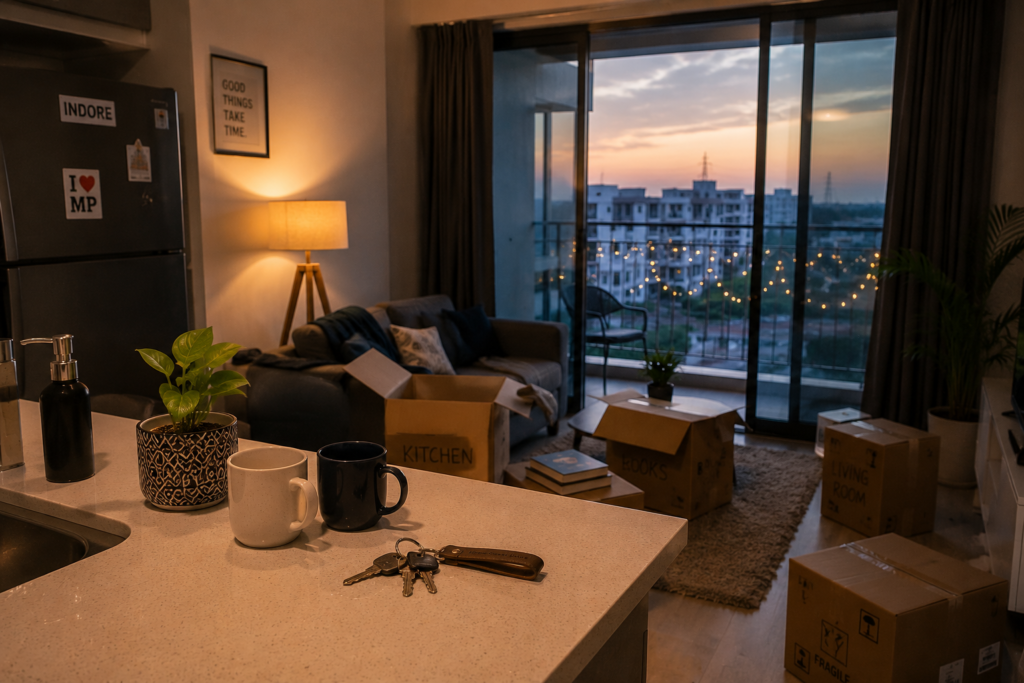
The right rental home is the one that continues to work for your everyday life.