
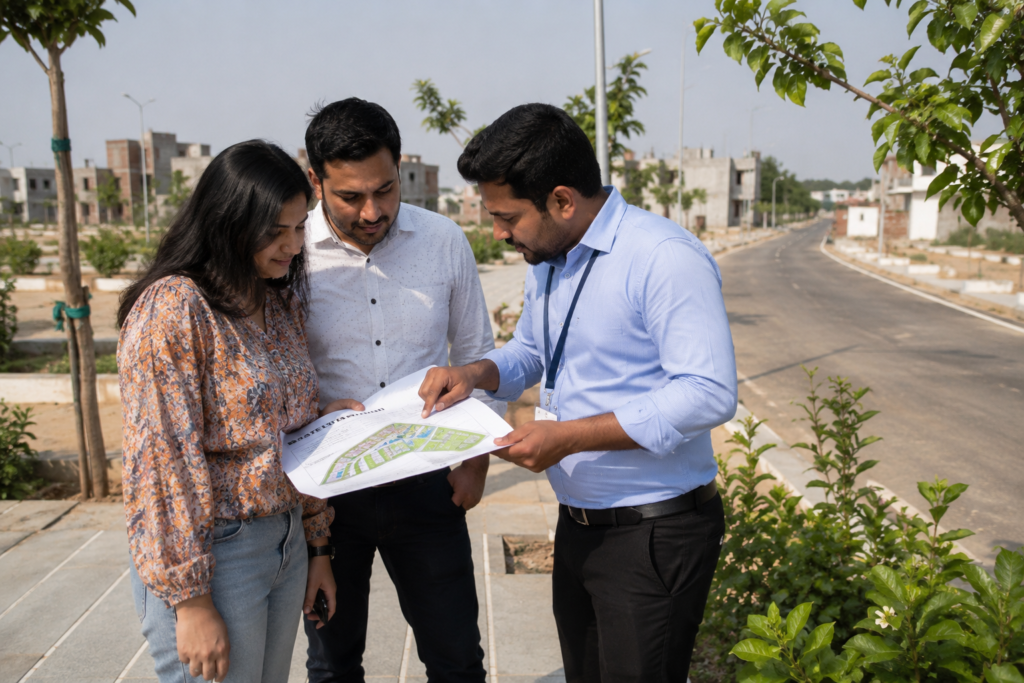
A property decision should begin with research, not just a price comparison.
Buying a property is a major financial decision. Whether you’re looking for a home, a plot, or an investment property, the decision should not be based only on price or how attractive a project looks in a brochure.
Indore has seen considerable growth in residential and commercial development, giving buyers more options than ever. But more options also mean more factors to compare.
Before making the final decision, you need to understand the location, documentation, developer, infrastructure, total cost, and how well the property fits your long-term plans.
A property that looks like a good deal today may not necessarily be the right choice for your family or investment goals.
Here are 7 important things to check before buying property in Indore.
1. Check the Location Beyond the Address
“Good location” means more than just having an Indore address.
Before buying, look at the area’s actual connectivity and surroundings. Check the approach roads, nearby schools, hospitals, markets, public transport, and availability of basic infrastructure.
If you’re buying a home, think about your daily travel and family requirements. If you’re buying for investment, connectivity, surrounding development and future demand may be more important.
It is also worth visiting the location yourself instead of depending entirely on online photos or a sales presentation.
Try visiting at different times of the day. Traffic, accessibility, and the overall environment can look very different during peak hours.
Also consider how the location may work for you five or ten years from now.
The right location is not necessarily the most expensive one. It is the one that fits your purpose and plans.
Before finalising a location, it is also useful to understand the factors that influence long-term property value. Read our Why Buying a Plot in Indore’s Developing Areas Can Be a Smart Long-Term Investment for more insights.
2. Check Property Documents and Applicable Approvals
A property can look perfect from the outside, but documentation is equally important.
Before committing your money, understand the relevant ownership documents, approvals, registrations, and permissions applicable to the property or project.
For applicable projects, buyers should also check relevant RERA information.
You don’t need to become a legal expert. However, you should not make a major financial commitment without understanding the property’s documentation and regulatory position.
This becomes especially important when purchasing:
- Plots
- Under-construction properties
- Resale properties
- Commercial properties
If you are unsure about any document or legal aspect, consider getting it reviewed by an appropriate property or legal professional.
A little verification before purchase can help prevent much bigger problems later.
Buyers can also refer to the official Madhya Pradesh RERA portal to check applicable project registration and regulatory information before making a property decision.
3. Research the Developer or Seller
Before buying a property, don’t just research the project. Research who is selling or developing it.
If you’re buying from a developer, look at their previous projects, delivery record, construction quality, and market reputation.
If possible, visit one of their completed projects. Seeing an older project can tell you more than a brochure.
Look at:
- Quality of construction
- Maintenance
- Roads and common areas
- Whether promised facilities were delivered
- Overall condition of completed projects
For resale properties, make sure ownership and relevant documentation are properly verified.
Online reviews can be useful for getting initial insights, but they shouldn’t be your only source of information.
A strong track record doesn’t guarantee everything, but it gives you another important factor to consider before making a decision.
Don’t Let the Price Decide Everything
A common mistake among first-time buyers is comparing properties only by price.
A cheaper property isn’t automatically better value.
A slightly higher-priced property may offer better connectivity, infrastructure, documentation, development quality, or long-term usability.
Instead of asking only:
“How much does this property cost?”
also ask:
“What am I getting for that price?”
That shift in thinking can make your property search much more practical.
Look Beyond the Property Price
The location and documentation are important, but there are a few more things you should check before making the final decision. A property may look attractive at first, but its total cost, infrastructure, and suitability for your purpose can make a big difference in the long run.
4. Check the Infrastructure and Future Development
A property doesn’t exist in isolation. The surrounding infrastructure can have a major impact on both convenience and long-term demand.
Check the condition of approach roads, electricity and water availability, drainage, nearby schools, hospitals, markets, and public transport.
If you’re considering a developing area, also look at the existing development around the project. Are homes already being built? Are essential services becoming available? Is the area gradually becoming more connected?
Future development can certainly add potential, but don’t make a decision based only on promises such as “a major road is coming soon” or “this area will become the next big location.”
If future infrastructure is an important reason behind your purchase, try to verify such information through reliable or official sources.
Future potential is useful—but it should be supported by facts, not just expectations.
5. Calculate the Total Cost of Buying
The quoted property price isn’t always the final amount you will spend.
Depending on the property and transaction, you may also need to consider:
- Registration-related expenses
- Applicable taxes and charges
- Brokerage, if applicable
- Legal and documentation costs
- Loan-related charges
- Maintenance expenses
- Interior or construction costs
For example, if you’re buying a plot, the purchase price is only one part of the financial plan. If you intend to construct a house later, construction and finishing costs will also need to be considered.
Similarly, a home may require interiors, furniture, and other setup expenses after purchase.
That’s why it’s better to calculate the complete financial commitment before deciding whether a property actually fits your budget.
Don’t stretch your finances simply because the property looks attractive.
6. Be Clear About Why You Are Buying
Before comparing properties, ask yourself one simple question:
“What exactly do I want this property for?”
Your answer can completely change what you should look for.
If you’re buying a home for your family, you may prioritise:
- Daily connectivity
- Schools and hospitals
- Neighbourhood environment
- Safety
- Basic amenities
If you’re buying as an investment, you may focus more on:
- Location demand
- Future development
- Rental potential
- Resale prospects
- Long-term appreciation potential
And if you’re buying a plot for future construction, factors such as plot dimensions, road access, surrounding development, and construction feasibility become more important.
There is no single property that is perfect for everyone.
The right choice is the one that matches your purpose, budget, and long-term plans.
Think About Resale Value Too
Even if you don’t plan to sell the property, it’s worth thinking about its future liquidity.
Life can change. A job transfer, financial requirement, or change in family circumstances may make selling necessary.
Properties with good connectivity, clear documentation, practical locations, and genuine demand may be easier to resell than properties chosen only because they were cheap.
So while evaluating a property, ask yourself:
“If I had to sell this property five or ten years from now, who would want to buy it?”
That question can help you look at the property from a long-term perspective.
Make the Final Decision With a Long-Term View
You’ve checked the location, documents, developer, infrastructure, and total cost. Now comes the final step—looking at whether the property will actually work for you in the long run.
7. Check the Actual Quality of the Property and Surroundings
Don’t judge a property only through brochures, photographs, or a sales presentation.
Visit the site and observe it yourself.
Look at the quality of roads, drainage, landscaping, common areas, boundary conditions, access points, and surrounding development. For a plotted project, check whether the actual site matches what has been communicated to you.
If you’re buying a house or apartment, pay attention to construction quality, ventilation, natural light, parking and overall accessibility.
The surrounding neighbourhood matters too.
A well-designed property may still be inconvenient if the roads, basic services or nearby facilities don’t meet your requirements.
A site visit can tell you things that a brochure simply cannot.
Don’t Rush Because of a Limited-Time Offer
Real estate purchases can sometimes come with a sense of urgency.
You may hear:
“Only a few units are left.”
“The price is increasing next week.”
“Book today to get the best deal.”
Sometimes such offers may be genuine, but they shouldn’t stop you from doing your basic due diligence.
Buying property is a long-term financial commitment. Taking some time to compare documents, costs, location, and alternatives is usually more important than making a rushed decision.
If the property still looks good after careful evaluation, you’ll be able to move forward with much greater confidence.
Common Mistakes Property Buyers Should Avoid
Even after doing their research, buyers can make mistakes when they become too focused on price or excitement.
Choosing Only on Price
The cheapest property isn’t necessarily the best value. Location, documentation, infrastructure, and future usability matter too.
Believing Every Future Promise
Don’t base your decision entirely on unverified claims about future roads, commercial development, or appreciation.
Ignoring the Surrounding Area
The project may look excellent, but the neighbourhood and connectivity are equally important.
Forgetting Additional Costs
Always consider the complete purchase and ownership cost rather than only the advertised price.
Making an Emotional Decision
Buying because you “really like the property” is understandable, but the final decision should also make financial and practical sense.
How Tesphero Infra Can Help
Finding the right property can be confusing when you’re comparing locations, prices, project features, and long-term potential.
At Tesphero Infra, we believe buyers should understand what they are investing in before making a decision.
Our team can help you explore property options in and around Indore while understanding factors such as location, project details, infrastructure, and suitability for your requirements.
Whether you’re looking for a property for your family or considering real estate as a long-term investment, the objective is to help you make a decision based on your needs—not simply on a sales pitch.
To know more about our approach and real estate experience, visit our About Tesphero Infra.
Final Thoughts
Buying property in Indore can be a rewarding long-term decision, but only when you choose carefully.
Before you make the final commitment, check the location, documents, developer, infrastructure, total cost, purpose, and actual project quality.
Visit the site. Ask questions. Compare your options. And most importantly, think beyond today’s price.
The best property isn’t always the cheapest or the most attractive one.
It’s the one that makes sense for your finances, your purpose, and your future.
Frequently Asked Questions
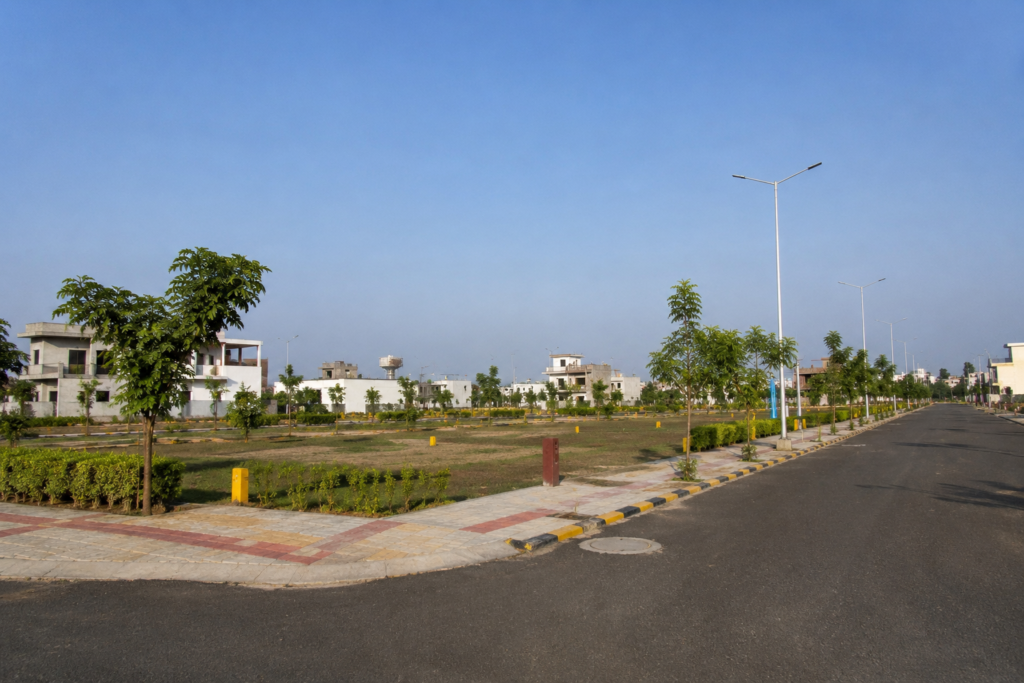
Look beyond the property itself and consider the environment you’re investing in.
Planning to Buy Property in Indore? Let’s Talk.
Exploring property options in Indore can be easier when you have the right information and guidance at every stage of the decision-making process. At Tesphero Infra, we focus on understanding your requirements first—whether you’re looking for a residential plot, a property for your family, or a long-term real estate opportunity.
If you’re currently exploring options and want to understand the location, project details, available choices, and how they fit your requirements, our team would be happy to discuss them with you.