
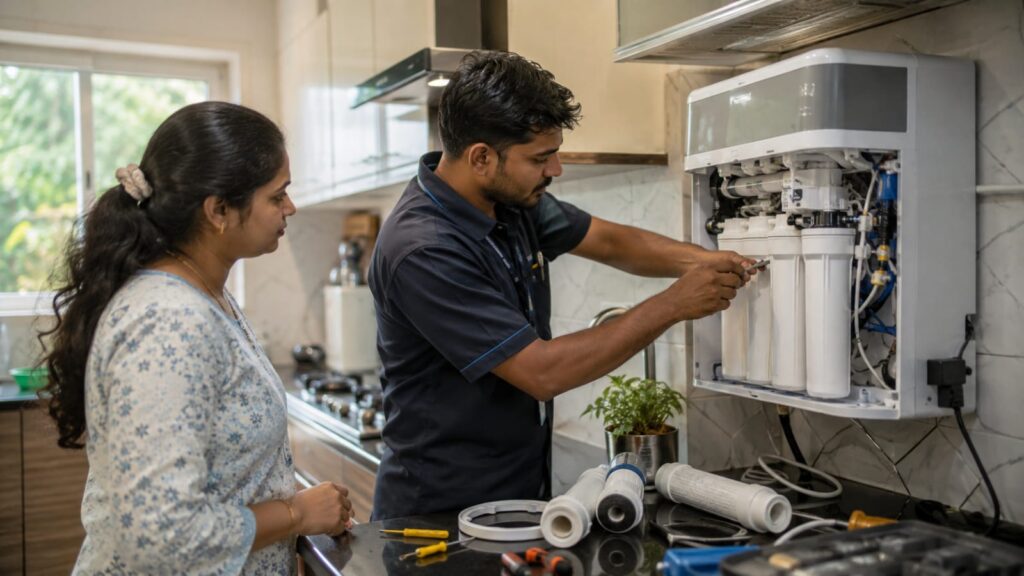
Regular RO maintenance helps ensure safe drinking water while preventing costly repairs in the future.
Installing a Reverse Osmosis (RO) water purifier is one of the smartest investments you can make for your family’s health or your business. Whether it’s a home, office, restaurant, hospital, school, or manufacturing unit, access to clean and safe drinking water is essential. As water quality concerns continue to grow across India, more people are choosing RO systems to remove harmful contaminants and improve the taste and safety of their drinking water.
However, many people believe that once an RO system is installed, the job is done.
In reality, buying an RO purifier is only the first step. Like any other machine, an RO system requires regular maintenance to perform efficiently. Filters become clogged, membranes gradually lose their effectiveness, and internal components experience normal wear and tear over time.
Unfortunately, this is where many users make a costly mistake.
To avoid spending money on routine servicing, they postpone maintenance until the purifier stops working or the water quality noticeably deteriorates. While this may seem like a way to save money in the short term, it often leads to expensive repairs, reduced purification efficiency, higher electricity consumption, and even health risks.
These are the hidden costs of neglecting RO maintenance.
Regular servicing is not simply about replacing filters. It’s about protecting your investment, ensuring consistent water quality, extending the life of your purifier, and preventing unexpected breakdowns that could cost significantly more than scheduled maintenance.
In this blog, we’ll explore why routine water purifier maintenance is essential, the early warning signs that your RO system needs attention, and how preventive servicing can save you money while ensuring safe drinking water for years to come.
If you want to understand the broader challenges involved in treating water for industrial applications, read our guide on Industrial Water Purification.
Why RO Maintenance Is Often Ignored
Most people understand the importance of servicing their car or maintaining an air conditioner, yet many overlook the maintenance needs of their water purifier.
One reason is that an RO system usually continues to operate even when its filters or membrane begin to lose efficiency. Since the purifier still dispenses water, users assume everything is functioning normally.
However, appearances can be misleading.
Inside the purifier, filters may already be clogged with dirt, sediment, and other impurities. The RO membrane may be working harder than necessary, and the purification process may no longer be as effective as it was when the system was new.
There are several reasons why regular RO service is often delayed.
“The Water Still Looks Fine”
Many people judge water quality by its appearance. If the water looks clear and there is no unusual smell, they assume it is safe to drink.
The reality is that many harmful contaminants cannot be seen, tasted, or smelled. This is why relying only on visual inspection can be risky.
Waiting Until Something Goes Wrong
Another common mistake is waiting until the purifier completely stops working.
By this stage, what could have been a simple filter replacement may have turned into a costly repair involving the membrane, booster pump, or other internal components.
Preventive maintenance is almost always more affordable than emergency repairs.
Trying to Save on Service Costs
Some users postpone servicing because they see it as an unnecessary expense.
Ironically, this decision often results in much higher repair bills later. Replacing damaged components generally costs far more than routine maintenance performed at the right time.
Assuming Filters Last Forever
Every filter inside an RO system has a recommended service life.
How long these filters last depends on several factors, including local water quality, usage, and the amount of impurities present in the water supply.
Delaying replacement beyond the recommended period can reduce purification performance and place unnecessary stress on the entire system.
Understanding these common mistakes is the first step toward protecting both your purifier and your long-term maintenance budget.
How an RO System Works
To appreciate the importance of regular maintenance, it helps to understand how an RO purifier cleans water.
Although different models may include additional technologies, most modern water purification systems follow a multi-stage filtration process.
Each stage performs a specific job, and every component requires timely maintenance to continue working efficiently.
Sediment Filter
The sediment filter acts as the first line of defence.
It removes visible particles such as dust, sand, rust, and suspended solids from the incoming water.
If this filter becomes clogged, water flow decreases, forcing the rest of the purification system to work harder.
Activated Carbon Filter
The carbon filter helps remove chlorine, unpleasant odours, organic compounds, and certain chemicals that affect the taste and smell of drinking water.
Over time, the carbon loses its ability to absorb these impurities, making regular replacement essential.
RO Membrane
The RO membrane is the heart of the purification process.
It removes dissolved salts, heavy metals, bacteria, viruses, and many other microscopic contaminants that ordinary filters cannot eliminate.
Since the membrane performs the most critical purification function, protecting it through timely filter changes and routine RO maintenance is extremely important.
A neglected membrane may lose efficiency or require premature replacement, increasing maintenance costs.
UV or UF Purification (Where Applicable)
Many modern RO systems also include UV (Ultraviolet) or UF (Ultrafiltration) technology as an additional layer of protection.
These stages help improve microbiological safety by targeting harmful microorganisms that may still be present after earlier filtration stages.
Like other components, these systems should also be inspected during routine servicing to ensure they continue performing effectively.
When every stage works together, your purifier delivers clean, safe, and great-tasting drinking water.
However, if even one component is neglected, the overall performance of the entire system can be affected.
Regular servicing ensures that every part of the purification process continues to function as intended.
Early Warning Signs Your RO Needs Servicing
Your RO system often gives small warning signs before a major problem develops.
Recognising these signs early can help you schedule maintenance before minor issues become expensive repairs.
Here are some of the most common indicators that your purifier may need professional attention.
Slow Water Flow
If purified water is filling much more slowly than usual, clogged filters or a weakening membrane could be restricting water flow.
Unpleasant Taste or Odour
A noticeable change in the taste or smell of drinking water often indicates that one or more filters are no longer working effectively.
Unusual Noises
Buzzing, vibrating, or unusually loud operating sounds may suggest that internal components such as the pump require inspection.
Water Leakage
Even small leaks should never be ignored.
Leaks can damage nearby furniture, waste water, and sometimes indicate worn-out fittings or internal components that need replacement.
Reduced Water Purity
If your purifier includes a TDS display or regular water quality testing shows inconsistent results, it may be time for a complete system inspection.
Longer Tank Filling Time
A storage tank that takes significantly longer to fill than before often indicates declining purification efficiency or clogged filtration stages.
Ignoring these early warning signs can allow minor maintenance issues to develop into major repairs. Scheduling timely RO service not only keeps your purifier running efficiently but also helps avoid unnecessary expenses in the future.
The Real Cost of Skipping Regular RO Servicing
A water purifier may continue producing water even when its internal components are no longer working efficiently. That is why RO maintenance is often overlooked until a noticeable problem appears.
However, the cost of neglecting routine servicing can go far beyond a simple filter replacement. What starts as a small maintenance issue can gradually affect water quality, energy efficiency, and the overall life of the purifier.
Let’s look at where these hidden costs can come from.
The Hidden Financial Cost of Skipping RO Maintenance
Regular servicing may feel like an additional expense, especially when the RO appears to be working normally. But delaying maintenance can allow minor problems to develop into expensive repairs.
For example, a filter that is overdue for replacement may become heavily clogged. This can put additional pressure on other components, including the RO membrane and pump.
Instead of paying for a routine filter change, you may eventually need multiple components repaired or replaced.
Expensive Repairs
When small problems are ignored for too long, the repair bill can increase significantly.
A damaged membrane, malfunctioning pump, leaking fittings, or electrical component may require professional attention. In some cases, several parts may need to be addressed at the same time.
Regular RO service helps technicians identify these problems earlier, when they are generally easier to manage.
Emergency Service Costs
There is also a difference between planned maintenance and emergency repairs.
If your RO stops working completely when you need it most, you may have to arrange urgent service instead of scheduling a convenient maintenance visit.
Emergency situations can also disrupt your daily routine, particularly in homes, offices, restaurants, and other places where purified water is needed throughout the day.
Preventive maintenance reduces the chances of being caught with a completely non-functional purifier.
Premature Component Replacement
When filters are not changed on time, they can affect the performance of components that depend on them.
For instance, an overloaded filtration stage may increase the workload on the purification system. Over time, this may contribute to premature wear of components.
Replacing one filter at the right time is usually much simpler than replacing several major parts later.
Poor Water Quality Can Cost More Than You Think
One of the biggest concerns with neglected water purifier maintenance is declining water quality.
The problem is that poor purification is not always obvious.
Water can appear completely clear while still containing dissolved impurities or other contaminants that a properly maintained purification system is designed to reduce.
As filters and membranes become less effective, the quality of purified water may gradually change.
Changes in Taste and Odour
A noticeable change in taste or smell is often one of the first signs that filters need attention.
For example, water may begin to taste unusual or develop an unpleasant odour. While this does not automatically indicate a specific health hazard, it is a good reason to have the purifier professionally inspected.
Increased Dependence on Bottled Water
When people lose confidence in their RO system, they may start purchasing packaged drinking water instead.
For occasional use, this may not seem significant. But for a family, office, restaurant, or other high-usage environment, the cost can quickly add up.
A well-maintained purification system can provide a more convenient and consistent source of purified water.
Avoiding Unnecessary Health Concerns
A poorly maintained purifier should not be treated as a reliable solution simply because it continues to dispense water.
Regular inspection and timely replacement of consumable components help ensure that the system continues operating as intended.
If you’re concerned about your water quality, professional water testing can provide more useful information than judging water only by its appearance, taste, or smell.
For broader information on drinking-water quality and health considerations, readers can also refer to the WHO’s drinking-water guidance.
Higher Electricity Consumption
Another hidden cost of neglecting RO maintenance is reduced efficiency.
A healthy RO system should operate according to the design and condition of its components. When filters become clogged or other parts begin to deteriorate, the system may have to work harder to produce the required amount of purified water.
For example, restricted water flow can increase operating time. If the purification process takes longer than usual, the pump and other electrical components may run for extended periods.
This can contribute to unnecessary energy consumption.
How Dirty Filters Affect Performance
Filters that are heavily clogged can restrict the movement of water through the system.
As a result, the purifier may take longer to fill its storage tank compared with when the filters were clean and functioning properly.
This is one reason why slow water production should not simply be ignored.
The Pump May Work Harder
The booster pump plays an important role in many RO systems, particularly where adequate water pressure needs to be maintained.
If the system is operating under poor filtration conditions, the pump may experience additional workload.
Regular maintenance allows technicians to inspect the system, identify restrictions, and check whether important components are operating properly.
Keeping the system in good working condition can therefore support better efficiency and help avoid unnecessary strain on electrical components.
Neglect Can Reduce the Lifespan of Your RO
An RO purifier is a long-term investment.
When you purchase a quality purification system, you naturally expect it to provide reliable service for years. However, the lifespan of the machine depends not only on the quality of the original installation but also on how well it is maintained.
Think about it this way.
A vehicle that never receives an oil change, inspection, or basic maintenance is unlikely to perform reliably for years. An RO system works on a similar principle.
Its filters, membrane, pump, tubing, electrical components, and other parts all need appropriate attention over time.
Regular Maintenance Protects Major Components
Timely filter replacement helps prevent excessive load on other parts of the system.
Routine inspections can also identify leaks, damaged connections, unusual sounds, and other issues before they become serious.
This preventive approach can help you avoid premature replacement of the entire purifier.
Better Performance for Longer
A properly maintained purifier is more likely to deliver consistent performance compared with one that is serviced only after a breakdown.
This is especially important for commercial and industrial users, where water purification equipment may operate frequently and downtime can affect daily operations.
Regular maintenance isn’t simply about fixing problems.
It’s about reducing the chances of those problems occurring in the first place.
The Benefits of Regular Preventive Maintenance
The good news is that most of these hidden costs can be reduced with a simple preventive maintenance routine.
Regular RO maintenance provides several practical benefits.
Better Water Quality
Timely filter and membrane servicing helps the purification system continue working effectively.
Lower Repair Expenses
Small problems can often be identified before they turn into expensive component failures.
Longer RO Lifespan
Proper maintenance reduces unnecessary stress on the system and supports long-term reliability.
More Consistent Performance
A serviced purifier can maintain better water flow and overall operating efficiency.
Peace of Mind
Perhaps the biggest benefit is knowing that your drinking water system is being checked regularly rather than waiting for an unexpected breakdown.
Preventive servicing should therefore be viewed as an investment rather than an unnecessary expense.
The amount spent on routine maintenance can help protect you from much larger costs later.
Make Preventive RO Maintenance Part of Your Routine
Regular servicing can help prevent many of the problems discussed in the first two parts of this guide. But for households and businesses that depend heavily on purified water, occasional servicing may not be enough.
A planned maintenance approach makes it easier to keep track of filter changes, inspections, repairs, and overall system performance.
This is where an RO AMC can become useful.
Why Annual Maintenance Contracts (AMC) Make Sense
An Annual Maintenance Contract is designed to provide scheduled service and maintenance for your RO system over a defined period.
Instead of remembering when the purifier needs inspection or waiting until something goes wrong, an AMC creates a more structured maintenance routine.
This can be particularly useful for offices, restaurants, schools, hospitals, hotels, and commercial facilities where purified water is needed regularly.
Scheduled Servicing
One of the biggest advantages of an AMC is that maintenance can be planned in advance.
Regular inspections give technicians an opportunity to check filters, membrane performance, water flow, leakage, electrical components, and other important parts of the system.
This makes it easier to identify developing problems before they become major failures.
Better Cost Control
Unexpected repairs can make maintenance expenses difficult to predict.
With a planned maintenance arrangement, businesses and households can manage servicing more systematically instead of dealing with sudden repair requirements.
The exact coverage and replacement terms depend on the AMC provider and the type of RO system, so users should always understand what is included before choosing a plan.
Reduced Downtime
For a commercial establishment, an RO breakdown can interrupt daily operations.
Restaurants may need purified water for food preparation and beverages. Offices need drinking water for employees and visitors. Hotels and institutions may have even higher requirements.
Scheduled maintenance can reduce the chances of sudden breakdowns and help keep essential equipment available when it is needed.
Professional Attention
An AMC can also make maintenance more consistent because the system is checked by trained technicians rather than being serviced only when a problem becomes obvious.
For businesses managing multiple water purification systems, this organized approach can be especially valuable.
Tips to Keep Your RO Running Efficiently
Professional servicing is important, but everyday care also plays a role in maintaining your purifier.
A few simple habits can help you identify problems early and reduce unnecessary strain on the system.
Follow a Regular Service Schedule
Don’t wait for the purifier to stop working before arranging maintenance.
The appropriate service frequency can vary depending on water quality, usage, system design, and manufacturer recommendations. A technician can help determine a suitable maintenance schedule for your particular RO.
Replace Filters on Time
Filters are consumable components and do not last indefinitely.
Using an old filter for too long can reduce purification efficiency and may affect other components.
Rather than choosing replacement dates based only on guesswork, follow the manufacturer’s recommendations and consider actual usage and incoming water quality.
Use Genuine and Compatible Spare Parts
Low-quality or unsuitable replacement parts may affect system performance and reliability.
Whenever a filter, membrane, pump, or other component needs replacement, use parts that are appropriate for the specific RO model.
The cheapest replacement is not always the most economical choice if it results in repeated problems.
Keep an Eye on Water Flow
You don’t need technical equipment to notice a significant change in your purifier’s performance.
If the tank starts taking much longer to fill, water flow becomes unusually slow, or the purifier starts making unfamiliar sounds, arrange an inspection rather than ignoring the change.
Check for Leakage
Small leaks can become bigger problems if left unattended.
Check the area around your purifier from time to time. If you notice dripping water, wet connections, or moisture around the system, have it inspected by a qualified technician.
Monitor Water Quality
Changes in taste, odour, or other noticeable characteristics can be useful warning signs.
However, these observations cannot replace professional water testing. If there is a serious concern about drinking-water quality, appropriate testing is the better way to understand the issue.
Common Mistakes People Make With RO Maintenance
Even people who understand the importance of clean drinking water sometimes make simple maintenance mistakes.
Avoiding these habits can help protect your purifier and reduce long-term expenses.
Waiting Until the RO Stops Working
This is perhaps the most common mistake.
A purifier does not need to stop completely before it needs servicing. Slow water flow, unusual sounds, leakage, or changes in taste may appear much earlier.
Treat these as warning signs rather than waiting for complete failure.
Choosing the Cheapest Replacement Parts
Saving money on low-quality filters or incompatible components can create problems later.
A replacement part should be selected based on quality, compatibility, and the requirements of the RO system—not price alone.
Attempting Complex Repairs Without Proper Knowledge
Simple cleaning around the external area of the purifier is one thing. Opening the machine and working on pumps, electrical connections, membranes, or internal plumbing without proper knowledge can cause further damage.
Professional RO repair is a safer choice when the issue involves internal components.
Ignoring the Source Water
The condition of incoming water has a major influence on RO performance.
Water with high levels of sediment, hardness, or dissolved impurities can place greater demands on the purification system.
Understanding the quality of your source water can therefore help determine an appropriate maintenance approach.
Forgetting About Commercial RO Systems
Businesses often use RO systems more heavily than residential users.
Higher usage can mean greater wear on filters and other components. Commercial systems should therefore have a planned maintenance routine based on operating conditions rather than following a one-size-fits-all schedule.
How Nidhish Water Solutions Can Help
Maintaining an RO system becomes much easier when you have access to reliable technical support.
Nidhish Water Solutions helps residential, commercial, and industrial users keep their water purification systems operating efficiently through professional maintenance and service support.
Depending on the system and its requirements, our services can include:
- Domestic RO Service for homes and residential properties.
- Commercial RO Service for offices, restaurants, hotels, schools, and other establishments.
- Industrial RO Maintenance for larger water purification systems and industrial applications.
- RO AMC Plans for customers who prefer scheduled maintenance and ongoing service support.
- Genuine Spare Parts to support reliable replacement and system performance.
- Water Testing to help customers better understand their water quality and purification requirements.
- Installation Support for customers setting up new RO and water purification systems.
The goal isn’t simply to repair a purifier after it breaks down.
Good maintenance is about understanding the condition of the system, identifying potential issues early, and helping customers get reliable performance from their investment.
Whether you have a domestic RO running in your kitchen or a larger purification system supporting a commercial operation, a planned maintenance approach can make a meaningful difference.
To learn more about our experience and approach to water purification solutions, visit our About Nidhish Water Solutions.
Final Thoughts
An RO purifier is designed to provide a reliable source of purified water, but it cannot maintain its performance without proper care.
Skipping a service appointment may save a small amount of money today. However, clogged filters, declining purification performance, pump problems, leaks, and premature component failure can create much higher costs later.
That’s the hidden cost of neglected RO maintenance.
Regular servicing helps you stay ahead of these problems. It supports consistent performance, protects important components, reduces the chances of unexpected breakdowns, and can extend the useful life of your water purification system.
The best approach is simple: don’t wait for a breakdown to think about maintenance.
Pay attention to changes in water flow, taste, odour, noise, and leakage. Follow appropriate filter replacement schedules, use compatible quality parts, and arrange professional servicing when required.
For homes and businesses that depend on purified water every day, preventive maintenance isn’t just another expense.
It is an investment in reliable performance, cleaner water, and lower long-term costs.
If your RO system needs inspection, servicing, or maintenance support, you can Contact Us to discuss your requirements.
Frequently Asked Questions
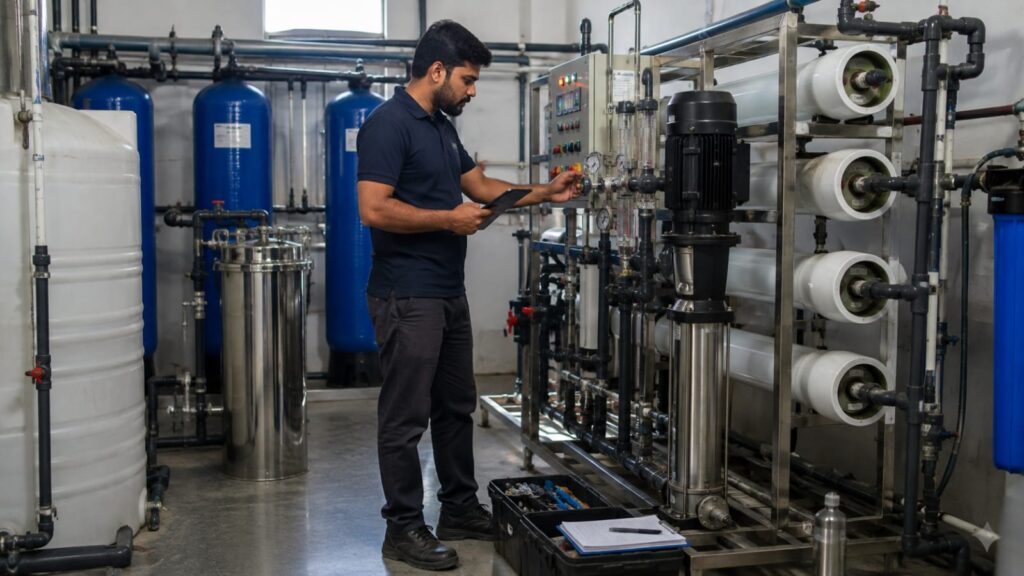
Preventive RO maintenance helps reduce unexpected breakdowns and supports reliable water purification.