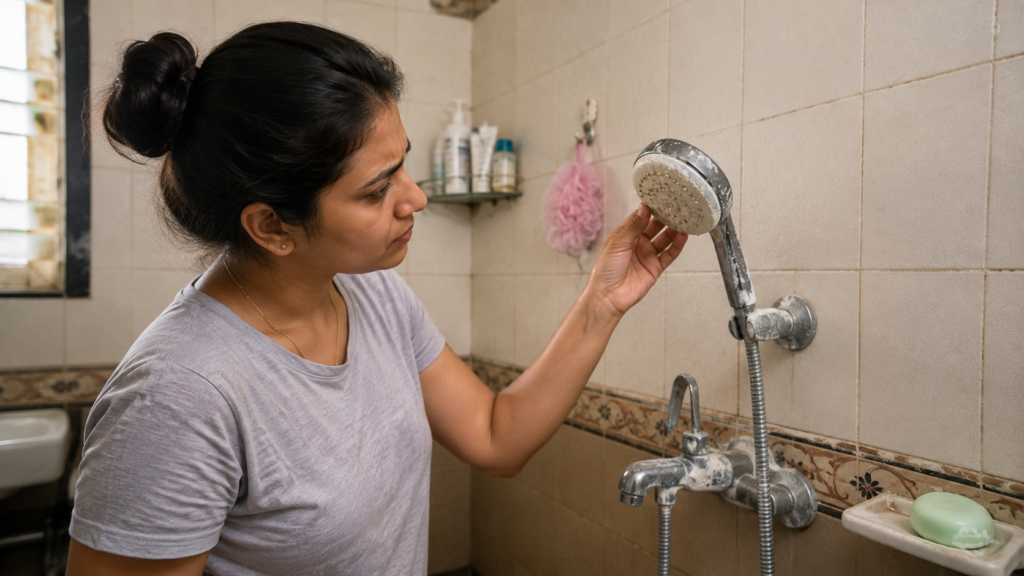
Hard water problems often begin with small signs that are easy to ignore.
Is Hard Water Becoming a Daily Problem?
Water may look clean, but that doesn’t always mean it is free from problems.
In many parts of Indore, people deal with water that contains a higher level of dissolved minerals, particularly calcium and magnesium. This type of water is commonly known as hard water.
For some households, the first signs may be simple—a white layer around taps, spots on bathroom fittings, or soap that doesn’t seem to rinse properly.
But over time, hard water can affect much more than the appearance of your bathroom.
It can leave deposits inside pipes and appliances, reduce the effectiveness of soaps and detergents, affect water-heating equipment and create additional maintenance work.
The impact can be even more noticeable in businesses where water is used every day and in larger quantities.
Hotels, restaurants, salons, laundries, offices, hospitals, and manufacturing facilities may all have different water requirements, but one thing remains common: water quality affects operations.
This is where understanding hard water—and knowing when a water softener may be useful—becomes important.
What Is Hard Water?
Hard water is water that contains relatively high levels of dissolved minerals, mainly calcium and magnesium.
These minerals are naturally present in groundwater and can enter the water supply as it moves through rocks and soil.
Hard water isn’t necessarily unsafe to drink simply because it is hard. The bigger concern is often its effect on plumbing, appliances, cleaning, and everyday use.
You may notice signs such as:
- White deposits around taps
- Scale on bathroom fittings
- Soap that doesn’t lather easily
- Clothes feeling rough after washing
- Spots on glassware
- Scale developing inside water heaters
- Reduced efficiency of certain water-using appliances
These signs can be easy to ignore because they usually don’t appear as a major problem overnight.
The issue develops gradually.
And that is exactly why many people don’t think about water hardness until maintenance costs start increasing.
Why Hard Water Can Be a Concern in Indore
Indore has a mix of municipal water supply and groundwater usage across different areas and properties.
Water quality can vary depending on the source, location, building, storage, and distribution system.
This means you shouldn’t assume that every home or business has the same water quality.
If you’re noticing repeated scale deposits, poor soap performance, or problems with water-using appliances, testing the water can be a sensible first step.
Rather than guessing whether your water is hard, test it and understand what you’re dealing with.
That information can then help determine whether a water softener or another water-treatment solution is appropriate.
Hardness is only one part of overall water quality. Read our Complete Water Purification Solutions in Indore to understand some of the other factors that can affect the water you use every day.
1. Hard Water Can Create Scale on Fixtures
One of the easiest signs of hard water is the white or chalky deposit that appears around taps, showerheads, and other fixtures.
At first, cleaning the deposits may seem like a minor household chore.
But when the deposits keep returning, it can become frustrating.
Scale can also build up in less visible areas, including pipes and components where water regularly flows.
This is why simply cleaning the surface doesn’t always solve the underlying issue.
If hard water is the cause, the deposits may continue to return until the water itself is treated appropriately.
2. It Can Affect Water-Using Appliances
Many homes and businesses depend on appliances and equipment that use water regularly.
These may include:
- Geysers and water heaters
- Washing machines
- Dishwashers
- Coffee machines
- Steam equipment
- Certain commercial kitchen equipment
Mineral scale can accumulate on internal components over time.
For water-heating equipment, this can be particularly relevant because deposits can interfere with heat transfer and contribute to reduced efficiency.
The result may be higher energy consumption, more frequent cleaning or maintenance, and potentially shorter equipment life.
For a household, that means additional expense.
For a business, repeated equipment downtime can become an operational issue.
How Hard Water Affects Everyday Life and Business
3. Cleaning Can Become More Difficult
Have you ever noticed that you need more soap or detergent to get the result you expect?
Hard water can make cleaning less efficient because calcium and magnesium can interact with soap and reduce its ability to lather effectively.
This can mean using more cleaning products for the same task.
In a home, the difference may seem small.
But imagine a hotel, restaurant, laundry, or facility that uses cleaning products every single day.
Small inefficiencies can add up.
This is why businesses that consume significant amounts of water should consider water quality as part of their overall operating costs—not just as a basic utility issue.
4. Your Clothes and Laundry May Be Affected
Hard water can also create problems during laundry.
Mineral deposits can interact with detergents and may contribute to clothes feeling less soft or looking dull over repeated washing.
For homes, this may mean using additional detergent or fabric-care products.
For commercial laundries, hotels, hospitals, and similar businesses, the impact can be much larger because of the volume of washing involved.
When water quality affects a high-frequency process, even a relatively small issue can become expensive over time.
5. Hard Water Can Increase Maintenance
This is one of the biggest reasons businesses and homeowners should pay attention to water hardness.
Think about everything that comes into regular contact with your water:
Pipes → taps → heaters → washing machines → kitchen equipment → bathroom fittings
If scale continues to accumulate, these components may require more frequent cleaning and maintenance.
This doesn’t mean hard water will automatically damage every appliance.
The actual impact depends on factors such as water hardness, usage, equipment design, and maintenance practices.
But if your water is consistently hard, managing the hardness can be one way to reduce unnecessary scale-related problems.
What Is a Water Softener?
A water softener is a water-treatment system designed to reduce hardness-causing minerals, primarily calcium and magnesium, from water.
One common method uses an ion-exchange process.
In simple terms, the system exchanges hardness ions in the water with other ions through a specialised resin.
The result is water with reduced hardness.
However, not every property needs the same type or size of softener.
A household with a small family will have very different requirements from a hotel, factory, or commercial facility.
That’s why selecting a system based on actual water conditions and consumption is important.
How Can a Water Softener Help?
A properly selected and maintained water softener can help reduce problems associated with hard water.
Less Scale Formation
Lower water hardness can help reduce mineral scale on plumbing fixtures and water-using equipment.
Better Cleaning
Softened water can improve soap and detergent performance, potentially reducing the amount needed for certain cleaning tasks.
Appliance Protection
Reducing hardness can help minimise scale accumulation in suitable water-using appliances and equipment.
Lower Maintenance Burden
When scale formation is controlled, cleaning and maintenance requirements may become more manageable.
For businesses, this can also help reduce interruptions caused by scale-related maintenance.
Softener vs RO: They Are Not the Same Thing
This is an important distinction.
A water softener and an RO system solve different water-treatment problems.
RO, or Reverse Osmosis, is primarily used to reduce dissolved salts and various contaminants from water.
A water softener is specifically focused on reducing hardness caused mainly by calcium and magnesium.
So if your main concern is hard water and scale, installing an RO system alone may not address the problem in the same way as a dedicated softening system.
The right solution depends on the water source, test results, and intended use.
Choosing the Right Solution for Your Home or Business
Test First, Then Choose
One of the biggest mistakes people make is buying a water-treatment system based only on what someone else is using.
Your water may be different.
Your consumption may be different.
Your requirements may be different.
Before selecting a softener, it is useful to understand factors such as:
- Water hardness level
- Water source
- Daily water consumption
- Number of users
- Required flow rate
- Available installation space
- Intended application
For a home, the requirement may be relatively straightforward.
For a commercial or industrial setup, system sizing becomes much more important because insufficient capacity can affect performance.
This is why a professional assessment can be more useful than choosing a system based purely on price.
Before selecting a treatment system for drinking-water applications, businesses and homeowners can also refer to the BIS drinking-water standards for a broader understanding of water-quality requirements.
Home vs Business: The Requirement Can Be Very Different
A household may primarily want to reduce scale on bathroom fittings, geysers, and appliances.
A business may have much broader requirements.
Hotels
High water consumption across bathrooms, laundry and housekeeping can make water hardness an important operational consideration.
Restaurants
Hard water may affect kitchen equipment, cleaning and certain water-based processes.
Salons and Spas
Water is used frequently for washing and customer services, making water quality an important part of the experience.
Offices
While the requirement may be smaller, water quality can still matter for washrooms, pantry areas and water-using equipment.
Industrial Facilities
Industrial applications can require more specialised water-treatment planning based on process requirements, flow rates and water chemistry.
The same softener cannot simply be recommended for every application.
The right system starts with understanding the requirement.
Don’t Ignore Maintenance After Installation
Installing a water softener is not the end of the process.
Like any water-treatment equipment, it requires appropriate maintenance.
Depending on the system, this may include checking the resin condition, monitoring performance, maintaining the regeneration process and ensuring that the system is operating correctly.
If maintenance is ignored, even a good system may not perform as expected.
For businesses, scheduled maintenance can be particularly useful because unexpected equipment problems can disrupt daily operations.
A water-treatment system should be treated as part of your regular maintenance plan, not something you install and forget.
Common Mistakes to Avoid
Buying Without Testing Water
You shouldn’t assume hardness levels based on location alone.
Choosing Only by Price
A cheaper system may not be suitable for your actual consumption or water conditions.
Using RO for Every Problem
RO and softeners serve different purposes. The treatment should match the water-quality issue.
Ignoring System Capacity
An undersized system may struggle when water demand is high.
Forgetting Maintenance
Regular servicing and monitoring are important for long-term performance.
How Nidhish Water Solutions Can Help
Hard water problems can look different from one property to another.
At Nidhish Water Solutions, we focus on understanding the water-quality requirements before recommending a suitable treatment approach.
From water softeners and domestic RO systems to commercial and industrial water-treatment solutions, the objective is to match the system with the actual application.
If you’re a homeowner dealing with repeated scale problems, or a business looking to manage hard water across a larger facility, a proper assessment can help identify a practical solution.
The goal isn’t to install the biggest or most expensive system.
It’s to install the right system for your water, usage, and requirements.
Facing hard water problems at home or at your workplace? Contact Nidhish Water Solutions to discuss your water-treatment requirement.
Final Thoughts
Hard water is easy to ignore because its effects usually develop gradually.
A little scale around the tap.
A little extra detergent.
A water heater that needs more maintenance.
An appliance that doesn’t perform as efficiently as expected.
Individually, these may not seem serious.
But over time, the cost and inconvenience can add up.
If you are noticing repeated signs of hard water at home or in your business, don’t simply keep cleaning the symptoms.
Start by understanding the water itself.
Test the water, assess your requirements, and then choose a suitable treatment solution.
A properly selected water softener can help manage hardness, reduce scale-related problems, and make everyday water use easier to manage.
Frequently Asked Questions
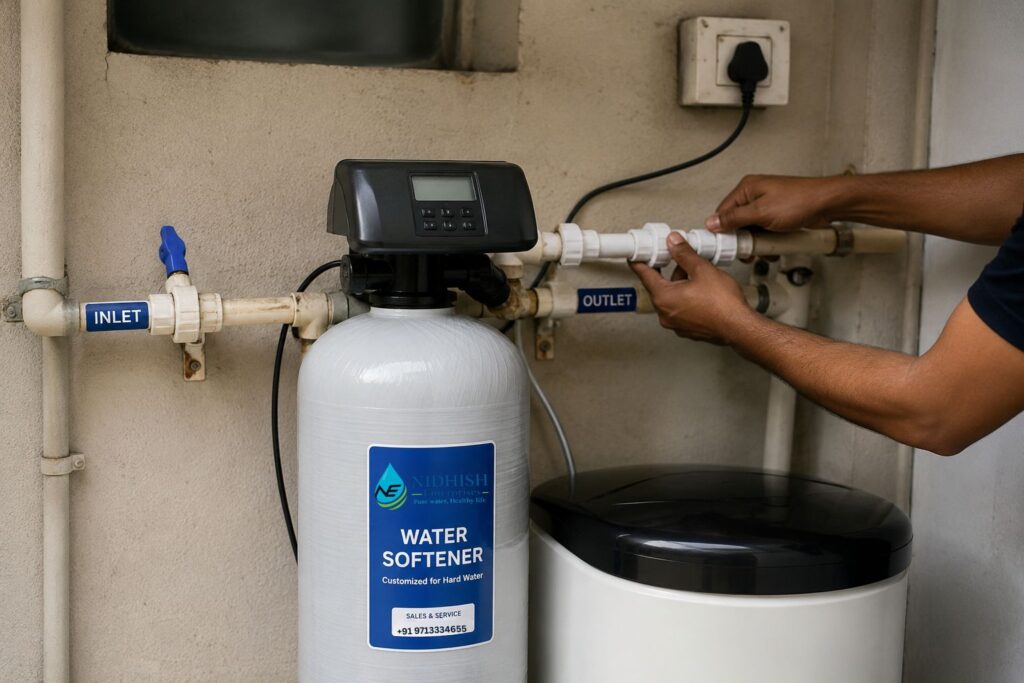
The right water-softening system starts with understanding your water and usage.
About the Author
Nidhish Water Solutions is a water-treatment solutions provider based in Indore, helping homes, businesses, and industries address their water-quality and purification requirements. With experience across Domestic RO Systems, Commercial RO Systems, Industrial RO Solutions, Water Softeners, and AMC Services, the team focuses on practical solutions tailored to each customer’s specific water and usage requirements.
Through its expertise in water purification and treatment, Nidhish Water Solutions aims to make clean and suitable water more accessible while helping customers choose systems that are practical, reliable, and easier to maintain.
To know more about Nidhish Water Solutions and its water-treatment solutions.